

More news on this day
Saudi Arabia has signaled a readiness for swift military action after Iranian missile and drone strikes targeted Riyadh and the oil-rich Eastern Province, a dramatic escalation that is shaking confidence in Gulf security corridors just as the kingdom’s tourism ambitions reach a critical peak.
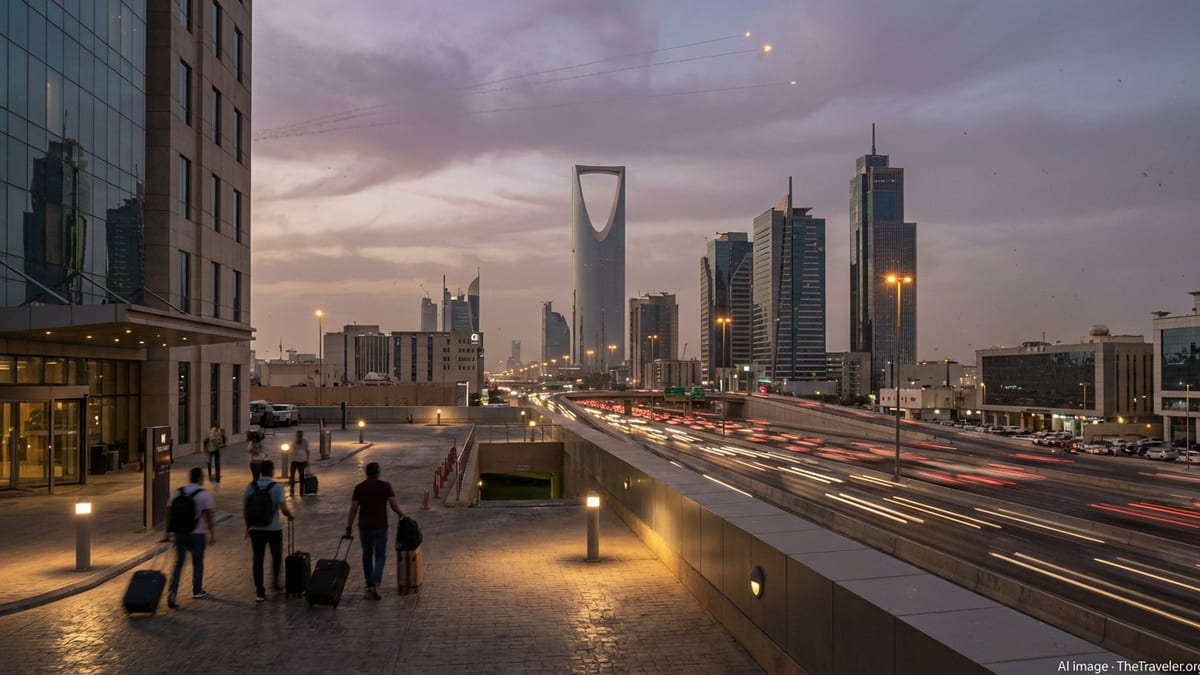
New Mandate for Rapid Military Response
In the wake of the weekend attacks, Saudi officials have framed the strikes on Riyadh and the Eastern Province as a direct assault on national sovereignty, emphasizing that the kingdom now considers rapid retaliatory options to be firmly on the table. The Foreign Ministry has reiterated that all necessary measures are being prepared to defend the country’s territory, citizens and residents, including proportional military action against further missile and drone launches originating from Iran.
Senior figures in Riyadh describe the new mandate as a shift from strategic patience to calibrated deterrence. While Saudi Arabia has long invested in layered air defenses and diplomatic outreach, officials now stress that messaging from the capital must be unmistakable: any repeat of the recent barrages will invite immediate countermeasures. Military planners are understood to be updating response scenarios that range from targeted strikes on launch infrastructure to expanded cooperation with regional partners on missile defense and early warning.
This sharper posture comes as interceptions over the capital and the east were visible and audible to residents and visitors, with social media filled with nighttime footage of glowing streaks and explosions above the skyline. The government insists that most incoming projectiles were neutralized before impact, but acknowledges that the psychological effect on the public and on foreign travelers has been significant.
Regional Security Calculus and Gulf Alliances
The Iranian strikes have forced a rapid recalibration of security thinking across the Gulf. Saudi Arabia has publicly condemned what it calls blatant and unjustified aggression, while also warning Tehran that the kingdom reserves the right to respond at a time and in a manner of its choosing. Behind closed doors, officials are said to be weighing how far any Saudi action should go without dragging the country deeper into the broader confrontation between Iran and the United States and Israel.
Riyadh has intensified consultations with neighboring states that also host United States military assets and have come under fire. Calls by the Saudi leadership with counterparts in the United Arab Emirates, Bahrain, Qatar, Kuwait and Jordan have focused on coordinated air defense, contingency planning for shared critical infrastructure and a common diplomatic front that stresses respect for territorial sovereignty. The attacks have, at least for now, aligned Gulf capitals around a shared message that their airspace cannot be used as a battlefield without consequences.
At the same time, Saudi diplomats continue to stress that any response must be grounded in international law. Officials note that the kingdom has tried to maintain a degree of balance in recent years, pursuing limited rapprochement with Iran even as it deepened defense ties with Western partners and regional allies. The latest strikes, however, have created growing pressure inside the country for a more forceful stance, particularly if further attacks threaten oil facilities or major population centers.
Tourism Dreams Under Fire
The timing of the attacks could hardly be worse for Saudi Arabia’s tourism sector, which has been aggressively repositioning the kingdom as a global destination for leisure, culture and religious travel. Just as international arrivals were building momentum and new resorts along the Red Sea coast were promoting cutting-edge sustainability and luxury, images of air defense interceptions above Riyadh and reports of disruptions in the Eastern Province have rattled would-be visitors.
Hoteliers and tour operators describe a wave of calls from anxious travelers and agents seeking clarity on flight operations, insurance coverage and on-the-ground safety. The aviation sector has faced diversions, temporary suspensions and route adjustments as airlines reassess risk profiles over the Gulf. For pilgrims planning to travel during the peak Hajj and Umrah seasons, questions about airspace closures and transit hubs have become as pressing as visa approvals and accommodation.
Saudi tourism officials insist that core visitor hubs remain secure and that contingency protocols honed during earlier regional crises are being activated. They point to the resilience of religious tourism in particular, which has historically shown a capacity to rebound quickly once immediate dangers pass. Yet there is no denying that the current flare-up, with its visible missile defense engagements and talk of rapid retaliatory options, presents a reputational challenge to a country marketing itself as a haven of curated experiences and futuristic mega-projects.
Life on the Ground: Travelers in a Theater of Tension
For visitors already in the kingdom when the sirens sounded and interceptions lit up the night sky, the crisis has turned a long-anticipated trip into an unnerving real-time security drill. Guests at major hotels in Riyadh describe being guided to interior corridors, basements or reinforced areas as staff followed emergency protocols. In some districts to the east of the capital, residents and tourists alike reported hearing successive booms as air defenses engaged incoming projectiles.
Authorities have emphasized that no large-scale damage was recorded in the capital itself and that critical infrastructure sites are under heightened protection. Nevertheless, embassies in Riyadh have issued updated travel advisories urging citizens to monitor local guidance, register with consular services and avoid non-essential movements near sensitive facilities. For expatriates and business travelers, the attacks are a stark reminder that the Gulf’s gleaming towers sit within a contested strategic landscape.
Despite the tensions, daily life in many parts of Riyadh has resumed quickly, with cafes, malls and cultural venues reopening under visibly tightened security. Tour operators are adjusting itineraries to minimize exposure to potential flashpoints, prioritizing museum visits, heritage tours and desert excursions far from key military and energy sites. In the Eastern Province, where the energy sector dominates the skyline, some corporate travel has been postponed, but local hotels report that core operations are continuing under close coordination with authorities.
Balancing Deterrence, Diplomacy and Destination Image
Saudi Arabia now faces the delicate task of proving that it can respond decisively to aggression while keeping its ambitious transformation as a tourism and investment hub on track. Officials are signaling that deterrence and destination-building must proceed in parallel: air defense deployments are being reinforced even as marketing campaigns continue to highlight cultural festivals, entertainment seasons and new coastal resorts.
The government is also leveraging its role as host to millions of religious visitors to press for broader de-escalation. Saudi diplomats argue that stability in the heart of the Islamic world is a global interest, especially when flight suspensions and security scares ripple outward to affect pilgrims and tourists from Asia, Africa, Europe and the Americas. Calls for restraint, they say, are not only political but practical, aimed at preserving the arteries of global mobility that converge on the Gulf.
Whether the kingdom’s new authorization for swift military action will reinforce or undermine that message depends largely on Tehran’s next moves and on the ability of regional and international actors to restore a measure of predictability. For now, travelers, airlines and investors are watching the skies over Riyadh and the Eastern Province as closely as defense planners, hoping that deterrence holds and that the Gulf’s busiest hubs can step back from the brink even as they remain on high alert.