

Saudi Arabia is rapidly transforming from one of the world’s most closed-off destinations into a headline-making place for culture, nature, and ambitious mega-projects. New e-visas, expanding flight routes, and a nationwide push to welcome visitors mean it has never been easier to explore the kingdom’s Nabataean tombs, Red Sea reefs, desert oases, and reimagined historic cities. This bucket list brings together the must-see places and experiences that capture both Saudi Arabia’s ancient soul and its bold new future.
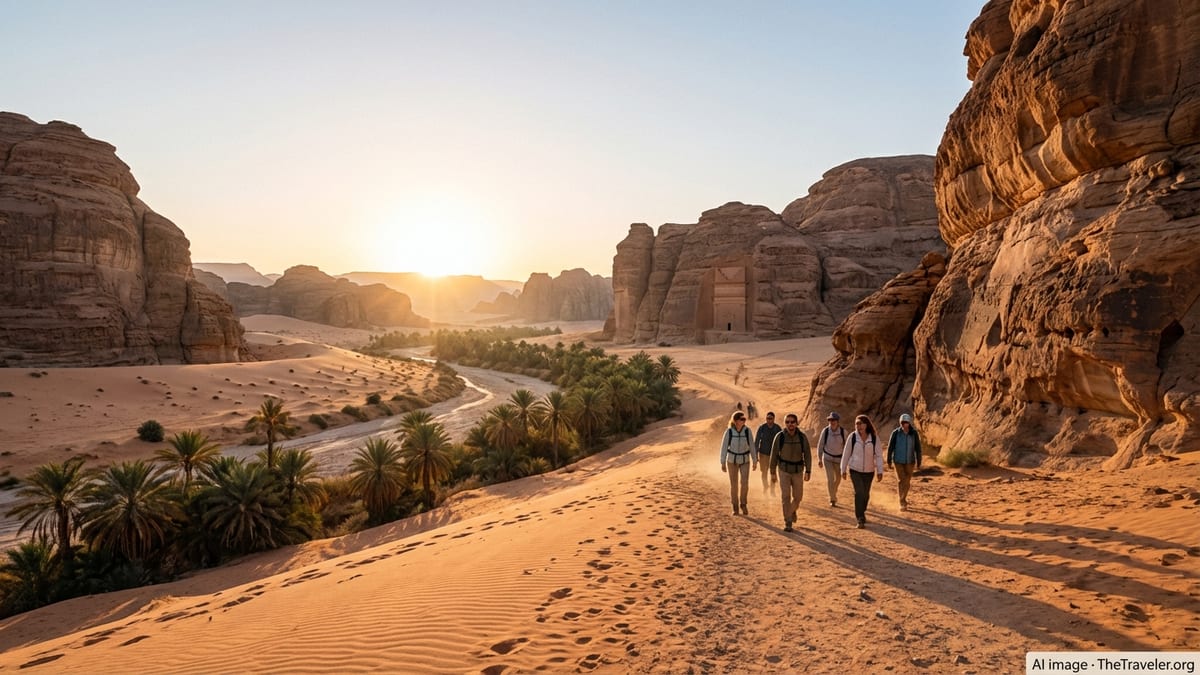
Explore AlUla and the Nabataean Tombs of Hegra
If there is one place that encapsulates Saudi Arabia’s blend of deep history and carefully managed tourism, it is AlUla. Set among sandstone canyons and date-palm oases in the northwest, this region has become the country’s flagship heritage destination, anchored by the UNESCO World Heritage Site of Hegra. Here, dozens of monumental rock-cut tombs carved by the Nabataeans, the same civilization behind Petra in Jordan, emerge from the desert in honey-colored stone.
Visiting Hegra remains a controlled and guided experience, with access limited to official tours that help protect the fragile archaeology. Expect to ride between key clusters of tombs by air-conditioned vehicle, step out for short guided walks, and hear context about the inscriptions and carving techniques. Sunrise and late afternoon are particularly atmospheric, when low light sharpens the tomb facades and the surrounding desert cools.
Beyond Hegra, AlUla has curated hiking trails, art installations integrated into the landscape, and restored old-town mudbrick alleys that now house cafés and galleries. Seasonal festivals bring large-scale art and music events, but the region is just as rewarding on quieter days. For a bucket-list stay, consider one of the low-rise desert resorts scattered among the rocks, which are designed to keep light pollution low so that the night sky remains dazzling.
Because AlUla is a protected cultural and natural landscape, visitor numbers and access routes can evolve. It is wise to confirm current entry procedures and any seasonal closures before you travel, especially around major events that can affect availability.
Walk Through Time in Riyadh and Historic Diriyah
Riyadh, the capital, has long been known more for business than leisure, but it is now a key stop on any Saudi bucket list. The skyline of glass towers and expanding metro lines sits beside older districts where courtyard houses and traditional markets still shape daily life. For first-time visitors, the contrast between modern malls and historic mudbrick fortresses provides a useful introduction to the country’s recent transformation.
West of central Riyadh, the restored mudbrick district of At-Turaif in Diriyah, a UNESCO World Heritage Site, tells the story of the first Saudi state. The narrow lanes, palaces, and defensive walls have been stabilized and carefully lit, and a wider redevelopment has added pedestrian promenades, museums, and dining areas along the palm-fringed Wadi Hanifah. The site offers an accessible way to understand Najdi architecture, characterized by thick earthen walls, geometric parapets, and small windows that once kept out summer heat.
Back in Riyadh proper, the National Museum and nearby Murabba Palace complex remain anchors for anyone seeking context on Arabian archaeology, Islam’s early centuries, and the unification of the kingdom in the 20th century. Around them, new cultural venues, creative districts, and seasonal festivals are steadily expanding. Riyadh has also been recognized in recent years for its design sector, mirroring a broader push to frame the capital as a creative city and not just a political one.
Plan at least two or three days to see both the historical core and newer lifestyle districts. Traffic and distances can surprise first-timers, so grouping visits by area and using licensed taxis or ride-hailing services will make your time more efficient.
Experience the Spiritual Energy of Makkah and Madinah
For many travelers, Saudi Arabia’s ultimate bucket-list experiences are the pilgrimages to Makkah and Madinah, Islam’s two holiest cities. Access to Makkah remains strictly limited to Muslims, and anything involving the Grand Mosque and the Kaaba must be planned with great care, especially during Hajj season when numbers surge dramatically. Outside of Hajj, many Muslims now use the more flexible e-visa and integrated digital platforms to perform the smaller Umrah pilgrimage at other times of year, when crowd levels may be more manageable.
Madinah, home to the Prophet’s Mosque, is also primarily a religious destination, but it has increasingly emphasized its wider cultural and culinary heritage. The city has received international recognition for its gastronomy, and recent urban development projects near the mosque area aim to accommodate larger numbers of pilgrims while preserving key historical zones. For visitors who qualify, staying within walking distance of the Prophet’s Mosque can turn each day into a rhythm of prayers, communal meals, and quiet time in shaded courtyards.
Even for non-Muslims, understanding the centrality of these cities is essential to grasping Saudi Arabia’s identity. While non-Muslims cannot enter Makkah, information centers, museums elsewhere in the country, and explanatory exhibitions in Riyadh and Jeddah offer historical and cultural background on the pilgrimage routes, rituals, and architecture. Respectful awareness of these sensitivities, including dress codes and restricted zones, is crucial when planning any wider itinerary that passes through the western region.
Pilgrimage regulations, quotas, and booking platforms can change as authorities adjust systems to manage demand. If your Saudi trip centers on Hajj or Umrah, rely on current official guidance and authorized agencies, and build flexibility into your schedule in case of last-minute adjustments.
Discover Jeddah’s Corniche, Historic Al Balad, and the Red Sea Coast
On the Red Sea, Jeddah serves as both a gateway to the holy cities and a characterful destination in its own right. Its historic quarter, Al Balad, is one of the most atmospheric urban areas in the kingdom, with coral-stone townhouses fronted by wooden latticed balconies, restored merchant homes, and art-filled alleyways. Ongoing conservation work has turned many old buildings into museums, cultural centers, and cafés, bringing day and night life back to streets that had fallen quiet in previous decades.
Along the waterfront, the Jeddah Corniche has transformed into a long, landscaped promenade where families stroll, joggers follow marked paths, and contemporary sculptures punctuate the shoreline. Public art, beach clubs in certain zones, and an increasingly varied dining scene contribute to a cosmopolitan mood that differs from the more conservative interior cities. The Red Sea International Film Festival, held annually in Jeddah’s historic center, has also helped position the city as a regional hub for cinema and the creative industries.
Jeddah is the natural jumping-off point for many Red Sea activities, from scuba diving on coral reefs to island-hopping and fishing trips. While the infrastructure for independent travelers is still developing, a growing number of licensed operators offer day and overnight excursions. Water temperatures are generally warm year-round, but visibility and sea conditions vary seasonally, so it is wise to confirm the best times of year for diving or snorkeling with local experts.
Because Jeddah plays multiple roles as a port, pilgrimage gateway, and leisure city, accommodation ranges from simple transit hotels to high-end seafront resorts. Booking well ahead for peak pilgrimage periods is essential, and even outside those windows, festival dates and major events can tighten availability quickly.
Unwind in the Red Sea Islands and New Coastal Resorts
Saudi Arabia’s west coast is the focus of some of its most ambitious tourism developments, marketed as regenerative destinations that limit visitor numbers and emphasize conservation. The Red Sea project, overseen by a state-backed developer, spans thousands of square kilometers and dozens of islands and aims to balance low-density luxury with renewable energy, habitat restoration, and a strict cap on annual guests. A small but growing cluster of resorts has begun welcoming visitors, while more islands and coastal enclaves are scheduled to open in phases through the late 2020s.
Expect overwater villas, beachfront suites, and desert-meets-sea landscapes where mangroves, coral reefs, and mountain backdrops share the horizon. Access is typically via Red Sea International Airport or private transfers from regional hubs, and stays are usually structured packages rather than casual drop-ins. Pricing mirrors high-end resort standards, and availability may initially be limited as additional properties come online. For travelers who value privacy, marine life, and design-led accommodations, these islands are quickly becoming the kingdom’s most coveted addresses.
Beyond the flagship development, smaller-scale diving and beach destinations along the coast near towns such as Umluj and Al Wajh are also gaining attention. Sometimes dubbed the “Saudi Maldives” in promotional material, these areas offer boat trips to small islands, snorkeling over reefs, and long stretches of undeveloped shoreline. Facilities can be basic compared with established resort hubs elsewhere in the region, but part of the appeal lies in the relative lack of crowds and the sense of discovering a coastline in the early stages of its tourism story.
Most coastal projects are evolving quickly, with new hotels, marinas, and protected zones announced regularly. Before locking in a Red Sea segment of your itinerary, check which resorts and activities are fully open to the public versus still in soft-launch or pilot phases, and be prepared for some elements to shift as the master plans roll out.
Head Into the Desert: Edge of the World, Asir Highlands, and Hidden Villages
No Saudi Arabia bucket list is complete without time in its varied desert and mountain landscapes. Near Riyadh, the dramatic escarpments popularly known as the Edge of the World offer sweeping views over a flat, fossil-studded plain from the rim of a sheer cliff. Until recently, most visitors arrived via rough tracks with local drivers, but authorities have gradually increased regulation, closing some approaches and promoting guided excursions that improve safety and reduce environmental impact.
To the southwest, the Asir region challenges stereotypes of a uniformly arid country. Here, mountain ridges catch moisture from the Red Sea, supporting terrace agriculture, juniper forests, and hill towns that are cool in summer compared with the lowlands. The city of Abha is the main gateway, with cable cars linking to nearby peaks and villages, including restored heritage settlements that showcase the area’s distinctive stone and adobe tower houses painted with geometric motifs.
Further south and inland, heritage villages such as Rijal Almaa and others on Saudi Arabia’s tentative list for World Heritage recognition reveal centuries-old trade routes and local building styles. Narrow alleys, stepped facades, and intricately decorated interiors reflect both defensive needs and community life in a region that historically looked as much toward Yemen and the Horn of Africa as toward the central Arabian plateau.
Conditions in desert and mountain areas can be unpredictable, from seasonal fog and sudden storms in the highlands to extreme heat on lowland plains. Whenever you venture beyond major cities, prioritize guides or drivers who know current access rules, road conditions, and safety protocols, and confirm whether any permits are required for protected zones.
Glance at the Future in NEOM, Qiddiya, and Emerging Giga-Projects
Beyond its historical and natural highlights, Saudi Arabia is increasingly defined by its so-called giga-projects: vast, state-backed developments meant to reposition the kingdom as a global tourism and investment hub. NEOM, stretching along the Gulf of Aqaba and inland mountains, is perhaps the most famous. It bundles a series of planned destinations, from high-tech linear cities to wellness and adventure retreats woven into canyons and oases. While many components remain under construction and timelines have shifted, early hospitality offerings and pilot experiences are gradually emerging in select zones.
Southwest of Riyadh, Qiddiya City is envisioned as an entertainment and sports capital, with a major theme park, waterpark, and motorsport facilities. Construction has been ongoing for several years, and while opening dates for flagship attractions have been revised, the site signals the country’s intention to keep more leisure spending at home and draw regional visitors for large-scale events. For now, Qiddiya is more a glimpse of the near future than a fully functioning destination, but its progress is worth tracking if you plan a trip in the later 2020s.
Elsewhere, new waterfront districts, creative quarters, and cultural hubs are appearing in cities such as Jeddah, Riyadh, and Dammam. Development intensity varies, and not every announced project will open as initially described, but together they point to a long-term recalibration of how and where visitors will spend their time in Saudi Arabia. When planning a bucket-list trip, it is sensible to anchor your itinerary around already established highlights while leaving room to sample one or two emerging areas that interest you.
Because these giga-projects are closely tied to economic policy and long-range planning, their public-facing elements can change quickly. Base your expectations on what is currently operating rather than on ambitious renderings, and treat any early access as an evolving experience rather than a finished product.
Practical Essentials: Visas, Seasons, and Cultural Etiquette
Saudi Arabia’s shift toward international tourism has been underpinned by a much-simplified visa system. Many nationalities can now apply for a multiple-entry e-visa online, typically valid for up to a year with stays that total several weeks or months, and some travelers are eligible for visas on arrival. Processing times, fees, and eligibility lists can change as policies expand, so always check the latest information through official government platforms before booking flights. Pilgrimage-related visas follow separate rules and timelines, especially for Hajj.
Climate is another crucial factor in shaping your itinerary. Summers in much of the country are intensely hot, with daytime temperatures that can restrict outdoor sightseeing. In contrast, the cooler months from roughly November to March are generally more comfortable for exploring cities, deserts, and coastal areas. Mountain regions in the southwest can be pleasant in summer, offering an escape from the heat, but weather patterns are complex, so consider regional forecasts rather than assuming uniform conditions nationwide.
Cultural etiquette and dress codes are evolving but still grounded in conservative norms. Modest clothing that covers shoulders and knees is expected in most public spaces for all genders, and loose, breathable fabrics are not only respectful but also practical in the heat. Non-Muslim women are not generally required to wear an abaya in many urban settings, but carrying a light outer layer can be useful for entering more traditional areas or religiously sensitive zones where rules are stricter. Public displays of affection should be minimal, and photographing people, especially women and families, always requires explicit permission.
Saudi Arabia remains a country in transition, balancing rapid societal changes with longstanding religious and cultural frameworks. Alcohol is not available in normal hospitality venues, public behavior is governed by local law, and penalties for certain offenses can be much harsher than visitors are used to at home. Staying informed, traveling with reputable local partners when venturing off the beaten path, and maintaining a respectful curiosity will help ensure your bucket-list journey is both memorable and smooth.
The Takeaway
Saudi Arabia’s appeal lies in its contrasts. Nabataean tombs in silent deserts, coral reefs off empty islands, skyscraper-lined boulevards, and centuries-old pilgrimage routes all share the same map. The country is changing fast, with new resorts, museums, and cultural festivals appearing every year, yet much of its most powerful magic still comes from timeless landscapes and traditions that predate the modern state by millennia.
For travelers, this is both an opportunity and a responsibility. Visiting now means witnessing a pivotal chapter in the kingdom’s story, when historic sites are being reopened, coastal ecosystems are being rethought through the lens of regenerative tourism, and cities are experimenting with new forms of public life. At the same time, it calls for sensitivity to a complex social fabric and a willingness to adapt plans as projects evolve.
Build your Saudi Arabia bucket list around proven highlights like AlUla, Jeddah, the Asir Highlands, and the Red Sea islands, then layer in a taste of future-facing developments such as Qiddiya or emerging NEOM retreats. Allow time for detours into neighborhood markets, conversations over cardamom coffee, and unhurried evenings under wide desert skies. Done thoughtfully, a journey across Saudi Arabia can feel less like ticking off a checklist and more like stepping into a country in motion.
FAQ
Q1. Do I need a visa to visit Saudi Arabia for tourism?
Most travelers require a visa, and many nationalities are eligible for an online e-visa or, in some cases, visa on arrival. Requirements, fees, and eligible countries can change, so always verify current rules on official Saudi government platforms before you travel.
Q2. When is the best time of year to visit Saudi Arabia?
The most comfortable period for most destinations is roughly from November to March, when daytime temperatures are milder. Mountain regions in the southwest can be pleasant in summer, while lowland cities and deserts are often very hot from late spring through early autumn.
Q3. Is Saudi Arabia safe for tourists?
Major cities and key tourist regions are generally considered safe, with visible security and low levels of petty crime in many areas. As with any destination, travelers should follow local advice, stay aware of their surroundings, and keep up to date with guidance from both local authorities and their home country’s travel advisories.
Q4. Can non-Muslims visit Makkah and Madinah?
Access to the city of Makkah and its sacred precincts is restricted to Muslims only. Madinah is also a primarily religious destination, and non-Muslim visitors must respect clearly marked boundaries that designate areas reserved for pilgrims.
Q5. What should I wear in Saudi Arabia as a visitor?
Modest clothing that covers shoulders and knees is expected in most public places for all genders. Loose, breathable fabrics are advisable, and carrying a light outer layer helps when entering more traditional neighborhoods or religiously sensitive areas where expectations may be stricter.
Q6. Is alcohol available in Saudi Arabia?
Alcohol is banned in standard public settings, including hotels, restaurants, and bars, and bringing it into the country is prohibited. Visitors should plan on an alcohol-free stay and be aware that penalties for attempting to import or consume alcohol illegally can be severe.
Q7. How easy is it to get around Saudi Arabia without a car?
In major cities, ride-hailing apps and licensed taxis are widely used, and some urban rail and bus networks are expanding. For intercity travel, domestic flights connect main hubs efficiently. Reaching remote natural areas or smaller towns often requires private transport or organized tours.
Q8. Are the new Red Sea resorts fully open to the public?
Several Red Sea properties and experiences are operating, while others are in phased or soft-launch stages. Availability, access routes, and pricing can vary, so it is important to confirm which resorts are open to independent bookings and what activities are currently offered.
Q9. Can I combine a pilgrimage with general sightseeing in Saudi Arabia?
Many Muslim visitors now use flexible visa options to perform Umrah and then spend additional time in other parts of the country. Regulations, visa categories, and route options can change, so coordination with authorized agents and consultation of official guidance are recommended.
Q10. What languages are commonly spoken in Saudi Arabia’s tourist areas?
Arabic is the official language and dominates daily life, but English is widely used in hotels, airports, major restaurants, and by many guides. Learning a few basic Arabic greetings and phrases is appreciated and can make interactions more rewarding.