

Saudi Arabia has rapidly transformed from one of the world’s most closed destinations to a country actively courting tourists, business travelers, and pilgrims. The result is a fast-evolving entry regime that combines modern e-visas and transit schemes with strict documentation rules and on-the-ground regulations. Understanding the latest visa categories, passport requirements, and border controls is essential before you fly.
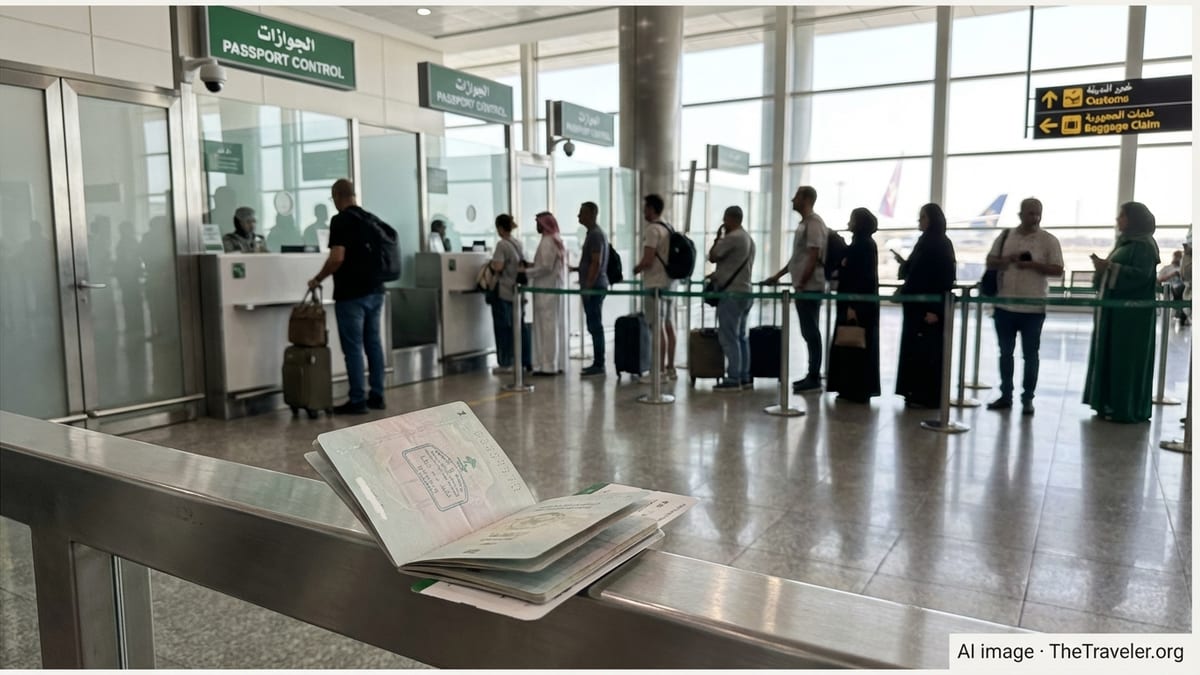
Overview of Saudi Arabia’s Entry System
Saudi Arabia’s entry rules are built around your purpose of travel: tourism, business, pilgrimage, work, residence, or short transit. In recent years the country has expanded its tourist e-visa program and relaxed some pilgrimage rules, while still maintaining tight controls on documentation, overstays, and behavior that conflicts with local law. Travelers should not assume that rules in neighboring Gulf states are identical; Saudi Arabia’s regulations are distinct and can change quickly.
Most short-stay visitors use either a tourist visa, an Umrah or Hajj pilgrimage visa, or a business visa. Many nationalities can now apply for a tourist e-visa online, while others must obtain a consular visa in advance. A growing number of travelers can also use a stopover or transit visa when connecting on a Saudi airline. Regardless of visa type, you will be required to present a valid passport, comply with customs and health rules, and respect local regulations once in the country.
Saudi authorities place particular emphasis on passport validity, insurance, and the declared purpose of your visit. At immigration, you can be asked to show proof of onward or return travel and accommodation, and in some cases evidence of sufficient funds. Border officers have broad discretion to refuse entry if documentation is incomplete or if your situation does not match the conditions of your visa.
The overall direction of policy has been toward greater openness to visitors, especially under the Vision 2030 program. However, enforcement of existing rules remains strict. Travelers are well advised to check official sources shortly before departure and to travel with printed copies of key documents, since you may be asked to show them more than once during your journey.
Visa Types: Tourist, Business, Pilgrimage, and Transit
For most visitors, the tourist visa is now the primary gateway to Saudi Arabia. Eligible nationalities can apply online for an electronic visa that is typically multiple entry and often valid for around one year, with each stay usually capped at about 90 days and a total annual stay limit. The tourist visa is designed for leisure travel, visiting family and friends, attending events, and performing Umrah outside the peak Hajj period. It does not allow paid work or long-term residence.
Business visas are aimed at travelers attending meetings, trade fairs, short-term training, or negotiations. These usually require an invitation letter from a Saudi company or institution and are often arranged through a consular process or a sponsoring entity in the Kingdom. While some business travelers may be eligible to enter on a tourist visa for conferences or exhibitions, you should always match the visa type to the main purpose of your trip to avoid problems at immigration.
Pilgrimage travel remains a special category. Hajj visas are tightly controlled, quota-based, and issued through approved tour operators for the annual pilgrimage season. Umrah travel, historically restricted to specific visa types, has become more flexible. Rules are evolving so that many standard visa categories, including tourist visas, can be used to perform Umrah, although dedicated Umrah visas still exist and are subject to dedicated conditions, validity periods, and booking requirements. Pilgrims must obtain permits through official digital platforms for certain rites and time periods.
Transit and stopover options have also expanded. Saudi Arabia has introduced transit visa schemes for travelers connecting through major airports on Saudi carriers. These short visas, often valid for a brief stay in the city of transit, allow passengers to leave the airport to explore for a limited period or to perform Umrah. Transit visa arrangements are closely tied to your airline ticket and must be obtained following the carrier’s or official platform’s instructions, usually before travel, even if your final destination is elsewhere.
Tourist e-Visas and Visa on Arrival
One of the most important changes in Saudi Arabia’s entry regime has been the introduction and gradual expansion of the tourist e-visa. Citizens of dozens of countries across Europe, North America, parts of Asia, and Oceania can now apply online through the official tourism portal. Successful applicants receive a digital visa which can be printed or stored on a mobile device and scanned at immigration alongside their passport. Processing is often fast, but applicants should allow several days in case of delays.
Typical tourist e-visas are multiple entry with a validity period of about a year from issuance and a maximum allowed stay of roughly 90 days per visit, subject to an overall annual cap. Health insurance is usually bundled into the visa fee. Applicants must be at least 18 to apply for themselves; younger travelers can be included in a parent or legal guardian’s application. The e-visa is intended for tourism, visiting family or friends, attending cultural or sporting events, and performing Umrah outside Hajj.
In addition to e-visas, certain travelers may qualify for a visa on arrival. This often includes citizens of eligible countries who hold valid visas or residence permits for the United States, the United Kingdom, or the Schengen Area, provided those visas have been used at least once to enter the issuing region. In practice, while visa on arrival can be a useful fallback, it may involve longer queues and greater scrutiny; applying for an e-visa in advance generally results in a smoother arrival experience.
Policies for who qualifies for e-visa and visa-on-arrival treatments are expanded in stages and may vary by nationality. Private agencies and airlines sometimes facilitate applications, but the underlying rules are set by Saudi authorities and can change without much notice. Travelers should rely on official government and tourism platforms for the current list of eligible nationalities and avoid assuming that rules for one country apply to another.
Passport Validity, Insurance, and Supporting Documents
Saudi Arabia applies strict passport validity rules. In most cases, your passport must be valid for at least six months from your planned date of entry. Some travelers from specific partner countries may benefit from limited exemptions, but as a general guideline you should not approach the six-month threshold. In addition, your passport must have enough blank pages for visas and entry stamps, and it should be in good physical condition; damaged or heavily worn documents can lead to problems at check-in or at the border.
Travel insurance is increasingly tied to entry requirements. Tourist visas typically include a mandatory health insurance component that covers basic medical costs during your stay. For other visa types, proof of insurance may be required or strongly recommended by airlines and tour operators. Even when not explicitly mandated, comprehensive coverage for medical care, emergency evacuation, and trip disruption is prudent, since treatment costs and logistical arrangements can be complex for foreigners.
At immigration, you may be asked to show proof of onward or return travel, hotel or other accommodation bookings, and evidence of sufficient funds to cover your stay. For some business and long-stay visa categories, you may also need to carry invitation letters, sponsorship documents, or employment contracts. Officials have the discretion to question you about your itinerary and may check that it aligns with the stated purpose of your visit and the type of visa you hold.
Families traveling with minors should be prepared for additional documentation, such as birth certificates, custody papers, or consent letters if one parent is absent. These requirements are partly aimed at preventing child abduction and may be enforced both by airlines at departure and immigration officers on arrival. Carrying originals or certified copies of key documents, along with simple translations into Arabic or English where applicable, can reduce the risk of delays.
Pilgrims: Hajj, Umrah, and Religious Travel Rules
Religious travel remains central to Saudi Arabia’s visa system. Hajj, the major annual pilgrimage, is governed by strict quotas and package rules. Most pilgrims must book through authorized agencies in their country of residence, which handle visa issuance, transport, accommodation, and internal logistics. Hajj visas are date-limited, cannot be used for regular tourism, and include conditions on arrival points, length of stay, and departure deadlines. Attempting to use a different visa type to perform Hajj is a serious violation and can result in fines, detention, or future bans.
Umrah, the minor pilgrimage that can be performed throughout much of the year, is more flexible. Saudi authorities have progressively opened Umrah access to holders of various visa types, including standard tourist visas and some transit visas, provided pilgrims register correctly. Dedicated Umrah visas still exist and are now subject to tighter validity windows and automatic cancellation if unused within a specified period. These changes are designed to improve crowd management and ensure that visa capacity aligns with real travel demand.
Regardless of visa type, prospective pilgrims must use official digital platforms and apps to book certain rituals, transport slots, and accommodations near the holy sites. These platforms help schedule visits to avoid overcrowding and allow the authorities to track capacity in real time. Travelers should ensure that the phone numbers and email addresses used for bookings will be accessible during their trip, as confirmations and permits are often delivered electronically.
Pilgrims should also be aware that health regulations can be more stringent during peak seasons. Depending on prevailing conditions, authorities may require or recommend specific vaccinations for meningitis and other communicable diseases, and they may introduce temporary rules related to respiratory illnesses. Regulations can change close to the season in response to global health developments, so it is important to consult healthcare providers and official advisories well before departure.
Transit, Stopovers, and Airline-Specific Programs
The growth of Saudi airlines as global connectors has led to new transit and stopover visa schemes that give travelers the option to turn a long layover into a brief visit. Under these programs, passengers holding confirmed onward tickets with participating airlines can obtain short-duration visas that permit them to leave the airport, stay in a hotel, and visit local attractions or even perform Umrah if they meet the related conditions. These visas are typically linked directly to flight bookings and must be requested through official channels before travel.
Transit visas usually allow a stay of a few days at most and are not interchangeable with longer tourist visas. They may have specific requirements such as travel only on designated airlines, valid tickets for onward travel to a third country, and fixed routing through certain airports. Immigration authorities will verify that your flight details match the transit visa, and deviations from your planned itinerary may cause complications.
Even if you plan to remain airside and not clear immigration, you should check whether you need any form of transit authorization to pass through a Saudi airport. Some nationalities can transit visa-free for a limited number of hours, while others require advance clearance even to remain within the international zone. Airline websites often provide guidance, but the final decision rests with Saudi border authorities, and the rules are subject to change.
Because transit and stopover schemes are relatively new, they are evolving quickly and may be promoted through airline marketing before all travelers fully understand the conditions. Before committing to a long layover or booking a multi-day stopover, confirm that your nationality, route, and timing qualify and that you can meet all documentation and insurance requirements for a brief stay in the Kingdom.
On-the-Ground Rules: Customs, Conduct, and Compliance
Crossing the border into Saudi Arabia involves more than having the correct visa sticker or approval email. Customs rules restrict the import of certain items, including some medications, publications, and electronic content that may be deemed offensive or contrary to local law. Travelers carrying prescription medicines should have them in original packaging with clear labels and, ideally, a copy of the prescription or a letter from a physician. Large quantities of cash or valuables may need to be declared, and failure to do so can lead to fines or confiscation.
Once inside the country, visitors are expected to respect local laws and cultural norms. Saudi Arabia has undergone rapid social change, with more visible tourism infrastructure and entertainment venues in major cities, but regulations on public conduct, dress in certain settings, and alcohol remain stricter than in many destinations. Possession or consumption of illegal drugs is punished severely, and some activities that might be minor offenses elsewhere can lead to detention or deportation.
Immigration officers or police can conduct identity checks, particularly in sensitive areas or near major events. Visitors should carry a copy of their passport and visa, or at minimum a clear digital copy, and be prepared to show details of their accommodation and travel plans. Long-term residents must carry their residence permits and obtain exit and reentry permits for travel abroad, but even short-stay visitors can be questioned if documentation is not readily available.
Overstaying a visa is treated seriously. Fines, detention, deportation, and bans on reentry are possible, and penalties may increase if the overstay is lengthy or repeated. Travelers should track the exact permitted stay shown in entry stamps or digital records rather than relying only on visa validity dates. If circumstances make it impossible to leave on time, you should work with your sponsor, airline, or local authorities well before your permission to stay expires.
The Takeaway
Saudi Arabia’s entry rules are more accessible than ever for tourists, business visitors, and pilgrims, but they remain detailed and tightly enforced. The expansion of e-visas, visa-on-arrival options, and transit schemes has opened the Kingdom to millions of new visitors, yet those same travelers must navigate nuanced regulations on passport validity, insurance, and behavior at the border.
Successful travel to Saudi Arabia starts with carefully matching your visa type to your purpose of visit, ensuring your passport and supporting documents meet all requirements, and staying alert to fast-changing policies, particularly around pilgrimage seasons and health regulations. Build in extra time to obtain the correct visa, keep digital and printed copies of key documents, and be ready to demonstrate your itinerary and means of support if questioned.
By treating the entry process as a core part of your trip planning rather than an afterthought, you can reduce the risk of last-minute surprises and focus on experiencing a country that is steadily opening its doors while maintaining firm control over its borders.
FAQ
Q1. Do I need a visa to visit Saudi Arabia as a tourist?
Most travelers do need a visa to enter Saudi Arabia, whether as a tourist, business visitor, or pilgrim. Many nationalities can now apply online for an electronic tourist visa, while others must obtain a consular visa in advance. A limited number of travelers may qualify for visa on arrival or transit visas tied to specific airlines and routes.
Q2. How long does my passport need to be valid for entry into Saudi Arabia?
In most cases, Saudi Arabia requires at least six months of passport validity from your planned date of entry. Even if limited exceptions exist for certain nationalities, it is safer to renew your passport before travel if you are approaching the six-month mark.
Q3. What is the difference between a tourist visa and an Umrah or Hajj visa?
A tourist visa is generally used for leisure travel, visiting friends and family, events, and performing Umrah outside the main Hajj season. Hajj visas are highly regulated, quota-based visas tied to specific pilgrimage packages and dates, and they cannot be used for regular tourism. Dedicated Umrah visas are focused on pilgrimage and have their own validity and booking rules, though many travelers can now perform Umrah on standard tourist visas under certain conditions.
Q4. Can I perform Umrah if I enter Saudi Arabia on a tourist visa?
In many cases, yes. Saudi regulations increasingly allow holders of valid tourist visas to perform Umrah, provided they obtain the necessary permits and bookings through official digital platforms. However, rules can change and may differ around peak seasons, so you should always check the latest guidance before traveling.
Q5. Are there any special entry rules for transit passengers?
Transit rules depend on your nationality, itinerary, and airline. Some travelers can obtain short stopover visas linked to their flight bookings, allowing them to leave the airport for a limited stay or to perform Umrah. Others may transit airside without a visa for a short period, while some nationalities require prior authorization even for airport transfers. Always confirm transit requirements before booking a connection through Saudi airports.
Q6. Do I need travel insurance to enter Saudi Arabia?
Tourist visas typically include a mandatory health insurance component as part of the visa fee, and other visa types may require proof of coverage. Even when not strictly required, comprehensive travel insurance for medical care, emergency evacuation, and trip disruption is strongly recommended due to the potential complexity and cost of emergencies abroad.
Q7. What documents might immigration officers ask to see on arrival?
In addition to your passport and visa, officers may request proof of onward or return travel, hotel or other accommodation bookings, evidence of sufficient funds, and, for business travelers, invitation letters or sponsorship documents. Families may also need to show birth certificates or consent letters for children when one parent is absent.
Q8. What happens if I overstay my Saudi visa?
Overstaying your permitted stay can result in fines, detention, deportation, and bans on future entry. Penalties often increase with the length of the overstay. You should pay close attention to the duration of stay granted on arrival and seek help from your sponsor, airline, or local authorities well before your permission expires if you cannot depart on time.
Q9. Are there restrictions on what I can bring into Saudi Arabia?
Yes. Certain items are restricted or prohibited, including some medications, publications, and content deemed offensive or contrary to local law. Travelers should carry prescription medicines in original packaging with copies of prescriptions and be prepared to declare large amounts of cash or valuables. Violating customs rules can lead to confiscation, fines, or more serious consequences.
Q10. How often do Saudi Arabia’s entry requirements change, and how can I stay updated?
Saudi entry policies, especially around tourism and pilgrimage, have been evolving quickly. Visa eligibility lists, pilgrimage rules, health requirements, and transit schemes are periodically updated. To stay current, check official Saudi government and tourism platforms, as well as your airline and reputable travel advisories, shortly before you travel.