

More news on this day
Saudi Arabia has introduced a significant package of visa relief measures allowing many stranded visitors to leave the country without overstay fines until April 18, in a move widely seen as an attempt to ease mounting travel disruption caused by the broader regional crisis.
Get the latest news straight to your inbox!
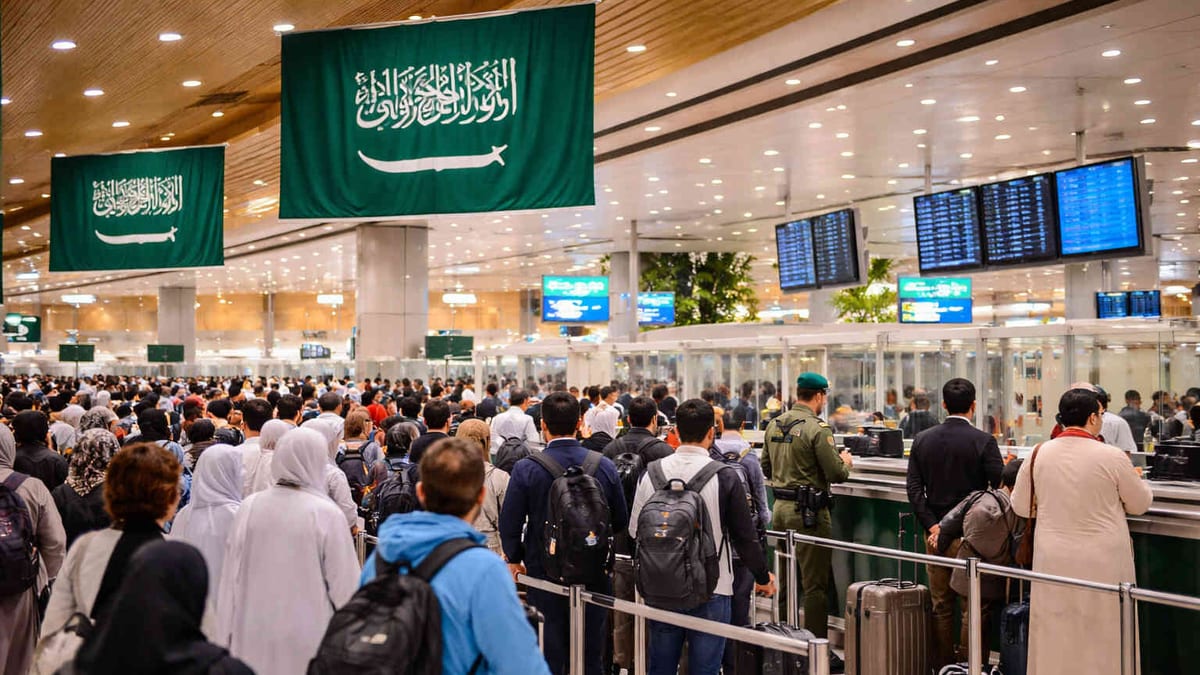
Image by Travel And Tour World
Fine-Free Exit Window Offers Critical Breathing Space
Publicly available information from Saudi government advisories and regional travel coverage indicates that foreign visitors whose visas have lapsed or are close to expiring are being granted an exceptional grace period to regularize their status by departing the kingdom by April 18. The measures appear to apply primarily to short-stay visit and Umrah visa holders caught by sudden flight cancellations, airspace closures, and rerouted connections across the Middle East.
In normal circumstances, travelers who overstay a Saudi visit visa can face daily penalties and potential long-term entry bans. Recent guidance referenced in regional legal and tax alerts notes that fines of around 100 riyals per day are commonly imposed on overstays, with stricter consequences for prolonged violations. The new grace window effectively pauses those punitive rules for a defined category of stranded travelers, provided they exit within the stated deadline.
The move comes as airlines rework schedules around airspace closures and security-related restrictions linked to the ongoing Iran conflict, which has disrupted key Gulf and Levant corridors. Travel industry reports describe a patchwork of emergency routes that increasingly rely on Saudi Arabia as a connecting or diversion point, heightening the risk that visitors find themselves stuck in transit with visas that no longer match their actual length of stay.
By suspending overstay penalties for exits completed before April 18, the kingdom is providing a narrow but vital safety valve for those whose original return options disappeared overnight. For many travelers, the policy means the difference between a difficult journey home and a long-term immigration record that could complicate future trips across the region.
Who Benefits From the New Saudi Visa Measures
Early analysis of the policy suggests it is designed for travelers physically present in Saudi Arabia whose visit or Umrah visas have expired or are about to expire while they are unable to depart normally. Reports from travel advisers and expatriate forums indicate that eligible travelers are being encouraged to leave at the earliest practical opportunity rather than wait until mid-April, given the volatility of flight schedules.
Umrah visitors appear to be a particular focus. Previous seasons have seen strict exit deadlines for pilgrims, often requiring departure before specific April cutoffs. This year, however, the regional air transport crisis has made compliance significantly harder, especially for travelers relying on connecting itineraries via Gulf hubs now facing reduced capacity or temporary suspensions. The fine-free exit option through April 18 effectively converts a rigid departure rule into a managed transition period.
Short-term tourist and family visit visa holders may also fall within the relief framework, especially those whose maximum stay limits coincide with the current disruption. While the detailed eligibility criteria have not been publicly translated in full, immigration consultants tracking the announcements note that the emphasis is on visitors who can show they were unable to depart on time due to canceled or rerouted flights rather than personal choice.
Long-term residents with work or dependent permits, by contrast, remain bound by existing exit and reentry rules, which already contain separate mechanisms for extension via sponsors. The current relief is narrowly framed around those who entered on short-stay permissions and have limited institutional support in navigating abrupt travel changes.
Regional Crisis Drives Unprecedented Flexibility
The Saudi decision is unfolding against a backdrop of wider travel turmoil across the Middle East. Coverage by international travel media describes cascading disruptions stemming from the Iran war, with several airlines suspending or reducing operations on key routes and rerouting aircraft around sensitive airspace. Some carriers have introduced special repatriation flights or temporary change-fee waivers to cope with the sudden dislocation of passengers.
Saudi Arabia’s role as both a destination and a critical overflight corridor has amplified the local impact. As neighboring hubs adjust operations, more traffic has been funneled through Saudi airports, often at short notice. This has increased the number of travelers entering on short-stay visas who then face onward flight cancellations, leaving them unexpectedly on Saudi soil for longer than their paperwork allows.
Comparative policy tracking by international consultancy firms suggests that while a number of states have adopted flexible rebooking or limited amnesty measures in response to the crisis, Saudi Arabia’s defined fine-free exit window stands out for its clarity and direct linkage to immigration penalties. By setting a concrete date and highlighting the waiver of overstay fines, the kingdom has provided a framework that is relatively easy for travelers, airlines, and consular staff to communicate.
The approach also aligns with Saudi Arabia’s broader effort to position itself as a major tourism and transit hub. Over the past several years, the country has expanded its e-visa offerings, opened up to new source markets, and promoted large-scale leisure developments. Ensuring that visitors affected by events beyond their control can leave without long-term immigration consequences helps protect that emerging reputation during a period of exceptional strain.
What Stranded Travelers Should Do Before April 18
For travelers currently in Saudi Arabia, the new policy creates both an opportunity and an urgent timetable. Travel advisories and expert commentary stress the importance of confirming individual visa details through official digital platforms and, where relevant, coordinating with airlines to secure the earliest available departure. With flight capacity fluctuating from week to week, relying on last-minute availability close to April 18 is widely viewed as risky.
Travel planners recommend that affected visitors gather documentation showing disrupted itineraries, such as canceled ticket confirmations or airline rebooking messages, in case additional clarification is requested at departure points. While the relief period is intended to simplify exit procedures, having clear evidence of the circumstances that led to an extended stay can help resolve any questions at border control.
Prospective visitors who have not yet entered Saudi Arabia are being advised by many travel agencies to review the latest regional advisories and consider flexible booking options. Some insurance providers have clarified that standard policies may not cover all disruption linked to war-related events, making it especially important to understand cancellation and change terms on air tickets, hotels, and tours before committing to new trips.
For those already inside the kingdom, however, the key message emerging from publicly available guidance is straightforward: use the fine-free corridor while it is open. Departing before or on April 18 allows stranded visitors to close their current stay cleanly, preserving their ability to return to Saudi Arabia in future seasons once the regional situation stabilizes.
Implications for Future Travel to the Kingdom
The decision to extend a visa grace period until April 18 may also shape how Saudi Arabia responds to future shocks affecting international mobility. Analysts who track Gulf migration and tourism policy note that emergency visa adjustments were deployed during the COVID-19 pandemic, and the current measures reflect a similar willingness to recalibrate rules when large numbers of visitors are affected by events beyond their control.
By explicitly linking the temporary amnesty to a fast-moving regional crisis, Saudi authorities are signaling that the kingdom expects to remain open to international tourism even in turbulent periods, while retaining the flexibility to make short-term immigration adjustments. For airlines and tour operators, this introduces an additional tool that can be factored into contingency planning for high season travel, particularly around pilgrimage periods when visitor volumes peak.
For travelers, the episode underscores the importance of tracking not only entry rules but also exit and overstay procedures when visiting the kingdom. The April 18 deadline offers reassurance that those currently stranded can leave without fines, yet it also highlights how quickly circumstances can change when geopolitical tensions intersect with tightly regulated visa regimes.
As the regional crisis continues to reshape air routes and traveler behavior, Saudi Arabia’s decision to prioritize a structured, fine-free exit path for stranded visitors is likely to be closely watched by other countries facing similar pressures. Whether it becomes a template for future emergency visa responses will depend on how effectively it helps both visitors and the kingdom navigate the weeks ahead.