

More news on this day
Saudi Arabia has joined Qatar and Kuwait in temporarily extending key visa validity and overstay grace periods, providing crucial breathing space for travelers and foreign residents stranded by ongoing airspace closures and security disruptions across the Gulf.
Get the latest news straight to your inbox!
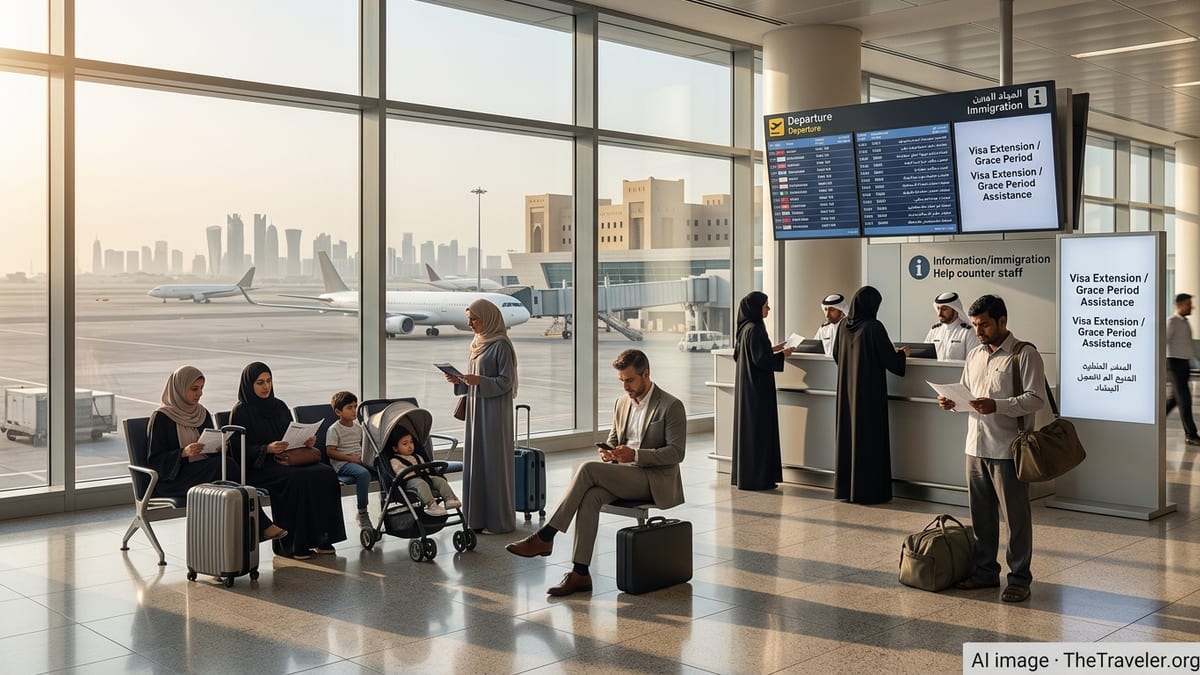
Coordinated Visa Relief Across the Gulf
Publicly available information indicates that authorities across the Gulf are softening visa rules in response to weeks of severe aviation disruption linked to the wider regional conflict. Airspace closures, missile interceptions and isolated attacks on aviation infrastructure have triggered repeated flight cancellations, leaving many visitors and foreign residents unable to depart or return before their permits expire.
Qatar has introduced an automatic one month extension for a wide range of entry visas for travelers already inside the country, according to recent government circulars and law firm briefings. The measure, which took effect toward the end of February, has been framed as a short term response to the suspension and rerouting of flights serving Doha and other regional hubs.
In Kuwait, local press and official bulletins describe a similar move to extend visit visas and relax absence rules for residents stuck abroad. Reports highlight a three month grace window for residents who could not re enter before the usual six month cut off, along with an automatic one month prolongation for certain visit visas issued before the latest disruptions.
Saudi Arabia is now mirrored in this pattern, with updated guidance indicating longer grace periods for some categories of overstays and additional flexibility for tourists and Umrah visitors affected by cancelled connections. While the measures vary by visa type, regional observers view them collectively as an emergency safety valve rather than a lasting shift in migration policy.
What Has Changed for Visitors to Saudi Arabia
For travelers currently in Saudi Arabia, the most significant change is the extension of grace periods around visa expiry and departure. Public notices and travel industry summaries suggest that visitors whose visas expired during the peak of flight disruptions are being granted additional time to exit without incurring the usual overstay fines, provided they depart as soon as reasonably possible once flights resume.
Short term e visa and visa on arrival holders appear to benefit most directly, particularly those who entered for tourism, business visits or religious travel and then found themselves unable to leave due to grounded flights or closed transit hubs. In a limited number of cases, reports indicate that exit procedures at airports have been streamlined for such travelers, with systems reflecting the temporary waivers.
There are also indications of more flexibility for residents and workers whose exit re entry permits or residency cards lapsed while they were stuck outside the country. In these cases, Saudi policy typically requires new sponsorship or formal reactivation, but current guidance points to a more generous interpretation for individuals who can document that their return was blocked by cancelled routes or closed airspace.
Despite this easing, the changes are narrowly framed and time bound. There is no indication that Saudi Arabia is introducing open ended amnesties or broad regularization programs. Travelers remain responsible for monitoring the specific expiry dates attached to their documents and any updated notices that may shorten or end the temporary relief.
How Qatar and Kuwait Are Handling Stranded Travelers
Qatar’s approach has centered on automatic extensions applied in the background to eligible visas, without requiring in person visits to immigration offices. Law firm alerts and regional news coverage describe a system level one month extension for many tourist and Hayya style entry permits issued before late February, as long as the holder remains inside the country. This has been particularly important for visitors who could not easily exit via alternative hubs.
Travel discussion forums and local reporting in Kuwait point to a broader mix of measures. These include a three month extension of the permissible absence period for residents overseas, intended to prevent automatic cancellation of their residency if they exceeded the six month limit while flights were disrupted. In addition, those already inside Kuwait on visit visas have widely reported a one month automatic extension applied to stays that would otherwise have expired in March.
For both Qatar and Kuwait, the steps appear calibrated to prevent large numbers of otherwise compliant visitors and residents from falling into violation status solely because of events beyond their control. However, the rules are not uniform. Some categories, such as older visitors or certain sponsorship types, may still face stricter conditions or require formal applications for any extension.
Airlines operating in and out of these markets have published their own change and refund policies, which intersect with the visa rules but do not replace them. Travelers who rebook through alternative routes or neighboring countries, including Saudi Arabia, may find that their immigration status in the original destination remains subject to the new temporary deadlines.
Key Deadlines, Grace Periods and Penalties
Despite the emergency relief, travelers face real financial and legal risks if they misread the new timelines. Overstay fines in Gulf countries are typically calculated on a daily basis and can accumulate quickly, often reaching hundreds of dollars or the equivalent in local currency for even a modest delay in departure.
In Saudi Arabia, published guidance emphasizes that extended grace periods only apply within specific windows linked to the disruption period. Once regular flight schedules stabilize and new cut off dates are announced, any continued overstay can again trigger standard penalties. Those who ignore updated deadlines may also face entry bans for future trips or complications when applying for work or residency visas later on.
Qatar’s automatic one month extension has been framed as a one time measure rather than a rolling benefit. Travelers who remained in the country beyond the newly adjusted expiry date could still be liable for overstay fees, and anecdotal accounts suggest that immigration systems are enforcing those revised dates strictly. Visitors who assume that future extensions will be granted automatically may be caught off guard.
In Kuwait, the extended absence allowance for residents outside the country reduces the risk of losing residency, but it does not freeze other obligations such as work contracts or sponsorship requirements. Individuals whose permits or employment arrangements lapse during the extended window may still need to regularize their position before they can re enter or resume work, and overstaying a visit visa beyond the temporary cushion remains subject to fines.
Practical Steps Travelers Should Take Now
Public guidance from Gulf governments and regional carriers points to a few practical steps for minimizing risk. First, travelers are encouraged to verify the precise expiry date now shown in the electronic systems associated with their visa or residency, rather than relying on the original stamp in their passport. In several countries, the effective validity has been updated digitally without any new physical endorsement.
Second, anyone whose visa has already expired or is within days of expiring is advised, where possible, to secure the earliest feasible departure even if an extended grace period technically applies. Airlines are gradually rebuilding schedules, but seats on outbound flights from major hubs remain limited and relatively expensive, raising the possibility that travelers who wait may not find convenient options before their new deadlines.
Third, travelers who need to re enter Saudi Arabia, Qatar or Kuwait after being stranded abroad should consult the latest public information on transit rules, residency validity and any special corridors through neighboring states. Reports indicate that some carriers have arranged temporary routings through Saudi airports for passengers originally booked to or from Kuwait and Qatar, which may affect where entry and exit stamps are issued.
Finally, experts in the region stress that the current visa relief measures are exceptional and closely tied to the present crisis. While they provide short term protection from immediate penalties, they do not guarantee long term flexibility. Travelers who treat the extensions as an opportunity to reset or ignore existing immigration limits may find that enforcement tightens quickly once the aviation network returns to a more stable footing.