

More news on this day
Travelers stranded across the Gulf by airspace closures and airport disruptions are receiving crucial visa relief, as Saudi Arabia joins Qatar and Kuwait in extending deadlines and relaxing penalties for visitors whose permitted stays are expiring mid-crisis.
Get the latest news straight to your inbox!
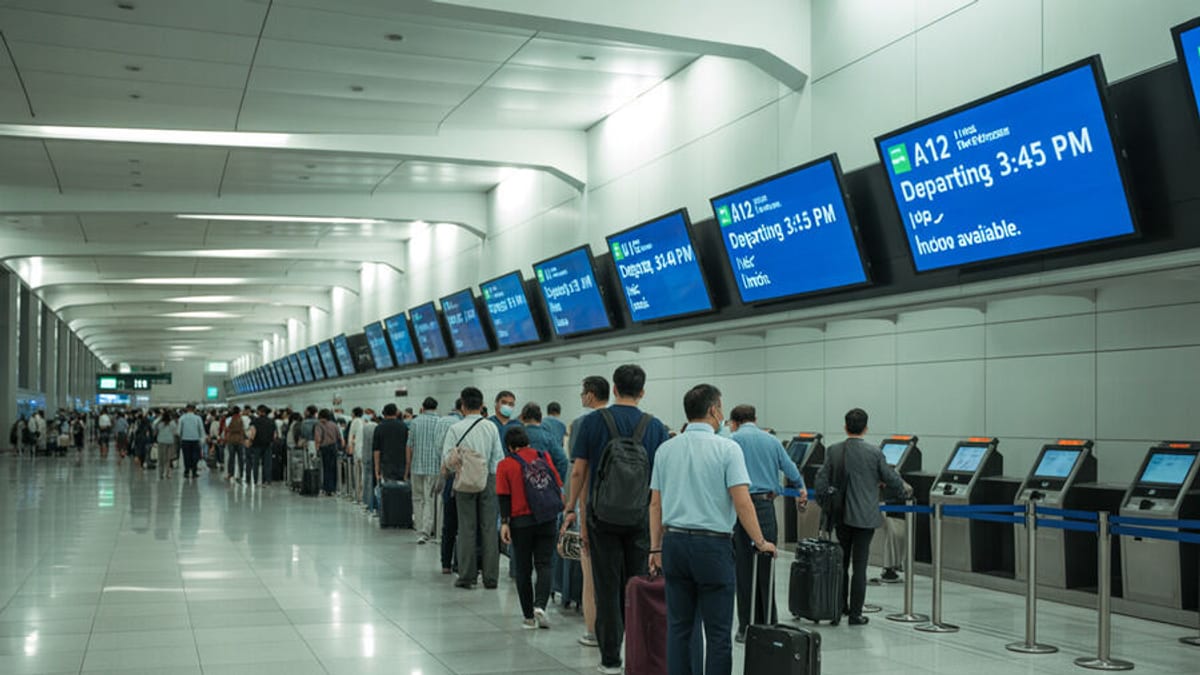
Image by Travel and Tour World – Tourism, Airline, Destination, MICE, Gobal Travel Market, Hotel news that you will find only over here.
Coordinated Gulf Response to an Escalating Regional Crisis
The latest visa steps from Saudi Arabia follow earlier measures in Qatar and Kuwait, forming a patchwork of relief across the Gulf Cooperation Council as the conflict involving Iran, Israel and regional allies continues to disrupt aviation. Airspace closures, cancelled flights and damage or security scares at major hubs have left passengers stuck in transit cities with little warning and limited onward options.
Publicly available travel advisories and media coverage describe a sharp spike in cancellations and diversions from late February 2026 onward, particularly through Doha and Kuwait City, and increasingly through Saudi hubs as airlines reroute via Jeddah, Riyadh and Dammam. In many cases, travelers arrived on short-stay visit visas that were never intended to cover week-long or open-ended delays.
Officials across the region have been under pressure to clarify whether stranded foreigners would face fines or immigration violations if their visas expired before they could secure a way out. Recent policy moves in Qatar, Kuwait and now Saudi Arabia indicate a shared attempt to prevent large-scale overstays from being treated as deliberate infractions when they are directly tied to the regional emergency.
The emerging Gulf approach mirrors ad hoc relief adopted by other countries outside the region, such as Sri Lanka and India, which have also issued temporary visa extensions and fee waivers for travelers trapped by Middle East flight cancellations. Together, these measures reflect how profoundly the conflict has disrupted global mobility, not just regional point-to-point travel.
Qatar’s Automatic One-Month Visa Extension Sets the Template
Qatar was among the first Gulf states to formally address the visa status of stranded visitors after its airspace was closed and commercial operations at Doha’s Hamad International Airport were heavily curtailed. Government notices and specialist immigration briefings indicate that, as of 28 February 2026, all categories of entry visas that had expired or were due to expire inside Qatar were granted an automatic one-month extension.
This automatic extension covers short-stay tourists, business visitors and many other temporary entrants who found themselves unable to depart. Reports emphasize that the process is electronic, with no requirement for in-person applications or additional fees, which has been critical for travelers juggling rebookings, accommodation and safety concerns.
Qatar Tourism separately announced continued hotel support for some stranded travelers, extending a temporary accommodation program into mid-March for visitors whose stays were disrupted by the crisis. Coverage in regional business media highlights that this scheme has been targeted mainly at passengers whose itineraries were routed through Doha and who had no immediate way to return home or continue their journeys.
However, not all visitors qualify for subsidized accommodation or additional assistance beyond the visa extension. Travelers staying in Doha during the crisis have reported that eligibility criteria can vary by hotel and booking channel, reinforcing the importance of confirming details directly with accommodation providers and airlines even when government-led support has been publicized.
Kuwait Offers Extra Time as Airport Operations Are Hit
In Kuwait, aviation and security incidents at Kuwait International Airport have produced their own set of complications for travelers. Media reports from late March describe a drone attack that triggered a fire near airport fuel facilities, prompting further cancellations and an extended period of reduced commercial operations. Combined with earlier disruptions linked to the broader regional conflict, these events have stranded both residents and visitors inside and outside the country.
Public discussion of Kuwait’s response references a temporary relaxation of residency and re-entry rules, including additional time for foreign residents who were unable to return before standard six-month cutoffs. Travelers and expatriates have circulated accounts of a three-month grace period being applied to those stuck abroad by flight unavailability, a significant buffer in a system that normally applies strict timelines.
Within Kuwait itself, short-stay visitors whose visas were expiring while outbound flights were cancelled have also benefitted from greater tolerance around deadlines, according to regional immigration commentators. While these changes are not framed as a blanket amnesty, the emerging pattern suggests an intent to avoid penalizing travelers who can document that their inability to leave was directly caused by airport closures or cancellations beyond their control.
As with Qatar, the situation in Kuwait remains fluid, with the precise scope and duration of extensions likely to evolve in step with airport security assessments and airline schedules. Travelers are being encouraged in public advisories to retain all evidence of cancelled flights and to monitor official channels for updates on both immigration rules and airport reopening timelines.
Saudi Arabia Moves to Protect Stranded Visitors and Transit Passengers
Saudi Arabia, which has seen its own airports and land borders absorb diverted traffic and overland evacuees from Qatar and Kuwait, is now adopting targeted visa relief measures of its own. While the country has not closed its airspace to the same degree as some neighbors, reduced frequencies, regional detours and the influx of travelers seeking alternative routes have all combined to increase the number of foreign visitors staying longer than planned.
Recent travel-advisory summaries and regional news coverage indicate that Saudi authorities have introduced deadline extensions and fee relief for certain categories of visit visa holders whose authorized stays expired after the onset of the crisis. These measures reportedly focus on travelers whose exit plans were derailed by cancelled flights, closed transit hubs or suspended cross-border services, reflecting patterns seen in Qatar and Kuwait.
Publicly available information also points to a more accommodating stance on entry for people using Saudi Arabia as a land or air corridor to reach other, still-operational hubs in the region. Anecdotal accounts from passengers describe transit visas and short-term visit permissions being granted or expanded to allow onward travel when direct routes via Doha or Kuwait City were no longer viable.
Although specifics continue to shift as the security and aviation picture changes, Saudi Arabia’s moves align it more closely with its Gulf neighbors in seeking to avoid mass technical overstays. For travelers caught in the middle of reroutings between Qatar, Kuwait and Saudi Arabia, the coordinated visa relaxations reduce the risk that a forced layover will inadvertently turn into an immigration violation.
Key Steps Travelers Must Take Now to Avoid Penalties
Despite these emergency measures, stranded travelers cannot rely on automatic protections alone. Immigration rules in Saudi Arabia, Qatar and Kuwait remain complex, and recent extensions are tied closely to the dates and causes of disruption. Public guidance from consular services and legal practitioners stresses that visitors should treat visa management as a priority, even while focusing on securing flights and accommodation.
First, travelers are advised to confirm whether an automatic extension applies to their specific visa type and location. In Qatar, the one-month blanket extension from 28 February has been widely publicized, but some specialized permits and residency categories may require separate action. In Kuwait and Saudi Arabia, relief often depends on proof that travel was directly impacted by airport or airspace disruption, making airline notices and booking records essential.
Second, visitors should keep meticulous documentation. Boarding passes, cancellation emails, screenshots from airline apps and any written guidance from carriers or tour operators can help demonstrate that an overstay was unavoidable. Public reports from recent crises show that immigration officials and consular staff frequently request such evidence when assessing fines, exit permissions or future visa eligibility.
Third, travelers need to monitor official government announcements frequently rather than relying solely on social media or word of mouth. Policies are being updated with little notice, and some relief measures, including hotel support schemes or special grace periods, have defined end dates. Missing those windows could mean the difference between departing cleanly and facing penalties on exit.
Looking Ahead: How Today’s Relief May Shape Future Gulf Travel
The coordinated visa leniency emerging in Saudi Arabia, Qatar and Kuwait comes as the wider Gulf region prepares for deeper integration of travel regimes, including the planned launch of a single GCC tourist visa. While that project predates the current conflict, the experience of managing hundreds of thousands of stranded passengers may influence how future shared rules handle emergencies and unexpected border closures.
Observers note that this crisis has underscored the importance of flexible, technology-driven visa management systems that can apply automatic extensions, waive penalties and update eligibility criteria in response to fast-moving events. Qatar’s electronic approach to extending entry visas, Kuwait’s evolving residency grace periods and Saudi Arabia’s adjustments for diverted transit passengers all point toward a more adaptive model.
For travelers, the immediate takeaway is that Gulf states are increasingly willing to shield bona fide visitors from the harshest legal consequences of disruptions they did not cause. Yet the onus remains on individuals to stay informed, keep records and understand that emergency measures are temporary. As air corridors gradually reopen and airlines restore schedules, visa rules are likely to tighten again, and leniency linked to the crisis may be withdrawn with limited notice.
In the meantime, anyone currently navigating the region should assume that immigration status matters just as much as flight availability. With Saudi Arabia now broadly aligned with Qatar and Kuwait in extending visa deadlines, those stranded by the conflict have more room to maneuver, but they still need to use that time carefully to avoid penalties that could affect future travel across the Gulf and beyond.