

More news on this day
Air travel across Saudi Arabia is facing renewed disruption as more than 60 flights are cancelled on routes involving Jeddah, Riyadh, Dammam, Medina, Abha and multiple international destinations, with major carriers including Saudia, Gulf Air, Air India and KLM adjusting schedules amid ongoing regional instability and operational challenges.
Get the latest news straight to your inbox!
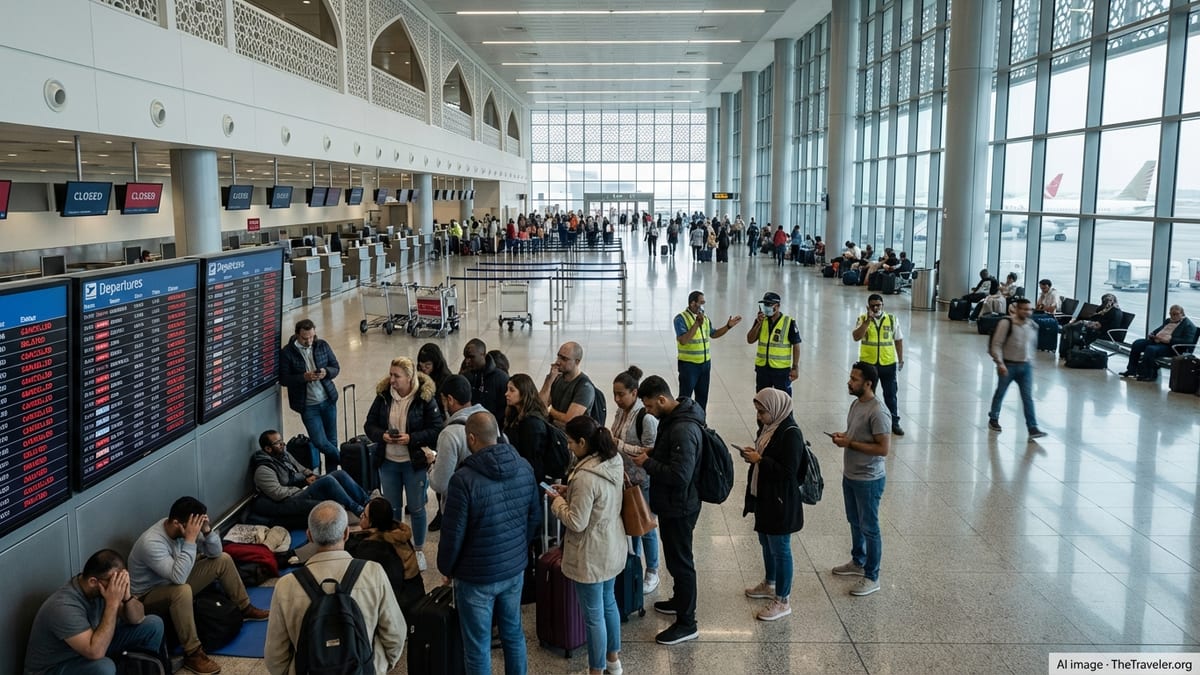
Latest Cancellations Hit Key Saudi Gateways
Published coverage from aviation and travel outlets indicates that over 60 flights linked to Saudi Arabia have been cancelled or withdrawn from schedules in recent days, compounding weeks of irregular operations across the wider Gulf. The latest round of disruption is concentrated at the Kingdom’s busiest hubs, including King Abdulaziz International Airport in Jeddah, King Khalid International Airport in Riyadh, King Fahd International Airport in Dammam, as well as Medina and the domestic gateway of Abha.
Reports show that Saudia, Air India, Gulf Air, KLM and several regional carriers have all made fresh adjustments, affecting services to and from cities such as London, Amsterdam, Istanbul, Mumbai, Delhi and Lahore. Some cancellations involve individual flights, while others reflect temporary suspensions of particular routes or sharply reduced frequencies, particularly on sectors linking Saudi Arabia with neighboring Gulf states.
Travel-focused news outlets describe a patchwork of disruptions, with some Saudi airports operating near normal and others seeing clusters of cancellations or extended delays on particular days. Data compiled from public flight-status boards and airline advisories points to short-notice schedule changes, leaving many travelers needing to rebook or reroute at the last minute.
Although Saudi airspace remains open, the broader regional context, including recent conflict-related tensions and earlier airspace restrictions in nearby countries, continues to shape schedules. Airlines are still recalibrating networks, aircraft placement and crew rotations, resulting in rolling schedule revisions that are now filtering through to passengers flying to, from or via Saudi Arabia.
Airlines Most Affected: Saudia, Gulf Air, Air India and KLM
Publicly available operational data suggests that Saudia has maintained the bulk of its domestic and international network while still registering targeted cancellations on selected routes. Domestic services touching Jeddah, Riyadh, Dammam, Medina and Abha have seen isolated cancellations and significant delays on peak days, particularly where aircraft and crews are rotated from disrupted regional sectors.
Gulf Air, which normally channels a substantial volume of Saudi-bound traffic through its Bahrain hub, has been heavily exposed to the ongoing constraints in Bahraini airspace. Travel reports and passenger accounts describe cancellations of itineraries involving Gulf Air connections between Bahrain and Saudi cities such as Jeddah and Dammam, with some travelers being re-accommodated on alternative routings via Saudi or third-country hubs.
Air India has issued a series of recent public updates detailing adjustments to services between India and Saudi Arabia. These advisories outline a pattern of curtailed operations, including limited flights to Jeddah and Riyadh and suspension or non-operation of regular services to Dammam on certain days. Capacity between Indian metro cities and the Kingdom remains below typical levels, and passengers are being encouraged to monitor flight status closely and use online channels for rebooking and refunds.
KLM has also been referenced in regional and European coverage as one of several European carriers scaling back or temporarily suspending flights into parts of the Gulf. Adjustments have included disruptions to services touching Saudi airports as part of wider changes to its Middle East timetable. These route decisions, combined with reductions by other European and Asian airlines, have narrowed long-haul connection options into Saudi Arabia, particularly via Amsterdam and other traditional transfer hubs.
Domestic and Regional Routes Under Pressure
Flight-status snapshots compiled over the past 48 hours show that domestic Saudi routes are not immune to the current wave of cancellations. Passengers traveling between Riyadh, Jeddah and Dammam have reported multiple schedule changes and aircraft swaps, while flights linking Jeddah and Riyadh with secondary cities such as Abha and other regional airports have occasionally been removed from the operating program for specific days.
Regional routes within the Gulf appear particularly vulnerable, reflecting the continuing aftershocks of earlier airspace closures and security-driven restrictions over neighboring states. Services linking Saudi Arabia with hubs in the United Arab Emirates, Qatar and Bahrain have seen repeated timetable changes in March, and this volatility is now carrying over into early April schedules. Even when airports remain open, airlines are occasionally trimming frequencies or consolidating flights in response to changing risk assessments and demand patterns.
Middle East aviation analysts note in published commentary that the interconnected nature of Gulf networks means a cancellation in one hub can ripple quickly through others. When flights into Dubai, Doha or Bahrain are reduced or delayed, knock-on effects can emerge on Saudi-bound legs operated by the same aircraft or partner airlines. This dynamic helps explain why passengers in Jeddah or Riyadh may experience disruption even when local weather and airport conditions are stable.
In addition, seasonal demand linked to religious travel is amplifying the impact. With substantial flows of Umrah travelers passing through Jeddah and Medina, any reduction in seats offered by Saudia, Gulf Air, Air India, KLM or other carriers can translate swiftly into higher load factors, fewer rebooking options and longer waits for the next available departure.
Passenger Impact: Missed Connections and Longer Journeys
The immediate impact for passengers has been a rise in missed connections, extended transit times and in some cases, unexpected overnight stays. Public reports from affected travelers describe itineraries that once relied on seamless same-day transfers now stretching into multi-leg journeys via alternative hubs, or being pushed back by 24 hours or more.
Travel advisories compiled by consumer-focused sites emphasize that passengers with onward connections beyond Saudi Arabia are especially exposed. A cancellation on a feeder flight into Jeddah or Riyadh can jeopardize long-haul departures to Europe, North America or Asia, particularly on tightly timed itineraries using multiple carriers. With several airlines cutting frequencies simultaneously, spare capacity to absorb disrupted travelers is often limited.
Some carriers, including Air India and Saudia, are publicly encouraging passengers to use digital tools to manage changes, such as online rebooking, mobile apps and chat-based assistance. However, heavy call volumes and stretched airport desks have been reported, which can slow down resolution for those already in transit. Published guidance also indicates that passengers should retain receipts for accommodation, meals and surface transport in case of later reimbursement, subject to each airline’s policies.
For travelers starting their journeys in smaller regional airports such as Abha, the disruption can be even more acute. Limited daily frequencies mean that a single cancellation may wipe out all same-day options, forcing passengers to reposition by road to Jeddah, Riyadh or Dammam in order to catch international flights that are still operating.
What Travelers Should Do Now
Given the evolving situation, aviation and travel information outlets are advising passengers with upcoming flights to or through Saudi Arabia to take a more proactive approach than usual. Checking flight status repeatedly in the 24 hours before departure, rather than relying on a single confirmation, is now widely recommended. Airlines are updating schedules on short notice, and timetable systems may lag behind fast-moving operational decisions.
Travel industry commentary also suggests building additional buffer time into itineraries, especially when connecting between different airlines or ticket types. Where possible, travelers are being encouraged to book longer connection windows in Jeddah, Riyadh or Dammam and to avoid tight transfers that leave little margin for delay. For those with critical time-sensitive plans, selecting earlier departures in the day may provide more fallback options if disruptions occur.
Passengers are further advised to familiarize themselves with the disruption policies of their chosen airlines, including eligibility for refunds, free date changes or rerouting. Some carriers operating in and out of Saudi Arabia have published temporary relaxation of change fees and fare rules during the current period, although conditions vary by route and ticket class.
While there are signs that parts of the regional flight network are slowly stabilizing compared with the most acute phase of disruption earlier in March, the cancellation of more than 60 flights involving Saudi airports this week underlines that conditions remain fluid. Travelers heading to Jeddah, Riyadh, Dammam, Medina, Abha and beyond are being urged, through publicly available advisories and news reports, to stay flexible and keep a close eye on airline updates as the situation continues to develop.