

Saudi Arabia used to be known as a place that went quiet after sunset. Today, its calendar is crowded with cultural seasons, global sports events, food and music festivals, and traditional celebrations that pull millions into streets, oases and historic districts. Time your trip to coincide with the right festival and you discover a different side of the Kingdom entirely: relaxed, animated and unexpectedly diverse.
Saudi Seasons: A New Festival Era
The clearest sign of Saudi Arabia’s changing rhythm is the rise of the so called Saudi Seasons, city based festival programs that unfold over weeks or months. Backed by the General Entertainment Authority, they combine concerts, pop up dining, art installations, family zones and theme park style attractions. Rather than a single weekend, they often define an entire period of the year for locals and visitors.
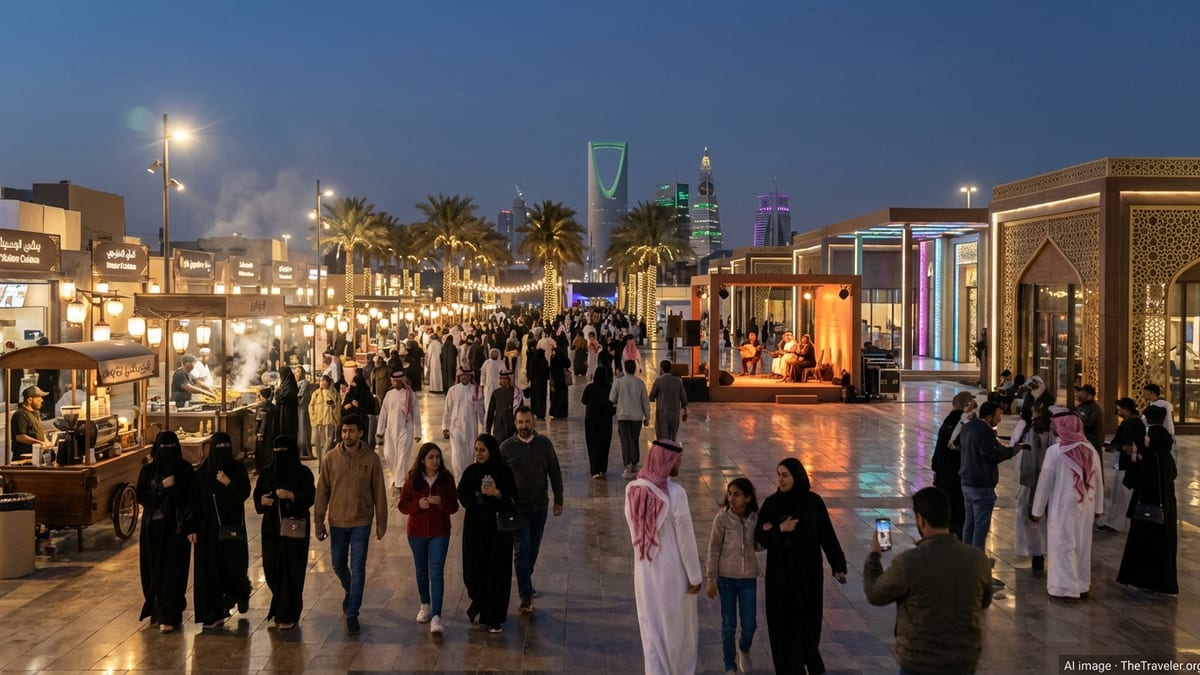
Riyadh Season in the capital helped pioneer this model, turning parts of the city into near continuous open air festivals with themed districts, international shows and nightly fireworks. The Riyadh Calendar now keeps events running across much of the year, but the main season typically clusters in the cooler months from late October into winter, when evening temperatures invite long nights outdoors. Visitors who remember Riyadh as a buttoned up business city can be surprised to find packed boulevards of café terraces, street performers and late night crowds.
Other cities have followed with their own Seasons. Jeddah Season, timed around early summer on the Red Sea coast, leans into the city’s seaside character with waterfront performances, water based shows and family friendly entertainment hubs. In recent years it has drawn millions of visitors, many combining festival time with beach days and diving trips. For travelers, these Seasons offer an accessible entry point to Saudi’s new public culture, with clear schedules, online booking and plenty of English language signage.
Riyadh Season: When the Capital Becomes a Stage
Riyadh Season has become the headline act in the Saudi festival landscape, a sprawling celebration that can run for several months and turn whole districts into temporary entertainment cities. Large zones such as Boulevard Riyadh City and Boulevard World host outdoor concerts, theatres, comedy shows, fashion events and esports competitions, while pop up restaurants and food trucks showcase everything from Saudi street snacks to international fine dining collaborations.
The atmosphere is at its peak in the evenings. Families arrive after sunset, groups of friends wander between live music stages and carnival rides, and international tourists blend easily into the crowd. The programming is eclectic by design: one night might bring a regional pop star or classical orchestra, another night professional wrestling, motorsport demonstrations or immersive art experiences. For travelers who want to sense how rapidly Saudi’s social life is changing, there are few better windows.
Practical planning matters here. Riyadh Season typically takes place during the cooler months, so aim for late autumn or winter trips to enjoy long nights outside without intense heat. Accommodation demand rises sharply around major concerts and headline sports events, so booking early is essential. Within the city, ride hailing apps and event dedicated shuttle buses usually make it straightforward to move between zones, but expect security checks and crowd control similar to any large scale international festival.
Jeddah Season and the Red Sea Cultural Wave
On the opposite side of the calendar and the country, Jeddah Season brings a different energy. Launched to showcase Jeddah’s role as the Red Sea gateway, the festival typically begins in early summer, with the 2024 edition starting at the end of June. Its programming mirrors the city’s coastal spirit: outdoor concerts near the corniche, light shows over the water, beach club events, family entertainment parks and an emphasis on dining that ranges from traditional Hijazi food to globally known restaurant brands.
The sea is never far from the action. Many visitors pair evenings at festival zones with daytime boat trips, snorkeling or historical tours in the UNESCO listed Al Balad district. Jeddah Season has also partnered with major sports and entertainment names, from mixed martial arts events to international shows, underlining Saudi Arabia’s strategy of turning its coastal cities into regional leisure hubs. For festival goers, that means a dense calendar of happenings packed into a manageable radius.
Because Jeddah Season runs at the start of the Saudi summer, heat and humidity are significant factors. Many events consciously shift later into the evening, and indoor venues with powerful air conditioning offer relief during the hottest hours. Travelers who are comfortable with warm weather will find the sea breeze and nocturnal timing help, but those sensitive to heat may prefer to focus on nighttime activities and choose accommodations with easy access to cooled spaces between outings.
AlUla’s Winter at Tantora and Desert Heritage Festivals
If the Seasons in Riyadh and Jeddah spotlight Saudi Arabia’s modern entertainment industry, Winter at Tantora in AlUla shows how festivals here can grow organically from deep historical roots. Named after the traditional sundial that once signaled the start of the winter planting season, this festival transforms the desert oasis and its sandstone mountains into a multi week celebration of culture, music and outdoor adventure. Recent editions have run from mid December into early January, aligning with the Kingdom’s most pleasant weather.
Winter at Tantora mixes high profile concerts in purpose built venues, such as the mirrored Maraya concert hall, with smaller scale experiences that connect visitors to local life. In AlUla’s Old Town and arts districts, open air music nights, street performances, crafts markets and storytelling sessions share space with pop up cafés and galleries. Seasonal initiatives like the AlUla Citrus Festival highlight the region’s agriculture, flooding stalls with oranges, lemons and pomelos from the surrounding farms.
Beyond the festival’s core program, AlUla’s year round heritage and nature offerings take on a special quality in winter. Hot air balloon flights, guided hikes through rock formations, stargazing sessions and visits to the UNESCO listed tombs of Hegra all benefit from cooler temperatures and the extra atmosphere of a town in full celebration mode. For many travelers, combining a few festival nights with quieter days exploring the desert creates one of the most memorable itineraries in Saudi Arabia.
National Day and Religious Festivals: The Countrywide Celebrations
Among Saudi Arabia’s most powerful moments of collective expression is National Day, held each year on September 23 to mark the unification of the Kingdom in 1932. It is a public holiday across the country, and in recent years the General Entertainment Authority has issued hundreds of permits for events ranging from air shows and military parades to concerts and drone displays. In large cities, landmarks are lit in green, cars are draped in flags, and crowds gather on main avenues to watch fireworks and aerial displays.
For travelers, being in Saudi Arabia on National Day offers a chance to witness overt patriotism that is often absent from daily life. Families dress in themed outfits, music spills from balconies and car windows, and malls and parks host special performances. At the same time, heavy traffic, road closures and packed public spaces can make logistics challenging. Those who prefer a calmer experience may choose to observe from hotel terraces or quieter neighborhoods, while others embrace the crowds in central celebration zones.
Religious festivals are more complex for visitors, as they are rooted in Islamic observance and some cities, particularly Makkah and Madinah, are restricted to Muslim travelers. Around Eid al Fitr, which marks the end of Ramadan, and Eid al Adha during the pilgrimage season, cities across the country come alive with family visits, special meals, charitable giving and shopping. Many businesses close or adjust hours, and in the days after Eid, parks and beaches fill with extended families celebrating together. Travelers who are respectful of local customs, modest in dress and flexible with timings can find these periods deeply evocative times to be on the road, even if they are not festivals in the commercial sense.
Film, Music and Sporting Festivals on the Global Stage
Alongside its city Seasons and heritage events, Saudi Arabia has rapidly expanded its roster of international facing festivals that target specific interests. The Red Sea International Film Festival in Jeddah, founded in 2019, has grown into a major regional event held each December, attracting filmmakers and actors from across the Arab world and beyond. Screenings, industry talks and red carpet premieres animate the city’s historic Al Balad district, bringing arthouse crowds into alleys better known for spice shops and traditional houses.
Music events have followed a similar trajectory. Large scale concerts and multi act festivals now regularly appear on Riyadh and Jeddah calendars, covering Arabic pop, classical music and international genres. Some of these events are integrated into Saudi Seasons, while others stand alone, hosted in open air arenas or purpose built venues. For travelers, that means an increasing likelihood that a visit will coincide with a performance by a globally recognized artist or orchestra, especially in the cooler months.
Sport has become perhaps the clearest symbol of Saudi Arabia’s ambitions as a year round events hub. The country now hosts elite football matches, major boxing bouts, motorsport rounds and equestrian competitions that attract global media coverage. Events such as high profile boxing title fights in Riyadh or mixed martial arts tournaments in Jeddah are often scheduled as centerpieces within broader festival periods, ensuring that even visitors without tickets feel the energy through fan zones, public screenings and citywide branding.
Regional Flavors: Smaller Festivals Across the Kingdom
While the flagship festivals tend to dominate headlines, some of Saudi Arabia’s most rewarding festival experiences unfold in smaller cities and rural regions. Agricultural festivals celebrate local produce, from date harvests in oasis towns to rose season in upland valleys. In these settings the line between everyday life and festival can blur: market days swell with visitors from neighboring villages, traditional music and dance performances appear in main squares, and families arrive with homemade dishes to share.
In the mountainous southwest, cooler highlands and terraced farms lend themselves to outdoor gatherings throughout much of the year. Cultural festivals there might showcase folk dances, poetry, honey production or coffee traditions unique to the region. For international visitors, these events require more planning and often some Arabic language support, but the payoff is a more intimate glimpse of Saudi hospitality, well away from the megastructure stages of the big cities.
Even in the desert heartlands, tribal heritage festivals and camel related events continue to draw crowds. Races, beauty contests and markets centered on camels remain an important part of local identity, and in some years the government formally highlights this heritage through themed initiatives. Travelers who are curious about this side of Saudi culture can look for seasonal programs that coincide with cooler months, when animal events and outdoor socializing are more comfortable.
Planning Your Trip Around Saudi Festivals
Choosing when to visit Saudi Arabia increasingly means choosing which festival mood you want to experience. Broadly, the most active windows run from October to early April, when weather across much of the country is at its best for outdoor events. National Day in late September, Riyadh Season in the cooler months, Winter at Tantora from mid December into January, and the Red Sea International Film Festival in early to mid December collectively make late autumn and winter especially dynamic periods.
Prospective visitors should begin by scanning event calendars for Riyadh, Jeddah, AlUla and other key destinations several months in advance. Hotel prices and availability can fluctuate sharply around tentpole events, from headline concerts to international sports fixtures. Booking early not only secures better rates but also increases your chances of staying within easy reach of festival zones, reducing time spent in traffic. Within cities, expect security checks, ticket scanning and crowd control similar to those found at major festivals elsewhere in the world.
Respect for local customs remains essential, even in the most modern festival settings. Modest clothing that covers shoulders and knees, sensitivity around photographing people, and avoiding public displays of affection all help ensure a smooth experience. Alcohol is not served, but cafés, juice bars and specialty coffee stands are abundant, and late night gatherings center on food, music and conversation. Families with children will find that many Saudi festivals are deliberately designed to be multigenerational affairs, with dedicated kids’ zones and early evening shows alongside later adult focused programming.
The Takeaway
Saudi Arabia’s festivals reveal a country in the midst of a profound transformation. What was once a largely private social landscape is now increasingly lived in public squares, waterfront promenades and desert valleys filled with temporary stages and light installations. From the neon dazzle of Riyadh Season to the desert stillness surrounding Winter at Tantora, from patriotic National Day flypasts to intimate regional harvest fairs, the Kingdom’s most vibrant moments are no longer hidden behind closed doors.
For travelers, timing a visit around these festivals turns a trip into something more than a checklist of sights. It offers an invitation into collective experiences, whether cheering with thousands at a concert, wandering through an arts district suddenly alive with music, or sipping tea beside families who have driven in from distant towns to share in the same spectacle. In these moments, Saudi Arabia feels most alive, and most eager to be seen.
FAQ
Q1. When is the best time of year to visit Saudi Arabia for festivals?
The liveliest period generally runs from October to early April, when cooler weather supports major events like Riyadh Season, Winter at Tantora and the Red Sea International Film Festival.
Q2. Is it worth planning a trip around Riyadh Season specifically?
Yes, if you enjoy large scale entertainment. Riyadh Season turns parts of the capital into immersive festival zones with concerts, shows, art and dining concentrated over several months.
Q3. How does Jeddah Season differ from Riyadh Season?
Jeddah Season leans into the city’s coastal identity, with more waterfront activities, outdoor shows by the sea and a slightly more relaxed, beach city atmosphere.
Q4. What makes Winter at Tantora in AlUla special?
Winter at Tantora combines concerts and cultural events with AlUla’s extraordinary desert landscapes and heritage sites, creating a festival experience closely tied to local history and nature.
Q5. Are Saudi festivals family friendly?
Most major festivals are designed with families in mind, offering kids’ zones, early evening performances and activities that welcome visitors of all ages alongside young adults and older guests.
Q6. What should I wear when attending festivals in Saudi Arabia?
Dress modestly, covering shoulders and knees, and choose lightweight fabrics suitable for the climate. Comfortable shoes are important because festival grounds can be large.
Q7. Can non Muslims experience religious festivals such as Eid?
Non Muslims are welcome in most Saudi cities during Eid periods, though they cannot enter holy sites in Makkah and certain areas of Madinah. Observing public celebrations respectfully can be rewarding.
Q8. How far in advance should I book hotels for big festivals?
For headline events like Riyadh Season’s opening weeks or Winter at Tantora, it is wise to book several months ahead, especially if you want to stay near main venues or historic districts.
Q9. Is alcohol available at Saudi festivals?
No, alcohol is not served at public festivals. Social life centers instead on food, coffee, juices and shisha in designated areas, with a strong emphasis on a family friendly environment.
Q10. Are tickets to Saudi festivals expensive?
Prices vary widely. Many outdoor zones and public shows are free or low cost, while headline concerts, sports events and premium experiences command higher, internationally comparable ticket prices.