

More news on this day
Travel across Saudi Arabia is facing fresh disruption as more than 60 flights have been cancelled or heavily rescheduled, affecting services operated by Saudia, Gulf Air, Air India, KLM and other carriers on routes linking Jeddah, Riyadh, Dammam, Medina, Abha and a range of international destinations.
Get the latest news straight to your inbox!
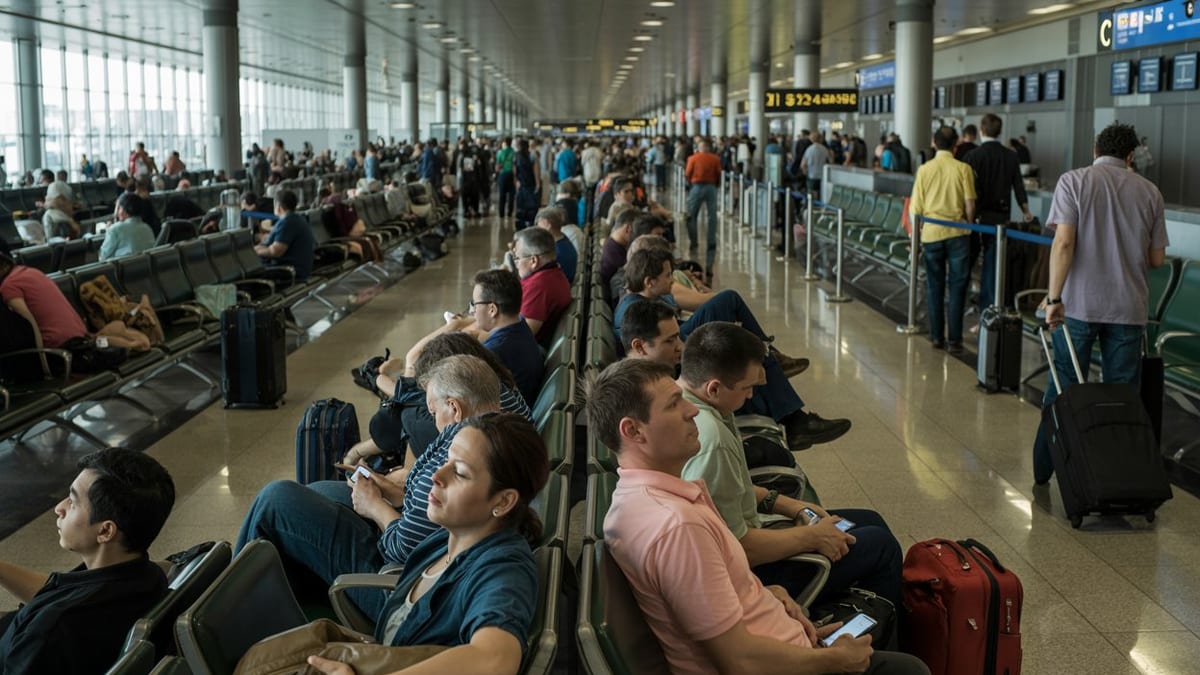
Image by Travel And Tour World
Wave of Cancellations Across Key Saudi Gateways
Published airline updates and airport schedule data indicate that a new wave of cancellations has built up across Saudi Arabia’s main hubs in recent days, with disruptions concentrated at Jeddah’s King Abdulaziz International Airport and Riyadh’s King Khalid International Airport. Flights serving Dammam, Medina and Abha have also been affected, according to publicly available departure and arrival boards.
More than 60 flights are reported to have been removed from schedules or converted into non-operating services on short notice, spanning both regional and long haul routes. The pattern includes outright cancellations, rolling rescheduling of departure times and aircraft swaps that have reduced capacity on some high-demand corridors.
The impact is being felt most sharply on routes linking Saudi Arabia with South Asia, Europe and other Gulf states, where seat demand remains strong but airlines are adjusting operations in response to evolving airspace and operational constraints in parts of West Asia.
Airlines Most Affected: Saudia, Gulf Air, Air India and KLM
Saudia, the kingdom’s flag carrier, features prominently in the disruption picture as it operates dense schedules into Jeddah, Riyadh, Dammam, Medina and Abha. Recent timetable changes show a series of Jeddah and Riyadh rotations being pulled or consolidated, particularly on regional routes that connect to onward long haul flights.
Gulf Air services linking Saudi cities with Bahrain have also seen cancellations, with travelers reporting last-minute notifications of withdrawn flights between Jeddah and Bahrain and onward connections to South Asia. Public posts from affected passengers describe rerouting via alternative hubs or rebooking on Saudia and other carriers at higher fares.
Air India and its low-cost arm Air India Express have repeatedly adjusted operations into Saudi Arabia this month. The group has publicized rolling updates detailing which flights to Jeddah and Riyadh are operating on a given day and which remain suspended, while some planned services to Dammam have not yet resumed. These changes follow earlier wide-scale suspensions across parts of the Gulf region and continue to generate uncertainty for passengers holding tickets into Saudi gateways.
KLM has also made cuts to services touching Saudi Arabia as part of a broader rethink of West Asia flying. Schedule information shows suspensions on certain routes linking Amsterdam with Dammam and Riyadh, compressing options for travelers using the Dutch carrier’s network to connect between Europe and eastern Saudi Arabia.
Domestic and Regional Routes Under Strain
While many of the highest-profile cancellations involve international services, domestic and short-haul regional links are also under strain. Passengers travelling between Riyadh and Dammam, or from Dammam to Jeddah, have reported repeated changes to departure times and, in some cases, outright cancellations followed by rebooking on later flights.
In the western region, services between Jeddah and Medina, as well as flights funnelling pilgrims and business travelers into Abha and other secondary cities, have experienced schedule volatility. Publicly shared experiences point to travellers facing extended waits and forced overnight stays when connecting itineraries unravel after an initial leg into Jeddah or Riyadh is cancelled.
Regional connectivity into Bahrain, the United Arab Emirates and other Gulf hubs remains patchy. While some airlines are operating repatriation-style or limited scheduled services, others continue to suspend or thin out flights, leaving Saudi-bound passengers reliant on a narrower set of options and putting pressure on remaining seats.
Knock-On Effects for Pilgrims, Workers and Transit Passengers
The disruption is hitting several key traveller segments at once. Jeddah and Medina are major gateways for religious travel, and cancellations there can derail tightly timed itineraries for pilgrims who have limited flexibility in their travel dates. Reports from the region highlight families forced to scramble for alternative tickets, often at significantly higher last-minute prices.
Saudi Arabia’s large expatriate workforce is also affected, particularly those commuting between the kingdom and South Asian cities. Sudden changes on routes operated by Saudia, Gulf Air and Air India are complicating travel for workers returning after leave or heading home at the end of contracts, sometimes resulting in missed connections and additional accommodation costs.
Transit passengers using Riyadh and Jeddah as intermediate hubs on longer journeys are facing additional uncertainty. With multiple carriers adjusting schedules and reducing frequencies, some itineraries that once relied on tight, same-day connections now entail longer layovers or the need to reroute entirely through different hubs in the Gulf or Europe.
Guidance for Travellers Facing Cancellations
Publicly available airline advisories and passenger reports suggest that schedules are changing quickly, often within 24 hours of departure. Travellers booked on Saudia, Gulf Air, Air India, KLM or other carriers into or out of Jeddah, Riyadh, Dammam, Medina or Abha are being urged in official notices and online alerts to check their flight status repeatedly in the days and hours before departure.
Where flights have been cancelled, airlines are generally offering rebooking on the next available service, subject to seat availability, or refunds according to standard fare rules. However, the combination of high demand and reduced capacity means that alternative flights can be heavily booked, and some passengers may find that only multi-stop routings are available at short notice.
Travel agents and online booking platforms are advising customers to build in additional buffer time for connections through Saudi hubs and to consider flexible or refundable tickets if travel plans allow. For those travelling for time-sensitive purposes, such as religious obligations or contract start dates, contingency planning and close monitoring of airline announcements remain essential as the regional aviation picture continues to shift.