

More news on this day
Saudi Arabia has joined a growing list of Middle Eastern and Gulf destinations offering emergency visa relief for foreign visitors stranded by the latest regional conflict, introducing fee-free departures and temporary extensions on humanitarian grounds in coordination with similar measures in Qatar, the United Arab Emirates, Jordan, Bahrain, Kuwait and other popular transit hubs.
Get the latest news straight to your inbox!
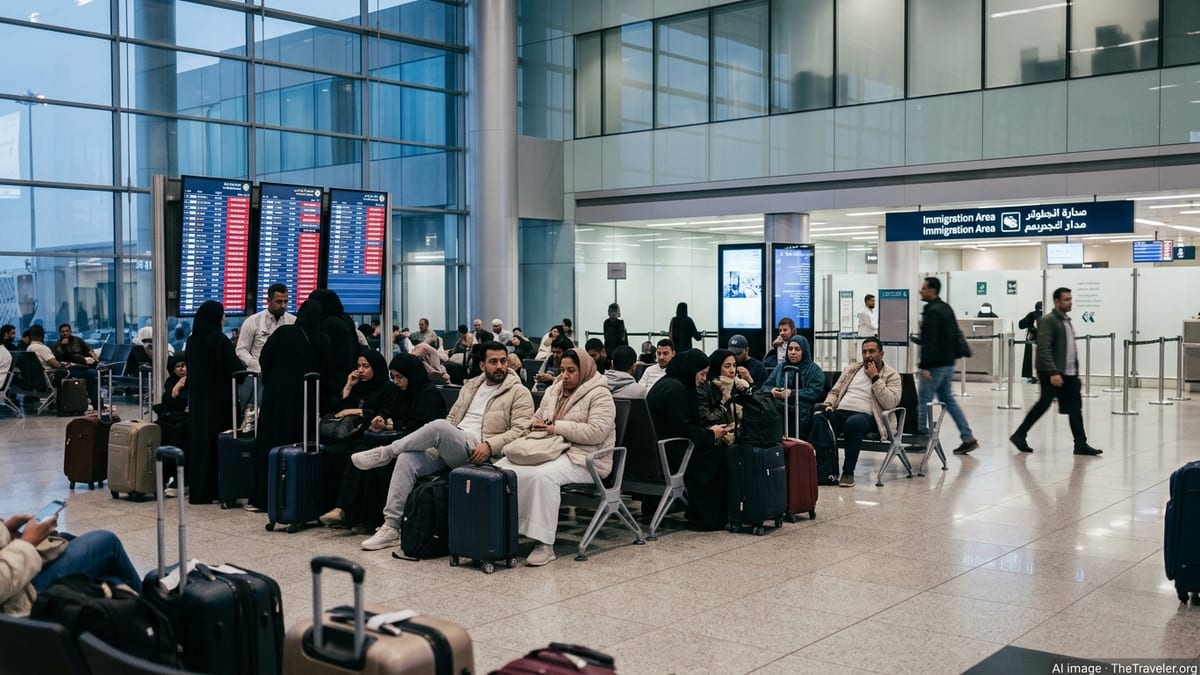
Coordinated Gulf Response to a Fast-Moving Airspace Crisis
Large-scale airspace closures and flight cancellations since late February have turned the Gulf region’s busiest hubs into holding points for tourists, business travellers and migrant workers unable to continue their journeys. Publicly available information shows that airports in Dubai, Abu Dhabi, Doha, Kuwait City, Manama and Riyadh have all seen major schedule disruptions as airlines reroute around conflict zones or suspend operations entirely.
Regional travel advisories and aviation trackers indicate that the conflict, centred on hostilities involving Iran, Israel and several Gulf states, has sharply reduced commercial capacity across the Middle East. With many long-haul itineraries between Europe, Asia and Oceania historically funnelling through Gulf hubs, the impact on connecting passengers has been immediate and widespread.
In response, governments across the Gulf Cooperation Council have begun rolling out humanitarian visa measures designed to prevent stranded visitors from falling into overstay status while they wait for a viable route home. Saudi Arabia is now described in travel advisories and specialist coverage as part of this coordinated approach, joining Qatar, the UAE, Bahrain, Kuwait and Jordan in signalling more flexible treatment for affected tourists.
Regional observers note that this level of synchronised immigration relief across multiple Gulf states is unusual outside of the pandemic period, underlining the scale of the disruption triggered by the current security crisis.
Saudi Arabia’s Emergency Visa Extensions and Fee Waivers
Travel and immigration updates compiled in early March indicate that Saudi Arabia has introduced temporary visa extensions and waivers of overstay penalties for foreign nationals who can demonstrate they were unable to depart due to grounded or heavily restricted flights. These steps mirror policies announced by neighbouring states and are being framed domestically as part of a broader humanitarian response.
Guidance referenced in regional travel advisories suggests that affected visitors in Saudi Arabia may be granted additional days of legal stay without the usual per-day overstay fines, particularly where airspace closures or cancelled onward segments can be documented. Digital platforms that typically handle routine visa services are being used to register stranded travellers and apply extensions remotely, easing pressure at immigration counters in key airports.
Reports also indicate that Saudi authorities are coordinating with national airlines and foreign embassies to prioritise passengers whose visas are close to expiry for seats on limited outbound services. While such arrangements vary by carrier and nationality, the overarching goal is to ensure that visitors can exit the kingdom without incurring punitive fees or jeopardising their ability to return in the future.
For now, these measures are characterised as temporary and explicitly linked to the ongoing regional emergency, meaning visitors are being urged through public communications and advisory channels to act promptly once viable flights become available.
Qatar, UAE, Bahrain, Kuwait and Jordan Offer Parallel Relief
Saudi Arabia’s decision follows a wave of similar announcements by other Gulf and Middle Eastern destinations that have traditionally functioned as major transit points. Recent coverage of Qatar’s response, for instance, describes an automatic extension of entry visas for stranded travellers and a suspension of overstay fines while airport operations remain constrained.
In the United Arab Emirates, travel law commentators and local media report that authorities are waiving overstay penalties for visitors whose flights were cancelled and facilitating short emergency extensions, particularly for those stuck in Dubai and Abu Dhabi after long-haul connections were severed. Emergency entry permits and flexible rebooking policies by UAE-based carriers are being presented as complementary tools in managing the backlog of stranded passengers.
Bahrain and Kuwait have likewise introduced grace periods and fee waivers for visitors whose legal stays have lapsed since the onset of the crisis, according to regional business and travel publications. Bahrain’s relief reportedly covers visit visas that expired after the first wave of airspace closures and will remain in effect for a transitional period once regular flights resume, while Kuwait is applying an immigration grace window to visitors who can show they were unable to leave.
Jordan, which has become an important staging point for evacuation and diversion flights, is also referenced in advisory material as providing overstay relief to travellers who were routed through Amman after their original Gulf connections were cancelled. Together, these policies illustrate an emerging regional consensus on the need to prioritise humanitarian considerations in visa enforcement during the crisis.
Humanitarian Imperative for Stranded Tourists and Pilgrims
The coordinated visa relief has a clear humanitarian dimension. The current Middle East emergency has stranded a broad mix of travellers: tourists on winter holidays, expatriate families in transit, business delegates, students, and religious pilgrims heading to or from Saudi Arabia and neighbouring countries. Many now face extended, unplanned stays with mounting accommodation and living costs.
Travel advisories and consular updates highlight cases of passengers who have already spent days or weeks in airport hotels and temporary lodgings while monitoring waitlists for outbound flights. Without targeted relief, thousands risk tipping into undocumented status simply because their visas expired while they were unable to leave through no fault of their own.
Humanitarian law organisations and migration analysts have frequently warned that strict enforcement of overstay penalties during major crises can push otherwise lawful visitors into irregularity, complicating repatriation efforts and increasing vulnerability to exploitation. Observers view the current wave of fee waivers and extensions as an attempt by Gulf and regional governments to avoid repeating such patterns during this conflict.
By explicitly linking visa flexibility to documented flight disruptions and airspace closures, authorities are also trying to balance humanitarian obligations with the need to maintain regular immigration controls. Publicly available guidance stresses that travellers who have not been directly affected by cancellations are still expected to respect standard visa conditions.
What Stranded Travellers Should Expect and Do Next
For travellers currently stuck in Saudi Arabia or neighbouring states, regional travel experts emphasise a few immediate priorities. First, passengers are being encouraged through aviation and consular channels to document all cancellations and schedule changes issued by airlines, as this evidence may be required when requesting fee-free visa extensions or departures.
Second, travellers are being advised to monitor official government portals, airline alerts and reputable travel advisories rather than relying solely on social media for updates about visa policies. In Saudi Arabia and other Gulf countries, many core services for visitors, from visa validity checks to extension requests, are now handled through digital platforms that can be accessed via mobile devices.
Finally, observers underline that visa relief does not guarantee rapid onward travel. Even as limited evacuation and commercial flights gradually resume, capacity remains tight and routings are complex, with some passengers being diverted through secondary hubs such as Muscat or Cairo to reach their final destinations. Travellers who receive temporary extensions are therefore being urged in publicly available guidance to continue pursuing rebooking options as early as possible.
With no clear end date for the regional crisis, the emergency visa measures announced by Saudi Arabia and its neighbours are likely to remain a critical safety valve for international visitors in the coming weeks, shaping how the global travel industry navigates one of its most serious disruptions since the pandemic.