

More news on this day
Saudi Arabia has unveiled a $1 billion hospitality investment platform known as AYARA, with plans to develop 50 new business hotels across the Kingdom by 2029, underscoring the country’s rapid push to expand and diversify its tourism-driven economy.
Get the latest news straight to your inbox!
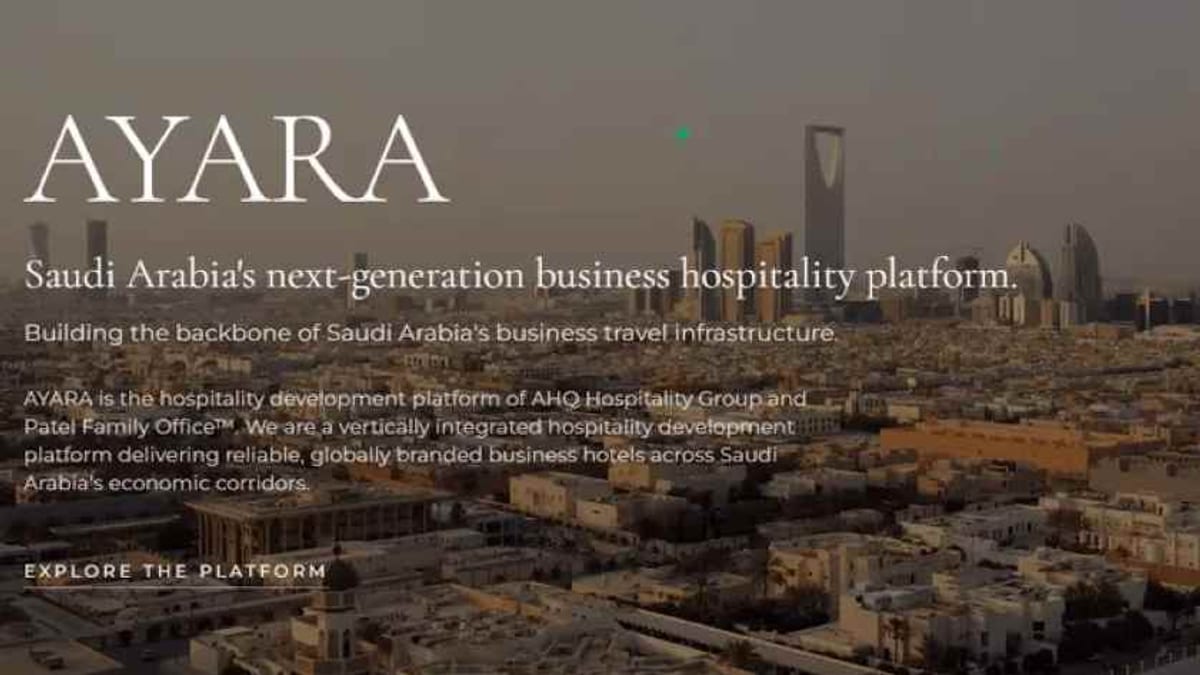
Image by International Hotels News, Hotel Industry & Hospitality News
A New Platform in a Fast-Growing Hospitality Market
The AYARA platform is designed as a dedicated vehicle to build and operate a network of branded business hotels, adding fresh capacity in step with Saudi Arabia’s rising visitor numbers. Publicly available information indicates that the program is focused on mid-scale and upper mid-scale properties, a segment viewed as critical to serving corporate travelers, domestic tourism and smaller events outside traditional luxury hubs.
The commitment of $1 billion over the life of the platform signals confidence that demand will continue to grow in line with national tourism targets. Saudi Arabia’s Vision 2030 strategy has set ambitious goals for international arrivals, religious tourism and domestic travel, prompting a surge of new hotel construction in both major and secondary cities.
By targeting 50 hotels within a defined timeframe to 2029, AYARA adds a structured pipeline to a market already experiencing one of the world’s most active hotel development cycles. Industry analysts note that such platforms help aggregate capital, standardize design and operations, and shorten delivery timelines across multiple sites.
The focus on business hotels distinguishes AYARA from many of the high-profile luxury and mega-resort schemes that have dominated headlines. While flagship projects along the Red Sea and in giga-developments such as NEOM and Diriyah capture global attention, mid-market accommodation is increasingly viewed as the backbone that will sustain year-round demand.
Aligning With Vision 2030 and Regional Tourism Targets
The launch of AYARA comes against the backdrop of record tourism performance in Saudi Arabia. Published hospitality reviews and government data point to tens of billions of dollars in tourism spending annually, with strong growth in both religious and leisure segments. The Kingdom has moved quickly to relax entry requirements for many nationalities, expand e-visa options and promote year-round events that extend beyond the traditional pilgrimage seasons.
Vision 2030 calls for hundreds of thousands of new hotel rooms across the country by the end of the decade. Large-scale developments in Riyadh, Jeddah, the Red Sea coast and heritage destinations such as AlUla and Diriyah are all contributing to a pipeline that spans luxury resorts, branded residences and city hotels. The AYARA portfolio is expected to complement this mix by targeting business-friendly formats in high-demand commercial and industrial corridors.
Sector research indicates that Saudi Arabia has rapidly become the leading hotel construction market in the Middle East, outpacing several neighboring countries in both active projects and planned investments. Mid-market and upscale properties are seen as essential to serving a growing base of small and medium enterprises, regional headquarters relocations and an expanding domestic travel culture.
By setting a clear 2029 horizon, the AYARA rollout dovetails with other infrastructure and transport improvements, including airport expansions and new rail links that are scheduled for completion toward the end of the decade. The timing is intended to ensure that new room supply is in place as connectivity improves and new destinations open to international visitors.
Filling the Mid-Market Gap Across Secondary Cities
While much of the commentary on Saudi hospitality focuses on luxury integrated resorts and iconic towers in major urban centers, analysts highlight a persistent gap in quality mid-scale accommodation, particularly in emerging business hubs and secondary cities. The AYARA platform appears positioned to address this shortfall with standardized, scalable hotel products.
Reports on the initiative indicate that the 50 planned hotels will be distributed across multiple regions, rather than clustered exclusively in Riyadh or Jeddah. Locations linked to industrial zones, logistics corridors, regional airports and new tourism clusters are expected to benefit, helping to spread the economic impact more evenly across the country.
Business travelers, domestic tourists and participants in smaller conferences and exhibitions often seek reliable, moderately priced hotels with efficient services, meeting spaces and convenient access to transport. Industry observers note that such properties can achieve high occupancy levels in markets where luxury supply may not be financially viable or aligned with local demand.
By emphasizing functionality, consistency and cost control, AYARA’s properties are likely to adopt modular design elements and shared back-of-house systems that support rapid deployment. This approach mirrors broader trends in global hospitality, where platforms and portfolios are increasingly favored over stand-alone developments for efficiency and brand recognition.
Investor Interest and Partnership Opportunities
The creation of a dedicated $1 billion platform reflects strong investor interest in Saudi Arabia’s hospitality sector. Regional and international investment reports show that hotel and tourism assets have become a core component of broader real estate and infrastructure strategies tied to Vision 2030. Platforms like AYARA can provide a structured entry point for institutional capital seeking exposure to the market.
Observers expect the platform to work with a range of local developers, operators and service providers to execute projects on the ground. Construction firms, design studios and technology suppliers active in the Kingdom are likely to view the 50-hotel pipeline as a source of multi-year demand, particularly if the properties are rolled out in phases.
Global hotel brands have already stepped up their presence in Saudi Arabia through management agreements, franchising and joint ventures. The AYARA portfolio could create additional opportunities for branding and operating partnerships, especially in the mid-scale business segment where international standards and loyalty programs can be a differentiator for frequent travelers.
Hospitality technology providers, from revenue management platforms to digital check-in solutions, are also watching the Saudi market closely. As new hotels open, there is growing demand for systems that optimize pricing, distribution and guest experience while aligning with local regulatory and cultural requirements.
Implications for the Wider Middle East Hospitality Landscape
Saudi Arabia’s decision to back a sizable business-hotel platform adds new momentum to a Middle East hospitality boom that has already seen major commitments from Gulf neighbors. Regional tourism data shows rising visitor numbers across the United Arab Emirates, Qatar, Oman and Bahrain, but the scale of Saudi Arabia’s pipeline is beginning to reset expectations for the entire region.
Developments inside the Kingdom, from the Red Sea coast to mountain resorts and desert heritage sites, are reshaping travel itineraries and airline route planning. The addition of 50 AYARA hotels targeted at business and mid-market travelers suggests that growth is not limited to ultra-luxury or leisure segments, but is spreading across the full spectrum of hospitality products.
The competitive response from other regional markets is likely to include renewed investment in airport capacity, tourism infrastructure and hotel refurbishments as destinations seek to maintain their share of business and leisure travel. Analysts suggest that improved connectivity between Gulf hubs will encourage multi-stop itineraries, with Saudi Arabia featured alongside established city-break and beach destinations.
For the Middle East hospitality industry as a whole, the AYARA announcement reinforces a trend toward large, clearly defined investment vehicles that bundle multiple assets under a single platform. This structure is increasingly seen as a way to manage risk, attract long-term capital and deliver the scale needed to match ambitious national tourism strategies.