

More news on this day
Saudi Arabia has moved to extend certain visa deadlines for visitors caught by the latest wave of Gulf travel disruptions, joining similar emergency measures already in place in Qatar and Kuwait and offering stranded travelers a limited window to regularize their status and avoid penalties.
Get the latest news straight to your inbox!
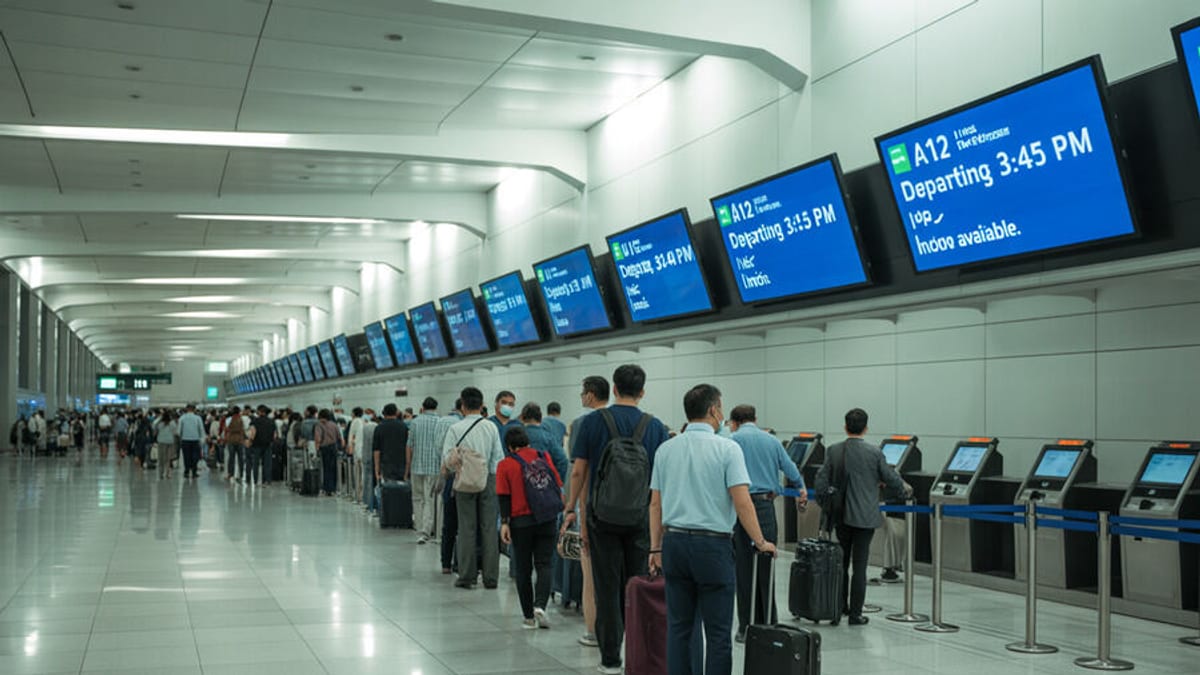
Image by Latest International / Global Travel News, Breaking World Travel News
Regional Conflict Pushes Gulf States to Soften Visa Cutoff Dates
Weeks of airspace closures, missile strikes and flight cancellations linked to the Iran conflict have left thousands of travelers stuck across the Gulf, unable to depart before their visas expire. Publicly available travel and aviation data point to a sharp reduction in operations through key hubs, including Doha’s Hamad International Airport, Riyadh’s King Khalid International Airport and Kuwait International Airport, as carriers reroute or suspend services due to security concerns and restricted airspace.
Qatar was among the first to adjust, with immigration circulars and local media reporting an automatic one month extension for most entry visas issued before the latest escalation. The measure is described as a temporary response to the evolving regional situation, designed to ensure visitors are not pushed into overstay violations solely because outbound flights were canceled or diverted.
Kuwait has faced its own acute disruption after recent drone activity near airport fuel facilities, which briefly curtailed operations and forced airlines to improvise routings through neighboring states. Local coverage indicates that short term visit and transit visas are being granted flexibility when travelers can demonstrate that they were unable to exit as scheduled due to suspended flights or last minute operational changes.
Against this backdrop, Saudi Arabia has now introduced targeted grace periods on selected visit, Umrah and transit visas, primarily for travelers whose return journeys were scheduled through affected hubs or routes. Government notices cited in regional reporting frame the decision as a humanitarian and practical step, aimed at reducing the likelihood that visitors fall out of legal status during an extraordinary crisis period.
How the New Visa Extensions Work in Saudi Arabia
The Saudi measures focus on visitors who entered on short term visas and whose legal stay was due to expire in March or early April 2026. According to information summarized by regional travel advisers and immigration consultants, many of these visas are being granted an automatic extension for a defined number of days, applied directly in the electronic system without the need for in person visits to passport offices.
In several cases, the extension appears to be tied to original departure dates and affected routing, particularly where travelers can show that they held confirmed tickets on flights canceled due to airspace restrictions or conflict related safety decisions. Public guidance suggests that those whose itineraries did not involve disrupted routes may not qualify for automatic leniency and could still be expected to depart on time or apply formally for an extension.
For Umrah pilgrims, the situation is more nuanced. Reports from Saudi based agencies indicate that pilgrims who arrived shortly before the latest round of disruptions and who can no longer depart as booked are being offered short grace periods to complete amended travel plans. However, these allowances are closely calibrated, and there is no sign of an open ended waiver of normal overstay rules.
Crucially, visitors should not assume that every visa category is covered or that all stays are extended to the same date. The emerging pattern points to targeted relief aligned with documented disruption, rather than a blanket amnesty. Travelers are being urged by consular advisories and travel industry briefings to verify the status and new validity date of their individual visas through official digital portals.
Qatar and Kuwait Offer Parallel Lifelines for Stranded Visitors
In Qatar, the headline measure has been described by legal and tax advisory firms as an automatic one month extension for all entry visas valid at the time regional tensions intensified. This reportedly includes tourist, business and some work related entry categories, with the extension applied centrally. No separate application is required, and the goal is to provide a uniform buffer while air and sea links remain volatile.
Qatari residency holders stranded abroad are also benefiting indirectly, as airlines and airport operators work to restore reliable outbound connections. Travel forums and local news coverage highlight multiple cases of residents and long stay visitors who left Qatar for short trips only to find return flights canceled or severely delayed, which in turn affects the timing of their permitted reentry.
Kuwait’s position is more fragmented, partly because the most severe disruption has centered on a single airport facility and specific time window. Yet reports from local newspapers and regional outlets indicate that immigration officials are waiving or reducing overstay fines where passengers can present evidence that a departure was prevented by the temporary suspension of flights or safety closures. Airlines have also promoted temporary routing options via Saudi Arabia and other neighbors, often combined with expedited transit clearances.
Across both Qatar and Kuwait, observers stress that these measures are explicitly tied to the current conflict period. There has been no indication that the countries are revising their broader visa and residency frameworks, which are expected to snap back to normal strict enforcement once air traffic stabilizes.
What Travelers Must Do Now to Stay Legal and Avoid Penalties
Despite the emergency extensions, travelers cannot assume that being stranded automatically protects them from overstay penalties. Published guidance from immigration specialists across the Gulf consistently emphasizes one key point: visa holders remain personally responsible for tracking their status and ensuring that they hold a valid right to stay on every day they remain in the country.
Visitors in Saudi Arabia, Qatar or Kuwait are being advised by consular alerts, law firms and travel agents to check their visa validity through official government apps or online portals rather than relying on airline assurances or word of mouth. In many cases, the extended date will appear in the system or in the digital visa record, even if there is no new physical sticker or stamp in the passport.
If a new validity date is not clearly reflected, travelers are encouraged to seek clarification well before their original visa expiry. Publicly available information suggests that immigration authorities across the three countries are more likely to show flexibility to travelers who can demonstrate proactive efforts to comply, such as attempting to rebook flights earlier, contacting carriers, or applying for a formal extension before their current permission runs out.
Those who overstay without clear evidence of disruption risk facing daily fines, possible detention on departure and future bans on reentering the country or wider region. Regional media have previously documented substantial penalties for visitors working on tourist visas or ignoring standard exit deadlines, and there is no indication that the present crisis suspends enforcement in unrelated cases.
Planning Ahead: Documentation, Insurance and Alternative Routes
The latest wave of visa extensions is emerging alongside broader travel advisories that urge passengers to reconsider nonessential trips to parts of the Gulf while the conflict continues. Travel intelligence firms point to the prospect of further short notice airspace closures and missile activity that could again ground flights or divert aircraft away from key hubs, even after partial service restarts.
In practical terms, travelers headed to or transiting through Saudi Arabia, Qatar or Kuwait are being encouraged by industry guidance to carry proof of onward travel, accommodation bookings and travel insurance that explicitly covers war related disruptions and extended stays. Such documentation can be important when requesting leniency on visa deadlines, as it helps to show that any overstay was unavoidable rather than intentional.
Alternative routings through relatively less affected gateways, particularly in neighboring countries with more stable security assessments, are also gaining prominence. Airlines and corporate travel managers are increasingly favoring itineraries that allow passengers to bypass the most contested air corridors, even if this adds time and cost, in order to reduce the risk of travelers becoming stranded and dependent on emergency visa measures.
Ultimately, the coordinated moves by Saudi Arabia, Qatar and Kuwait to extend visa deadlines offer welcome breathing space for thousands of visitors trapped by events beyond their control. Yet the relief is tightly framed, time limited and contingent on individual compliance, underscoring the need for anyone traveling through the region to stay informed, document every disruption and treat visa rules as a central part of their risk planning.