

More news on this day
Foreign Muslims planning to perform Umrah in Saudi Arabia during the 2025–26 season are being urged to pay close attention to exit deadlines, as publicly available information shows that all Umrah pilgrims must leave the Kingdom by 18 April 2026 or risk serious immigration and legal consequences.
Get the latest news straight to your inbox!
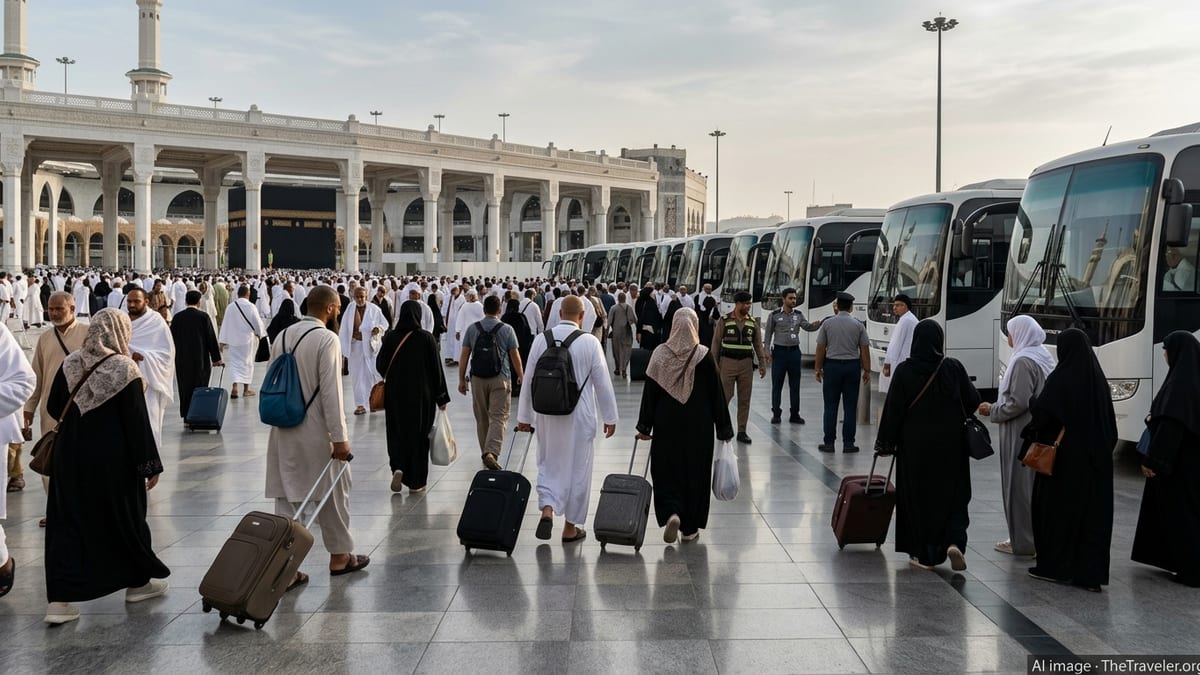
New 2025–26 Umrah Calendar Sets Hard Exit Date
Saudi Arabia’s Ministry of Hajj and Umrah has outlined a detailed calendar for the 1447 AH Umrah season, corresponding to 2025–26, that introduces a fixed timetable for visa issuance, arrival and final departure. Reports on the new schedule indicate that the last day to issue Umrah visas is 20 March 2026, with the final date for pilgrims to enter the Kingdom set around 3 April 2026.
Within this calendar, 18 April 2026, corresponding to 1 Dhul Qadah 1447, has been identified in published coverage as the final day for foreign Umrah pilgrims to remain in Saudi Arabia. After this date, the focus of the authorities shifts fully to preparations for the Hajj season, including crowd management, security planning and transport logistics around the holy cities.
The designated departure deadline effectively shortens the operational Umrah window at the end of the season and is being described in travel advisories and specialist reporting as a hard cut-off. Pilgrims whose itineraries extend beyond 18 April 2026 are being warned that they may no longer be considered to be in the country legally under an Umrah visa.
Why 18 April 2026 Matters for Umrah Pilgrims
The 18 April deadline is more than an administrative formality; it is closely tied to long-standing regulations that prohibit non-Hajj visa holders from entering or remaining in Makkah as the Hajj period approaches. Travelers have shared documentation showing language on visas stating that holders are not permitted to perform Hajj, or to enter or stay in Makkah, from 18 April 2026 through the end of May.
According to regional media coverage and travel-industry explanations, the cut-off is intended to clear the holy city of non-Hajj visitors so that accommodation, transport and essential services can be reserved for registered Hajj pilgrims. The same sources note that the 18 April 2026 deadline has been applied across visa categories in relation to access to Makkah, while Umrah visa holders are also expected to exit the Kingdom entirely by that date.
For many would-be visitors, this means that itineraries planned toward the end of Ramadan or into mid-April now require precise timing. Pilgrims who arrive near the entry deadline in early April will have only a narrow window to complete the rites of Umrah, visit Madinah if desired, and still depart Saudi territory before the final exit date.
Penalties and Legal Risks for Overstaying
Saudi Arabia has repeatedly tightened enforcement of overstay rules in recent years, and publicly available statements and news reports point to a combination of fines, detention and deportation for those who do not leave on time. In earlier seasons, service providers that failed to report overstaying pilgrims faced penalties reported at up to 100,000 Saudi riyals per case, alongside other administrative sanctions.
Travel advisories from various countries and guidance from Hajj and Umrah agencies emphasize that individuals who overstay pilgrimage or visit visas can be subject to detention in immigration facilities pending deportation. In many documented cases, overstayers are also issued multi-year bans on re-entering Saudi Arabia, which may bar them from performing Hajj or Umrah in the future.
For the 2025–26 Umrah season, commentators following Saudi regulatory changes note that enforcement systems are increasingly integrated with electronic visas, biometric data and exit controls at airports and land borders. This makes it significantly harder for any pilgrim to remain undetected after their authorized stay expires, especially once the 18 April 2026 cut-off takes effect.
Confusion Among Travelers Highlights Need for Clear Planning
The publication of the new Umrah calendar has prompted intense discussion among prospective pilgrims, especially on community and travel forums where visitors share screenshots of visas and official notices. Many travelers appear to be grappling with the distinction between the last date to enter the Kingdom for Umrah, the last day to stay in Makkah, and the final deadline to exit Saudi Arabia entirely.
Some posts reference earlier seasons, such as 2025, when the last date to enter for Umrah was mid-April and the final exit date was 29 April, with strict warnings that overstaying would be treated as a violation. For 2026, those dates have shifted forward, leaving a shorter gap between the final entry and exit deadlines and raising concern among pilgrims who booked flights without yet seeing the official calendar.
Travel organizers and independent experts in pilgrimage logistics are urging visitors to cross-check flight bookings, hotel stays and ground transport against the 18 April 2026 deadline. They also note that Umrah regulations can evolve from one season to the next, and that pilgrims who performed Umrah in previous years should not assume the same timelines apply for 1447 AH.
Practical Steps for Pilgrims Ahead of the Deadline
For those already holding confirmed plans for Umrah in early 2026, the first step is to verify the specific visa type and its validity dates, paying close attention to any printed restrictions regarding Makkah access and Hajj-related blackout periods. Publicly available guidance stresses that Umrah visas are purpose-specific and do not function as open-ended visit permits once the season’s final exit date passes.
Prospective pilgrims are also being advised in news and industry reports to coordinate closely with their chosen airlines and accommodation providers. Adjusting arrival and departure dates to ensure exit on or before 18 April 2026 may involve fare differences or change fees, but these are likely to be minor compared with the potential cost of fines, legal issues or disrupted future travel.
Specialists in religious tourism note that many travelers underestimate the time needed to move between Jeddah, Makkah and Madinah, particularly as the pre-Hajj period approaches and transportation networks face heavy demand. Building a one or two day buffer before the 18 April deadline is being recommended in many advisory notes as a practical safeguard against delays or unexpected disruptions.
With global demand for Umrah surging and Saudi authorities continuing to refine crowd management for Hajj, the 18 April 2026 exit deadline underscores a broader trend toward stricter, more time-bound pilgrimage regimes. For pilgrims, meticulous planning and careful adherence to the published calendar will be essential to completing their journey smoothly and without legal complications.