

More news on this day
Saudi Arabia is moving to plug a growing shortfall in business-focused hotels, with around 1 billion dollars of new capital being directed toward mid-market and select-service properties that cater to corporate travelers, project teams, and the expanding meetings and conferences trade.
Get the latest news straight to your inbox!
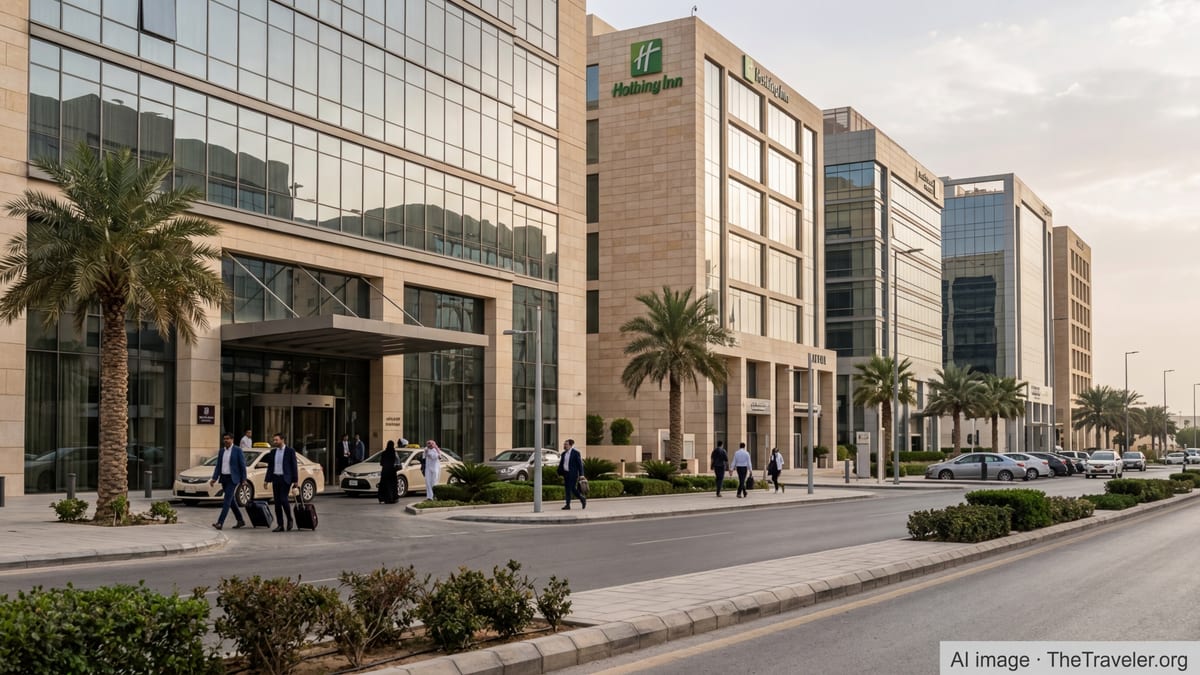
Corporate Demand Outpaces Supply in Key Cities
Recent hospitality market reviews indicate that Riyadh, Jeddah and the Dammam metropolitan area have experienced sustained growth in business travel, supported by a pipeline of large-scale infrastructure and industrial projects tied to Vision 2030. Hotel occupancy levels in major commercial districts have continued to edge higher, even as new rooms are delivered to the market.
Analysts monitoring development pipelines note that while thousands of additional rooms are scheduled to come online by the middle of the decade, the majority of new supply in Riyadh still skews toward upscale and luxury categories. Only a small share of upcoming keys are classified as midscale or economy, leaving a structural gap in affordable accommodation for frequent business visitors and long-stay project teams.
Feedback from global distribution channels and travel management companies suggests that day-to-day corporate travelers are increasingly price-sensitive, especially those attached to construction, engineering, and professional services firms working on government-backed schemes. In practice, many are either pushed into high-rate luxury hotels during peak periods or forced to book properties at considerable distance from business districts.
This imbalance has translated into elevated average daily rates in core commercial submarkets and has encouraged investors to look more closely at business-oriented formats that can be delivered faster and at lower cost than large resort or ultra-luxury schemes.
New Capital Targets Mid-Market and Extended-Stay Brands
The latest wave of roughly 1 billion dollars in investment is concentrated in mid-market, select-service and extended-stay hotels positioned for domestic and regional corporate demand. Publicly available documents and investor presentations highlight multiple projects clustered around financial districts, logistics hubs and emerging industrial zones near Riyadh and Jeddah.
Several developments feature internationally branded properties with comparatively compact footprints, standardized room designs, and limited but efficient food and beverage offerings. This format is designed to keep build costs and operating expenses lower than traditional full-service hotels while still meeting the expectations of business guests for strong connectivity, workspaces, and reliable service.
In parallel, new extended-stay concepts are being introduced to capture demand from consultants, project managers and technical specialists who remain in the kingdom for weeks or months at a time. These properties typically offer apartment-style units with kitchenettes, on-site laundry, and flexible communal lounges, aligning more closely with the requirements of long-term corporate assignments than conventional rooms.
Investment materials suggest that a significant portion of the 1 billion dollars in funding is being channeled through private real estate vehicles and joint ventures between local developers and regional or global hospitality groups, allowing international brands to expand their footprint while sharing risk with domestic partners.
Vision 2030 Projects and MICE Growth Reinforce the Business Case
The rapid acceleration of meetings, incentives, conferences and exhibitions activity is adding further pressure to Saudi Arabia’s business hotel stock. Recent coverage of the country’s international MICE summit in Riyadh described new agreements with global conference organizers and venue operators, underlining the authorities’ ambition to position the capital as a regional hub for large-scale events.
As new convention centers and exhibition halls open or expand, they are drawing higher volumes of international delegates who typically require centrally located accommodation with efficient check-in, meeting rooms, and reliable transport connections to event venues and airports. Market observers note that existing luxury supply in major cities is not always configured or priced for this segment, making dedicated business hotels a more logical fit.
Vision 2030-linked giga projects and industrial investments across sectors such as energy, logistics, culture and sports are also generating sustained flows of visiting executives, contractors and technical specialists. Many of these travelers require functional accommodation close to project sites rather than resort-style amenities, which has encouraged developers to plan new business hotels in secondary commercial nodes beyond traditional downtown cores.
Industry analyses suggest that if current project timelines are met, demand from corporate travel, project teams and MICE segments will remain robust for the rest of the decade, reinforcing the commercial rationale for a concentrated 1 billion dollar push into business-focused hospitality formats.
Domestic Travelers and Secondary Cities Enter the Frame
While headline investment is focused on the main commercial gateways, domestic corporate travel within Saudi Arabia is also shaping the new business hotel landscape. Government agencies, regional authorities, and private firms are moving more staff between provinces, reflecting efforts to decentralize economic activity and develop non-oil sectors across the kingdom.
Market reports indicate growing interest in business-class hotels in emerging urban centers that host industrial parks, logistics corridors or administrative hubs. Locations along major transport routes and near domestic airports are attracting feasibility studies for compact hotels that can serve sales teams, auditors, trainers and regional managers conducting short visits.
Developers are also examining opportunities in mixed-use schemes that combine offices, clinics, retail and hospitality components. In these projects, a mid-market or select-service hotel can benefit from built-in demand generated by on-site businesses, while offering out-of-town employees and visiting partners a convenient place to stay without leaving the complex.
This shift toward secondary and tertiary markets is viewed by some investors as a way to diversify risk beyond flagship city-center hotels, while aligning with national policies that encourage balanced regional development.
Challenges Ahead: Talent, Financing and Brand Positioning
Despite the positive demand story, building out a new generation of business hotels in Saudi Arabia presents challenges. Sector research points to ongoing competition for experienced hospitality staff, particularly in operations and revenue management, at a time when multiple upscale and luxury projects are opening in parallel.
Financing conditions are another key factor. Although the broader pipeline of hotels, resorts and tourism infrastructure across the kingdom is measured in tens of billions of dollars, lenders are increasingly scrutinizing project fundamentals, looking for evidence of robust demand, realistic rate assumptions and credible operating partners, especially in newly emerging commercial districts.
Brand positioning will also be critical as more mid-market flags enter the country. With several international hotel groups expanding aggressively in Saudi Arabia, each will need to articulate a clear proposition for business travelers, from loyalty program integration and digital tools to co-working spaces and flexible meeting facilities.
Analysts suggest that projects backed by the 1 billion dollar business hotel push that manage to combine efficient design, competitive pricing, and strong operational expertise stand the best chance of capturing rising corporate demand and narrowing the long-recognized gap in Saudi Arabia’s hospitality offer for business travelers.