

As Saudi Arabia accelerates its tourism ambitions under Vision 2030, a growing ecosystem of attraction passes, bundled tickets and seasonal event packages has emerged across cities like Riyadh, Jeddah and AlUla. For visitors planning a trip, these new products can be confusing: do they genuinely save money and time, or do they just add complexity to your itinerary? This guide unpacks the main types of tourist passes and tickets now available in the kingdom and explains when they are worth it, and when you are better off paying as you go.
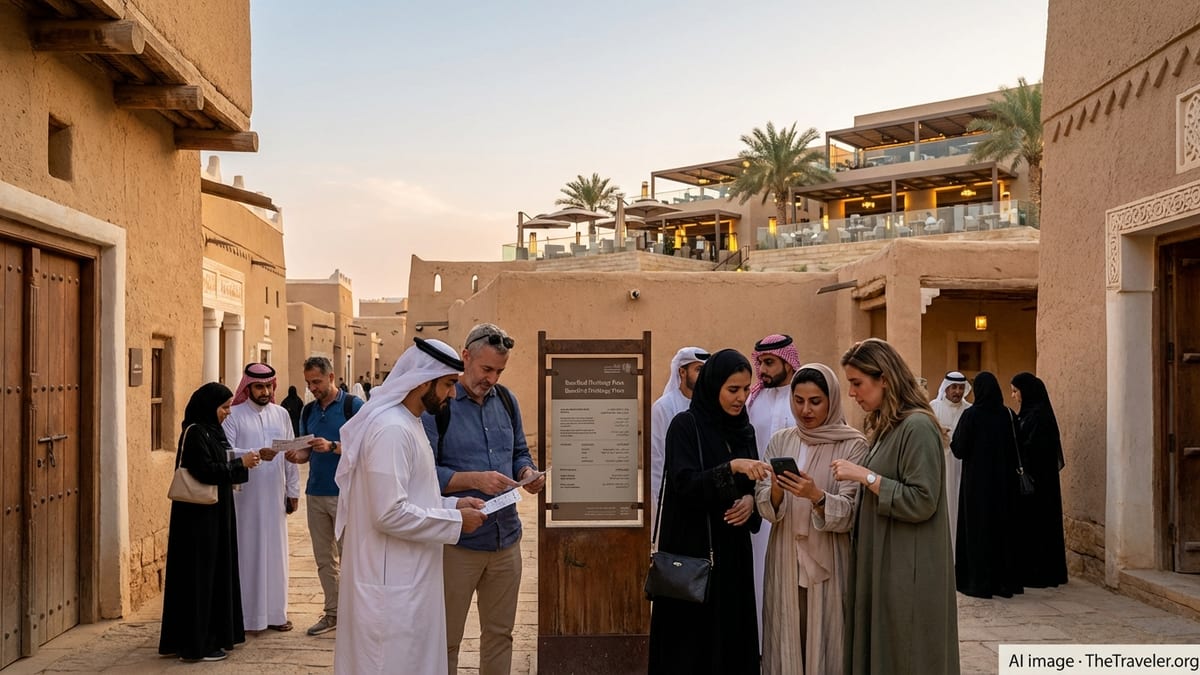
Understanding Saudi Arabia’s Rapidly Evolving Tourism Scene
Saudi Arabia has moved from a largely closed tourism market to an increasingly open and diversified destination in only a few years. The launch of a tourist e-visa for dozens of nationalities, the expansion of domestic and international flights, and high-profile events such as Riyadh Season have all driven demand for more structured visitor experiences. In parallel, state-backed giga-projects like Qiddiya City, Diriyah and the rejuvenated historic district of Jeddah are creating clusters of attractions that lend themselves naturally to bundled access and passes.
Against this backdrop, private companies and official entities have started to experiment with city passes, flexible attraction bundles and seasonal wristbands. These can cover multiple museums and heritage sites in one neighborhood, combine activities across a coastal city such as Jeddah, or grant access to entertainment zones and shows in Riyadh during peak seasons. However, because the market is young and still changing, passes in Saudi Arabia are not yet as standardized as long-running options in major European capitals.
Most passes in the kingdom are operated either by destination management companies, event organizers or attraction platforms rather than by municipal tourism boards. As a result, the inclusions, validity periods and refund rules can vary significantly from one pass to another. Visitors need to pay closer attention to the small print than they might be used to in more mature city-pass markets, and they should expect that options could change between one travel season and the next.
Crucially, Saudi Arabia’s geography and infrastructure influence how useful a pass can be. Cities are often spread out, public transport is still developing, and extreme summer heat can limit how many attractions you can realistically visit in a single day. When evaluating whether a bundle or pass will pay off, you must consider not just the advertised savings but also how much time and energy it will take to reach the included sites.
Key Types of Tourist Passes and Tickets in Saudi Arabia
Although naming and branding differ, most tourism-related passes in Saudi Arabia fall into a few broad categories. The first is the flexible multi-attraction pass sold for cities like Jeddah, where a single digital pass can be used to redeem entry at several participating experiences over a fixed period. These often target free independent travelers who want choice without committing to a rigid daily schedule, allowing them to pick a certain number of attractions from a broader list.
A second category includes site-specific access passes for large heritage or cultural zones. In Riyadh, for example, the Diriyah Access Pass bundles entry to the At Turaif UNESCO World Heritage Site and the adjacent Bujairi Terrace dining and leisure district, sometimes with credit redeemable at partner restaurants. Similar arrangements exist in other heritage clusters, where conservation authorities use unified ticketing to control visitor flows and encourage longer stays.
The third category is seasonal entertainment and festival passes linked to events like Riyadh Season. These can range from simple day tickets to particular zones to more elaborate packages combining multiple shows, theme-park style areas, sports events and concerts. Because visitor numbers during these festivals can reach into the millions, organizers use tiered tickets and passes to manage demand and offer premium experiences to those willing to pay more.
Lastly, a set of quasi-pass products sits at the intersection of tourism and transportation. Airlines and national carriers have experimented with stopover programs that bundle hotel stays, airport transfers and selected attractions at discounted rates for transit passengers. While not always marketed as “passes,” these packages function similarly by concentrating multiple experiences into a single purchase, often at a lower combined cost than booking each component independently.
How Attraction Bundles Like City Passes Work in Practice
Multi-attraction passes in Saudi Arabia are typically digital products purchased online ahead of time. After payment, you receive a QR code or electronic voucher that can be presented at participating attractions. Products in Jeddah, for instance, may allow you to choose three or more experiences from a curated list that can span everything from cultural visits to outdoor adventures along the Red Sea coast. Once activated at the first attraction, the pass remains valid for a set number of days or weeks.
These passes often emphasize flexibility rather than strict daily quotas. Instead of cramming as many visits as possible into a single day, you might have up to 90 days from purchase to use all your entitlements. This design recognizes that many visitors to Saudi Arabia combine business, family visits and leisure, so they may not be free to sightsee intensively on consecutive days. It also reflects the climate: in hotter months, early mornings and evenings are prime sightseeing windows, which naturally spreads activity over time rather than concentrating it.
Pricing is usually positioned to deliver savings if you use the pass for higher-value attractions or premium experiences that cost more when bought separately. For example, adventure activities, island boat trips or specialized cultural tours tend to be priced higher than standard museum entries. If your chosen bundle lets you combine several of these within one pass, your per-experience cost can drop significantly compared to walk-up rates. If you only redeem lower-priced inclusions, any savings quickly erode.
Another important operational detail is pre-booking. While the marketing often promotes spontaneous access, many individual attractions still require reservations for specific time slots, especially on weekends or during school holidays. In practice this means that, even if you hold a flexible pass, you may have to commit to dates and times once your plans firm up. Failing to reserve ahead can lead to sold-out time slots, which undermines the value of the pass and can leave you scrambling to use your remaining credits.
Heritage and Culture Passes: Diriyah and Beyond
Heritage-focused passes are particularly relevant in and around Riyadh, where projects like Diriyah are reshaping how visitors engage with Saudi history. Diriyah’s At Turaif district, a UNESCO-listed mud-brick city and birthplace of the Saudi state, has been restored as a major cultural attraction. Access is managed through a ticketing system that usually includes entry to both the heritage area and nearby Bujairi Terrace, a contemporary dining and lifestyle zone overlooking the historic site. In some seasons the pass credits part of its value toward spending at participating restaurants, effectively turning your ticket into a partial voucher.
Visitors who plan to spend an evening exploring At Turaif’s museums, walking the illuminated alleys and then dining or attending events in Bujairi tend to find strong value in such passes. You pay once, move freely between the old and new quarters, and avoid the friction of separate payments at each gate. In comparison, travelers who intend only a short photo stop or a quick stroll may feel that a bundled pass overshoots their needs, particularly if they are traveling with a large family and must buy multiple tickets.
Beyond Riyadh, similar integrated approaches are emerging in places like AlUla, where a range of experiences from rock-cut tombs to open-air art installations are managed under a single destination framework. Pass-like products there may bundle specific sites on designated days, or pair guided tours with optional add-ons such as stargazing or desert dining. In Jeddah, the revitalized historic district of Al Balad has trialed ticketing models for guided access to restored houses, cultural centers and galleries, sometimes packaged together for visiting cruise passengers and tour groups.
These heritage passes are less about racing between as many attractions as possible and more about curating a deeper experience within a focused area. Their value is measured not only in currency saved but also in convenience, storytelling and the quality of interpretation provided by guides and multimedia. For travelers genuinely interested in Saudi history and culture, they can be worth the premium over pay-per-entry tickets, provided you allow enough time in your itinerary to fully explore what is included.
Festival, Event and Theme Park Tickets: Riyadh Season and Qiddiya
Saudi Arabia’s event calendar has expanded dramatically, and nowhere is this more visible than in Riyadh Season. This multi-month entertainment festival transforms the capital into a patchwork of themed zones offering concerts, exhibitions, sports, dining and immersive attractions. Tickets are usually structured by zone, event or experience, and while blanket “season passes” are less common, visitors can effectively build their own passes by pre-purchasing multiple zone tickets and show entries.
From a value perspective, Riyadh Season tickets are especially worthwhile when you cluster several experiences in the same area on a single day or evening. Many zones offer attractions that could easily fill several hours, and purchasing a day ticket to one zone often proves more economical than paying separately for each ride, exhibit or show available there. The downside is that moving between widely separated zones can be time-consuming, and each zone may require its own access ticket, so planning is essential.
The emergence of Qiddiya City on the outskirts of Riyadh is reshaping the conversation about amusement park passes in Saudi Arabia. With the opening of Six Flags Qiddiya City and an adjacent water park, visitors now have access to a theme-park ecosystem that rivals major international destinations, complete with record-breaking roller coasters and high-capacity attractions. While exact pricing structures evolve, large parks like this typically offer day tickets, priority access options and sometimes multi-day or annual passes aimed at both residents and repeat visitors.
For international tourists, a single full-day ticket that includes unlimited rides usually offers the best value, especially if you time your visit outside peak national holidays. Priority or fast-track passes can be worth the extra cost during busy weekends to minimize queue times, but they add significantly to the overall spend. As Qiddiya develops further with hotels, live shows and other entertainment, expect bundled stay-and-play packages to appear, which will function much like resort passes in other global theme-park hubs.
When Saudi Tourist Passes Genuinely Save You Money
Tourist passes in Saudi Arabia deliver their strongest value in a few clear scenarios. The first is for travelers planning concentrated sightseeing in one city over several days. If you know you will visit multiple paid attractions in Jeddah, spend an evening in Diriyah, and perhaps add a themed entertainment zone in Riyadh, bundling these into passes or structured packages can bring meaningful savings compared to buying single tickets on arrival. This assumes you actually follow through and redeem most of your included experiences.
Passes also favor travelers who gravitate toward higher-priced activities such as boat trips, adventure sports, premium heritage tours or large-scale theme parks. Because these experiences carry higher standalone prices, any discount or bundled access quickly adds up. For example, combining an island excursion, a guided snorkeling trip and a desert adventure under one flexible pass will usually cost less in aggregate than paying walk-up rates for each, particularly in peak season when individual prices often creep up.
Another situation where passes shine is when they offer additional benefits beyond simple entry, such as skip-the-line access, included public transport or dining credits. In Saudi Arabia, public transport integration is still emerging, but time-saving perks are increasingly built into premium tickets and festival packages. If a heritage or event pass lets you bypass queues, secure preferred seating or access exclusive areas, the non-monetary value can be significant, especially if your visit coincides with school holidays, religious festivals or major sporting events.
Finally, passes can serve as budgeting tools. Prepaying for a bundle before you arrive in the kingdom can help you lock in costs and avoid exchange-rate surprises or last-minute price spikes. This is particularly relevant for families and small groups who need to keep a close eye on daily spending. Knowing that core activities are already covered allows you to focus your on-the-ground budget on food, local transport and spontaneous extras rather than on large, unpredictable ticket purchases.
Common Pitfalls and When Passes Are Not Worth It
Despite their potential advantages, Saudi tourist passes are not automatically a good deal. One of the most common pitfalls is overestimating how much you can realistically do in a short time, especially in hot weather or during busy event periods. Long distances between attractions, traffic congestion and midday heat can all slow you down, and travelers who buy ambitious multi-attraction passes may end up using only a portion of what they paid for.
Another risk lies in misaligned interests. Many flexible passes include a mix of museums, family attractions and adventure activities. If you are traveling with young children, older relatives or people with limited mobility, a large chunk of the available options may not suit your group, which reduces the effective pool of attractions you can benefit from. In such cases, selectively buying individual tickets to the few experiences that genuinely appeal to everyone is often more sensible than locking yourselves into a broad but only partially relevant pass.
Travelers with highly fluid itineraries should also be cautious. If you expect to spend significant time visiting relatives, attending business meetings or making last-minute changes, you may not have the predictability needed to get full value from passes that require advance reservations for specific time slots. Cancellations or no-shows may incur penalties or cause you to forfeit a day of validity, turning what looked like a good bargain into a sunk cost.
Finally, visitors who prefer unstructured wandering and free attractions are unlikely to benefit from paid passes. Many of Saudi Arabia’s most memorable experiences, from strolling the Jeddah Corniche to exploring Al Balad’s streets or watching the sunset over desert landscapes, cost little or nothing. If your travel style emphasizes atmosphere over checklists of paid sights, a pass may feel restrictive rather than liberating, and your money may be better spent on high-quality meals, guided experiences that truly matter to you, or upgrading your accommodation.
How to Decide: A Simple Framework for Travelers
Deciding whether a Saudi tourist pass or ticket bundle is worth it becomes easier if you treat it like any other major travel purchase and run a few quick checks. Start by building a rough itinerary for each day of your trip, including where you will be based and how much time you realistically have for sightseeing. Then list the specific attractions, experiences or zones you are most interested in, noting their standalone ticket prices where available. This gives you a baseline against which to compare any pass you are considering.
Next, examine the details of the pass or package. Look at the list of included attractions, the validity period, any blackout dates and reservation rules. Ask yourself honestly how many of the included experiences you would do anyway even if you did not buy the pass. If you have to add less appealing attractions just to make the math work, the pass is probably not the right fit. Conversely, if the pass conveniently groups together several experiences already on your wish list, you are likely to come out ahead.
You should also weigh non-financial benefits. In a country where ticketing systems can still feel fragmented and language barriers occasionally arise, having a single QR code or voucher that opens multiple doors is a genuine advantage. For group leaders, passes simplify logistics by centralizing payments and confirmations. If a pass offers skip-the-line privileges at popular heritage sites or festivals, that time saved can be especially valuable on shorter trips.
Lastly, consider your risk tolerance. Passes are almost always paid in full up front and may offer limited options for refunds or date changes. If you are traveling during a volatile period or have personal circumstances that could disrupt your plans, the flexibility of pay-as-you-go tickets might outweigh potential savings. When in doubt, it can be wise to combine approaches: purchase one or two targeted passes for key days, while leaving the rest of your itinerary open for spontaneous, individually ticketed experiences.
The Takeaway
Saudi Arabia’s tourist passes and bundled tickets reflect a fast-evolving tourism landscape. They can deliver good value in the right circumstances, particularly for travelers who plan ahead, cluster activities within specific cities or heritage zones, and gravitate toward higher-priced attractions. Products ranging from flexible multi-attraction passes in Jeddah to heritage access bundles in Diriyah and day tickets to major theme parks around Riyadh all aim to simplify the visitor experience and encourage deeper exploration.
However, passes are far from essential for every trip. Travelers with relaxed schedules, a preference for free experiences, or highly fluid itineraries may find that buying individual tickets better matches their needs and travel style. The climate, distances between attractions and the still-developing nature of the pass ecosystem in Saudi Arabia all mean that you should be cautious about overcommitting to large bundles that you may not fully use.
The smartest approach is to treat passes as tools, not as must-have accessories. Start with your own interests and daily rhythms, calculate whether a pass aligns with the experiences you would choose anyway, and only then decide if it justifies the upfront cost. If you take the time to match the right product to your plans, Saudi Arabia’s emerging network of tourist passes can enhance your journey, smooth logistics and, in many cases, save you money without compromising the spontaneity that makes travel rewarding.
FAQ
Q1. Do I need a tourist pass to enjoy major attractions in Saudi Arabia?
Not necessarily. Most attractions sell individual tickets, and passes are optional tools that may save money or time if they match your planned itinerary.
Q2. Are Saudi city passes similar to those in Europe or North America?
They share the same idea of bundling attractions, but the Saudi market is newer and products are less standardized, so inclusions and rules can vary widely.
Q3. Will a pass let me skip lines at popular sites and events?
Some premium passes and festival tickets include priority access or special entry lanes, but this is not universal. Always check whether skip-the-line benefits are clearly stated.
Q4. Are passes good value for families with children?
They can be, especially when they include family-friendly attractions or discounts for children, but you should confirm that most included activities are suitable for your kids’ ages and interests.
Q5. How far in advance should I buy a tourist pass in Saudi Arabia?
It is usually best to buy once your travel dates and rough daily plans are fixed. During peak seasons, securing passes and necessary reservations several weeks ahead is sensible.
Q6. Can I get a refund if my plans change after buying a pass?
Refund and change policies differ by provider. Some passes are non-refundable once activated, while others may allow limited changes before the first use, so always read the terms carefully.
Q7. Do passes cover public transport in Saudi cities?
In most cases they do not. Public transport integration is still developing, and passes typically focus on attraction entry rather than buses or metro services.
Q8. Are tourist passes useful for business travelers with limited free time?
They can be if you have clear windows of leisure time and intend to visit several included attractions, but pay-as-you-go tickets often suit unpredictable schedules better.
Q9. Is it safe to rely on digital passes on my phone?
Yes, digital QR codes are widely accepted, but it is wise to download confirmations offline and carry screenshots in case of network issues at the gate.
Q10. What is the best way to check if a specific pass is worth it for my trip?
List the attractions you truly want to see, total their individual ticket costs, then compare that figure to the pass price while factoring in any time-saving or added benefits.