

Saudi Arabia is rapidly emerging as one of the Middle East’s most ambitious destinations, blending ancient desert landscapes and sacred cities with ultra-modern megaprojects on the Red Sea and in Riyadh. For travelers, the kingdom now offers a surprisingly diverse mix of experiences, provided you understand local laws, cultural expectations, and how to plan a smooth itinerary. This guide outlines the key places to visit, current travel rules, and practical planning advice for a first or second trip.
Understanding Today’s Saudi Arabia
Saudi Arabia is in the midst of a sweeping transformation under its Vision 2030 strategy, which aims to diversify the economy beyond oil and position tourism as a major pillar. Major investments in heritage restoration, luxury coastal resorts, public art, and new airlines are reshaping how visitors experience the country. Yet beneath the change, Saudi Arabia remains a deeply conservative society grounded in Islamic law, which still shapes daily life and legal expectations.
Tourism opened more widely in 2019 with the launch of an electronic tourist visa for citizens of dozens of countries, including the United States and much of Europe. Since then, visa rules have continued to evolve, and new flight connections are steadily appearing, from Gulf carriers to emerging players such as Riyadh Air. Air connectivity is increasing from Europe and Asia, and U.S. carriers have announced direct services in the coming years, making it easier than ever to include Saudi Arabia in a wider regional itinerary.
Travelers today will encounter a mix of strict rules and relaxed social scenes, especially in major cities. Concerts, mixed-gender events, and international sporting competitions are now commonplace, while rules on women’s mobility have eased significantly. At the same time, laws governing religion, expression, alcohol, and public behavior remain stringent and are enforced with penalties that can be severe by Western standards. Understanding this mix of openness and constraint is essential to a respectful and trouble-free visit.
Saudi Arabia is also geographically vast, roughly four times the size of France, with varied regions that can feel like different countries. The holy cities of Mecca and Medina, accessible only to Muslims, draw millions of pilgrims each year, while the Red Sea coast, desert plateaus of AlUla, and the futuristic projects in NEOM and The Red Sea region are being developed as global leisure destinations. Building your trip around a few regions rather than trying to cover the entire country will make for a more rewarding experience.
Visa, Entry Rules, and Travel Requirements
For many nationalities, tourism access now starts with an electronic visa obtained online before arrival or, in some cases, on arrival at major airports. The e-visa typically allows multiple entries over a period of about a year with stays of several weeks per visit, though exact terms can vary by nationality and policy changes. Travelers from countries not covered by the e-visa scheme need to apply through a Saudi consulate or licensed visa service and should allow extra time for processing and documentation.
Transit policies have also become more flexible. Some travelers flying with Saudi carriers or through key hubs such as Riyadh or Jeddah can qualify for short transit permissions that allow them to leave the airport and briefly explore the city. The details change periodically, so it is important to check current airline and official guidance right before you travel. Non-Muslim visitors must remember that entering Mecca is prohibited and that access to central Medina is limited to Muslims, even if they hold valid visas for the rest of the country.
On arrival, immigration officers may ask for proof of accommodation, onward or return travel, and in some cases evidence of travel insurance. Biometric data collection is common. Customs rules remain strict: drugs, alcohol, pork products, and items considered pornographic or blasphemous are prohibited, and penalties for violations can be severe, including detention and deportation. Travelers carrying large amounts of currency or valuable items should be prepared to declare them as required by Saudi regulations.
Health requirements are particularly important for those visiting the holy cities during Hajj or peak Umrah seasons, when proof of vaccination against certain diseases may be mandatory. Even for general tourists, proof of standard vaccinations and health insurance is strongly recommended. Because entry requirements and screening procedures can tighten during regional tensions or major religious events, checking official government advisories from both your home country and Saudi authorities is a critical pre-departure step.
Cultural Norms, Laws, and Safety
Saudi Arabia’s legal system is based on Islamic law, and many everyday behaviors that might be taken for granted elsewhere are regulated. Criticism of the government, royal family, or official religion, including online posts made outside the country, can trigger investigations and potentially harsh penalties. Authorities monitor social media, and tourists have been detained in the past for posts or images deemed offensive, even if they were shared years earlier. It is wise to avoid political discussions in public, refrain from photographing security infrastructure, and be cautious about what you post during and after your trip.
Public displays of affection are discouraged, and sexual relations outside of marriage are technically illegal, although enforcement toward foreign couples in hotels has softened in practice. Mixed-gender socializing is now far more common in cafes, restaurants, and entertainment venues, particularly in major cities. Same-sex relationships and LGBTQ+ expression remain criminalized, and travelers in these communities should adopt a particularly discreet profile, avoiding public discussion of sexuality or romantic partners and steering clear of visible pride symbols.
Alcohol remains largely banned in Saudi Arabia, including for tourists and residents. Possession, importation, or consumption can result in fines, detention, and deportation. A tightly controlled alcohol shop in Riyadh now serves a narrow group of non-Muslim foreign residents under specific conditions, but this does not extend to general visitors. Most hotels, resorts, and restaurants serve an array of non-alcoholic mocktails, fresh juices, and specialty coffees instead. Travelers who are accustomed to nightlife centered on alcohol should reset expectations and instead plan evenings around dining, music events, or strolling in popular boulevards and coastal promenades.
From a personal safety perspective, violent crime against tourists is relatively rare, and major cities have visible security forces. Petty crime rates are generally lower than in many global capitals, though standard precautions still apply: secure valuables, use hotel safes, and avoid isolated areas late at night. Traffic presents a more tangible risk, especially on highways and in congested urban areas where driving can be fast and assertive. If you rent a car, consider choosing a vehicle with strong safety features and be conservative behind the wheel. Women can legally drive and travel independently, but in conservative rural areas may still attract attention and should plan movements with cultural sensitivity in mind.
Dress Codes, Social Etiquette, and Ramadan
The formal dress code has eased in recent years, but modesty remains the guiding principle. Women visitors are no longer required by national law to wear the traditional black abaya, though many still choose a loose, long outer garment in more conservative regions. At a minimum, women should cover shoulders, chest, and knees, avoid tight or transparent clothing, and carry a light scarf that can serve as a head covering if visiting religiously significant areas or if asked out of respect. Men should avoid sleeveless tops and very short shorts in public areas, especially outside resort zones.
Social etiquette is shaped by Islamic values and a strong emphasis on hospitality. Greetings often begin with a handshake or a simple nod, and it is courteous to use the right hand when offering or receiving items. Avoid initiating physical contact with the opposite sex unless they clearly extend a hand first. When visiting traditional markets or smaller towns, dressing slightly more conservatively than you might in Riyadh or Jeddah is both respectful and practical, as it can reduce unwanted attention.
Ramadan, the Islamic month of fasting, profoundly affects daily rhythms. During this period, Muslims fast from dawn to sunset, and restaurants outside hotels often close during daylight hours or only serve take-away behind covered windows. Eating, drinking, or smoking in public during the fasting hours is restricted by law and can lead to fines. Non-Muslim visitors are expected to either eat in private spaces such as hotel rooms or in designated discreet venues until sunset. After the daily fast breaks at sunset, cities come alive with family gatherings, night bazaars, and extended shopping hours that can stretch into the early morning.
Traveling during Ramadan can be both rewarding and logistically challenging. You may experience lighter crowds at certain attractions during the day but heavier traffic and congestion in the evenings, especially near major mosques and popular iftar locations. Government offices, banks, and some businesses operate on reduced daytime hours. If your trip coincides with the final ten days of Ramadan, expect even more intense nighttime activity and especially large crowds in and around major mosques. Booking accommodation well in advance during this period is essential, particularly in cities like Jeddah, Riyadh, and those serving as gateways to the holy sites.
Top Destinations and Experiences
For many visitors, Riyadh offers the clearest window into the country’s future-focused ambitions. The capital has seen a surge of contemporary architecture, shopping districts, and cultural projects, along with the Riyadh Season entertainment festival that brings concerts, sporting events, and art installations. Public art initiatives have transformed parts of the city into open-air galleries, while historic sites such as Diriyah, the restored birthplace of the Saudi state, give context to the royal family’s roots. New museums, culinary experiences, and upscale hotels continue to open, making Riyadh an increasingly cosmopolitan stop.
Jeddah, on the Red Sea coast, has a different character, blending a long mercantile history with relaxed seaside life. The historic district of Al-Balad, with its coral-stone houses and wooden latticed balconies, has been undergoing careful restoration and offers one of the kingdom’s most atmospheric urban walks. Along the waterfront, the corniche features public artworks, bike paths, and family areas that stay busy in the cooler evenings. From Jeddah, many pilgrims continue to Mecca, while leisure travelers are beginning to venture further up and down the coast as new beach resorts and marine protected areas open to tourism.
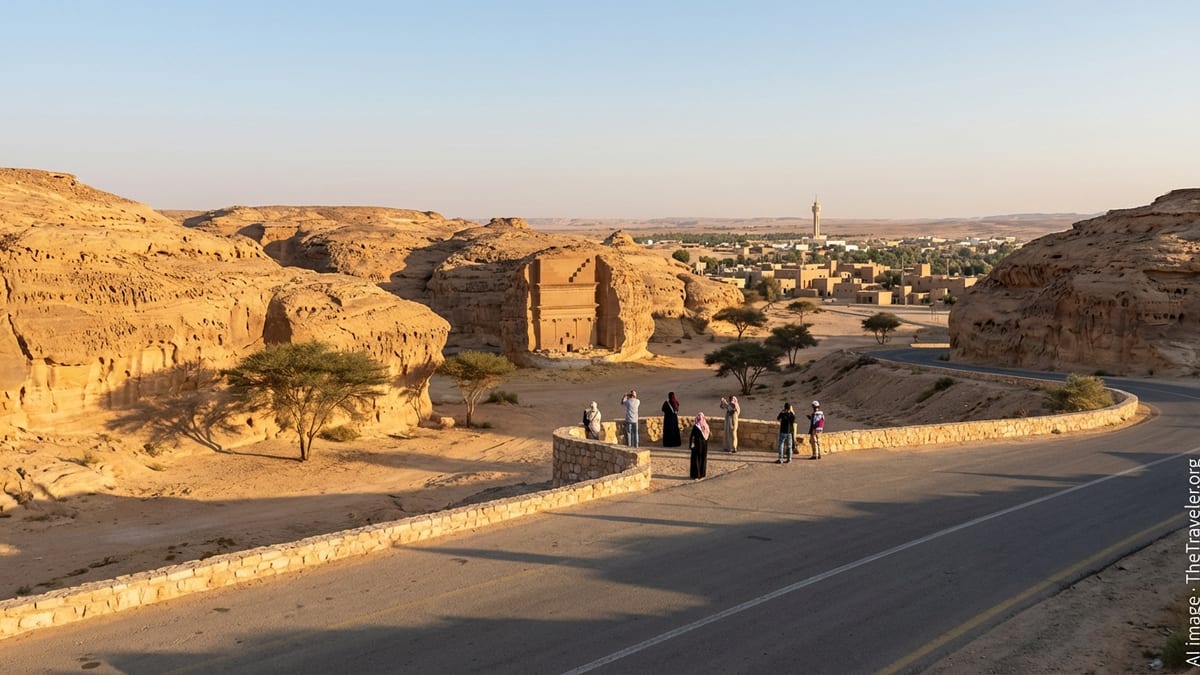
AlUla has quickly become Saudi Arabia’s flagship heritage and landscape destination. Set among sandstone cliffs and desert valleys in the northwest, it is home to dramatic rock formations, an oasis old town, and nearby Hegra, the country’s first UNESCO World Heritage Site, known for monumental tombs carved into rock faces by the Nabataeans. Carefully managed visitor numbers, guided hikes, hot air balloon rides, and open-air concerts in the cooler months create a distinctive blend of culture and adventure. Accommodation ranges from stylish eco-lodges to high-end desert resorts that prioritize low-impact design and dark skies for stargazing.
Further west, Saudi Arabia’s Red Sea megaprojects are steadily opening sections of pristine coastline and island archipelagos to visitors. New resorts on previously uninhabited islands emphasize clear waters, coral reefs, and sustainability-forward design, with a mix of overwater villas and beach suites aimed at the luxury market. In the far northwest, NEOM is rolling out its first coastal and island projects, while inland plans for mountain and desert resorts continue to evolve. These areas are ideal for travelers who want snorkeling, diving, or sailing in relatively untouched settings, though prices at early-opening properties can be significantly higher than in established regional beach destinations.
Getting Around and Seasonal Planning
Domestic travel inside Saudi Arabia is easier than it once was, thanks to competitive airfares and a growing network of flights connecting major cities and smaller regional hubs. Multiple carriers operate frequent services between Riyadh, Jeddah, Dammam, and other key centers, and a new wave of airlines is adding routes that link the kingdom more tightly with Europe, Asia, and North America. For longer distances, flying remains the most time-effective option. High-speed rail between some cities, including Medina and Mecca, is primarily geared toward pilgrims, but over time rail links are expected to play a bigger role for general tourism.
Renting a car offers flexibility, particularly in regions like AlUla, Tabuk, or the Asir highlands, where public transport is limited and many natural attractions sit far from town centers. International visitors can usually drive with their home-country license for a short period, but carrying an international driving permit is a prudent backup. Road quality on main highways is generally good, though local driving styles can be fast and lane discipline inconsistent. In cities, ride-hailing apps are widely used and provide a comfortable alternative to driving yourself, including for solo women travelers who may wish to avoid the hassle of navigating unfamiliar traffic.
Climate should play a central role in your planning. Summers can be extremely hot across much of the country, with temperatures in some regions rising well above what many travelers consider comfortable for sightseeing. Coastal areas such as Jeddah and the Eastern Province can also be very humid. The prime travel season for most destinations runs from roughly November through March, when daytime temperatures are milder and evenings cooler. Desert areas and highlands can be cool or even cold at night in winter, so packing layers is important if you plan outdoor activities.
Religious calendars also shape the flow of travelers. The Hajj pilgrimage period, which shifts each year according to the Islamic lunar calendar, places enormous pressure on airports, roads, and accommodation around Mecca and Medina and can affect availability and prices in nearby cities such as Jeddah. If you are not traveling for pilgrimage, it is usually advisable to avoid those peak dates. Umrah seasons outside of Hajj are somewhat less intense but can still create spikes in demand during school holidays and Ramadan. Booking flights and hotels well ahead is especially important if your visit overlaps any of these high-demand windows.
Budgeting, Accommodation, and Trip Itineraries
Costs in Saudi Arabia vary significantly by city and by the types of experiences you choose. Major cities such as Riyadh and Jeddah offer a full spectrum of accommodation, from midrange business hotels to top-tier global luxury brands. In emerging resort regions, options can skew toward the high end, particularly on newly opened Red Sea islands and flagship cultural properties in AlUla. While budget hotels and serviced apartments exist, they may offer limited English-language support and fewer amenities than similarly priced options in some neighboring countries.
Food can be a good-value highlight if you embrace local dining habits. Traditional Saudi and broader Arabian dishes, from fragrant rice and meat platters to fresh breads and mezze, are widely available at modest prices in neighborhood restaurants. International cuisine, specialty coffee, and dessert shops abound in urban centers, particularly in newer boulevards and lifestyle districts. Keep in mind that without alcohol, restaurant bills may be lower than in comparable cities where cocktails and wine add significantly to the tab, though high-end venues in luxury hotels and resorts can still be expensive.
For a first-time visitor with about a week, a balanced itinerary might include three nights in Riyadh to explore the capital’s museums, historic quarters, and entertainment zones, followed by three or four nights in AlUla or a Red Sea resort for nature and relaxation. With 10 to 14 days, you could combine Riyadh, Jeddah and the Red Sea coast, plus time in AlUla, or add a detour to the cooler highlands around Abha in the southwest. Pilgrims who are eligible to visit Mecca and Medina might build additional days in Jeddah or Taif to experience other aspects of Saudi culture before or after their religious obligations.
When planning, anticipate higher costs around major events, festivals, and international sports tournaments, which Saudi Arabia increasingly hosts. Hotel prices can spike during high-profile boxing matches, football tournaments, Formula One races, and cultural seasons, particularly in Riyadh and Jeddah. Monitoring event calendars and adjusting your dates by just a few days can make a noticeable difference to both availability and price, while also allowing you to decide whether to seek out or avoid large-scale gatherings.
The Takeaway
Saudi Arabia today is a country in transition, offering travelers a rare chance to witness rapid change while engaging with a culture that remains deeply rooted in tradition. Monuments carved into desert cliffs, restored old towns, and untouched coral reefs coexist with megaprojects, art festivals, and a new generation of Saudis eager to present their country to the world. Navigating this landscape requires more preparation than some destinations, particularly around laws, dress, and religious norms, but the rewards can be significant for those who approach it with curiosity and respect.
For most visitors, a successful trip begins with the basics: securing the correct visa, checking up-to-date travel advisories, planning around climate and religious calendars, and building an itinerary that focuses on two or three regions rather than rushing across the kingdom. Once on the ground, dressing modestly, being conservative about public behavior, and staying attuned to local expectations will help you move comfortably through both modern districts and traditional neighborhoods.
As infrastructure grows and direct flights expand from Europe, Asia, and North America, Saudi Arabia is likely to become a more familiar name on global travel maps. By understanding the travel rules and planning carefully, you can experience both the kingdom’s ambitious new horizons and its enduring cultural heart. For travelers willing to engage thoughtfully, Saudi Arabia offers not only a destination but a fascinating story in progress.
FAQ
Q1. Do I need a visa to visit Saudi Arabia as a tourist?
Most travelers do need a visa, often obtained through an electronic system for eligible nationalities; requirements and allowed stay vary, so always check the latest rules for your passport before booking.
Q2. Is Saudi Arabia safe for solo travelers, including women?
Saudi Arabia is generally safe, with relatively low violent crime, and solo women can travel and drive, but it is wise to dress modestly, avoid isolated areas at night, and use reputable transport such as licensed taxis or ride-hailing apps.
Q3. Can tourists drink alcohol anywhere in Saudi Arabia?
No, alcohol remains effectively banned for the general public, including tourists, and importing or consuming it can lead to serious penalties, so plan on enjoying non-alcoholic options instead.
Q4. What should I wear in public as a visitor?
Both men and women should dress modestly, avoiding tight or revealing clothing; women are no longer legally required to wear an abaya, but loose, long layers and a light scarf are recommended, especially in conservative areas.
Q5. Is it okay to travel during Ramadan?
Yes, you can travel during Ramadan, but expect limited daytime dining options, changes to business hours, and busier streets and restaurants at night; avoid eating, drinking, or smoking in public during daylight fasting hours.
Q6. Are Mecca and Medina open to non-Muslim tourists?
No, access to Mecca and central Medina is restricted to Muslims, and non-Muslim visitors must respect these boundaries even if they hold valid Saudi visas for other parts of the country.
Q7. How many days do I need for a first trip to Saudi Arabia?
Around seven to ten days is enough for a focused first trip, allowing time to explore Riyadh or Jeddah and add either AlUla or a Red Sea resort without rushing.
Q8. Can I use public displays of affection with my partner?
Public displays of affection are discouraged, and while married couples are generally not questioned in hotels, it is best to keep physical affection very discreet in public spaces.
Q9. Is English widely spoken?
English is commonly spoken in international hotels, airports, and major restaurants in big cities, but less so in rural areas, so learning a few basic Arabic phrases and carrying important addresses written in Arabic can be very helpful.
Q10. What is the best time of year to visit Saudi Arabia?
The most comfortable period for most regions is roughly from November to March, when temperatures are milder; coastal and desert areas can be very hot outside these months, which can limit daytime outdoor activities.