

Saudi Arabia is opening up fast to international tourism, and the way people pay inside the Kingdom is changing just as quickly. Sleek malls and coffee chains tap your card or phone in seconds, while traditional markets and desert camps still prefer paper riyals. Understanding how money works in Saudi Arabia before you land will save you time, fees and stress, and help you blend in with how locals really pay for things.
The Saudi Riyal: What Travelers Need To Know
The official currency of Saudi Arabia is the Saudi riyal, abbreviated as SAR and often written simply as "riyals". It is divided into 100 halalas, though in everyday transactions prices are usually rounded to the nearest 0.5 or 1 riyal. The riyal is widely available in regional foreign exchange markets and at major international hubs, but you do not need to arrive in the Kingdom with large amounts of local cash. Currency exchange desks and ATMs are present in major airports, city centers and shopping malls.
The riyal is effectively pegged to the US dollar, and that peg has been stable for many years. As a result, visitors coming from dollar-linked economies can expect minimal day to day exchange rate volatility, while travelers from Europe and elsewhere may see small fluctuations against their home currencies. It is sensible to check approximate rates shortly before you travel, but there is rarely a need to worry about sudden swings while you are on the ground.
Banknotes are issued in several denominations, commonly including 5, 10, 50, 100 and 500 riyals. Lower value coins exist but are used less frequently in big city, card-first life. Most mid range and higher end transactions are conducted by card or mobile wallet, and even many budget cafés and supermarkets support fully cashless payments. At the same time, small notes are extremely useful in traditional markets, small taxis and roadside stops, so withdrawing a mix of denominations when you first use an ATM is wise.
One practical point for visitors is that riyal banknotes are printed with Arabic numerals as well as Western numerals, and some older signs or receipts may only show Arabic script. It is worth familiarising yourself with how numbers look in Arabic before arrival. In practice, staff in hotels, chain restaurants and major shops nearly always speak at least basic English and can confirm prices for you, but being able to recognize the digits yourself will make cash transactions smoother.
Cash, ATMs and Currency Exchange
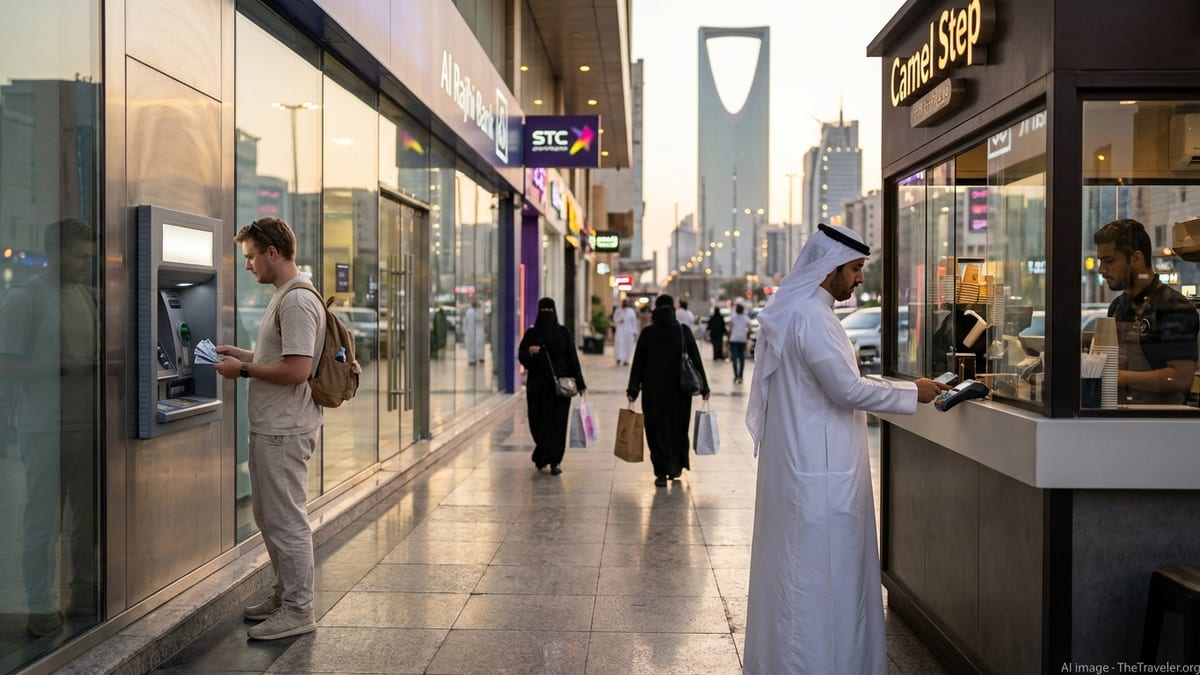
Saudi Arabia has a dense, modern banking network, and ATMs are widespread in cities, airports and larger towns. Machines connected to the national Mada network typically accept major international brands such as Visa and Mastercard, and often do not add a local withdrawal fee for foreign cards. That said, your home bank may still charge its own cash withdrawal or foreign transaction fee, so it is essential to check your card’s fee structure before you travel and, where possible, bring at least one debit card known for low overseas fees.
In the main urban centers like Riyadh, Jeddah and Dammam, you are rarely more than a few minutes from an ATM inside a mall, supermarket, bank branch or petrol station. Tourist hubs such as AlUla and coastal resorts on the Red Sea also have reasonable coverage. In more remote areas, on desert highways or when visiting small villages, access becomes patchier, and machines can occasionally run out of cash or be out of service. If your plans include long road trips, mountain villages or desert camps, withdraw enough cash in the nearest city beforehand rather than assuming you will find a working ATM en route.
Currency exchange services are available at major airports, some large hotels and licensed exchange bureaus in city districts with heavy commercial activity. Rates at airport counters tend to be less competitive than in town, and commission structures vary, so exchanging only a small amount on arrival and then using ATMs or city bureaus for larger sums is usually more cost effective. As a general rule, avoid unlicensed street exchangers and stick to banks, well known exchanges or machines physically attached to recognized financial institutions.
If you are carrying substantial cash in or out of the country, be aware of declaration rules. Travelers must formally declare cash, traveler’s cheques, precious metals and similar negotiable instruments if their combined value reaches or exceeds the local regulatory threshold, which is set around tens of thousands of riyals. The exact level and procedures are periodically updated, and declarations can typically be completed online in advance or at customs on arrival and departure. Staying within the limits or declaring accurately where required will help you avoid delays, fines or confiscation.
Cards, Mobile Payments and the Mada Network
Saudi Arabia is one of the most advanced markets in the region for digital payments. In the big cities, you will see locals tapping cards and phones for everything from a quick coffee to supermarket runs. The national Mada network links local banks and point of sale terminals, and works in partnership with global schemes like Visa, Mastercard and others, so foreign-issued cards from major providers are widely accepted in shops, restaurants, hotels and larger services.
Contactless payments are the norm in urban areas. Apple Pay, Google Pay and bank-specific wallets are commonly used at supermarkets, chain cafés, pharmacies, cinemas and even many independent restaurants. In practice, if a merchant has a modern card terminal, they will often accept both physical cards and mobile wallets. Nonetheless, acceptance can still vary by individual business, and technical issues such as poor connectivity can temporarily disrupt card processing. It is prudent to carry at least one backup card from a different issuer, and a modest amount of cash, rather than relying on a single phone wallet for every purchase.
For visitors, an important detail is that Saudi merchants sometimes automatically process foreign cards with dynamic currency conversion, which means they show you the amount in your home currency on screen. While this looks convenient, the exchange rate embedded in these conversions is often less favorable than the rate your home bank would use. Whenever a terminal asks whether to charge in your home currency or in riyals, choosing riyals usually leads to a better overall rate, provided your bank does not impose excessive foreign transaction markups.
Credit cards are suitable for hotels, car rentals, flight tickets and higher value restaurant bills, but they are rarely the most economical way to get cash from ATMs because of cash advance fees and interest that may start accruing immediately. Where possible, use a debit card with low or no foreign fees for withdrawals, and keep credit cards for purchases where their fraud protection and travel insurance benefits are most useful. As always, notify your bank of your travel dates in advance to reduce the chance of automated fraud blocks once you start using your cards in the Kingdom.
Where You Still Need Cash in Saudi Arabia
Despite the surge in cards and mobile wallets, cash remains important in certain situations. Traditional markets, or souqs, can be particularly cash-oriented. In older quarters of Riyadh, Jeddah’s historic Al Balad or smaller regional towns, many stallholders sell incense, textiles, spices and household items from simple booths without fixed terminals. Even where card readers exist, mobile network coverage inside thick-walled buildings can be erratic, leading vendors to prefer banknotes to avoid failed transactions.
Street food and small-scale snacks are another cash-heavy corner of the economy. Independent shawarma counters, juice carts, roadside tea stalls and small bakeries often deal exclusively in cash, especially for very small purchases. Expect to pay for a quick falafel sandwich or cup of chai with coins and low denomination notes rather than tapping a card. Having a pocketful of tens and fives will smooth these interactions and avoids the awkwardness of offering a large note for a tiny order.
Transport is becoming increasingly digital, but gaps remain. App based ride services, including local versions of widely known international brands, accept in-app card and wallet payments by default, and official airport taxis in bigger cities may be able to process cards. However, older city cabs and informal drivers sometimes accept only cash, particularly in smaller towns or late at night when card terminals are switched off. Long distance private drivers hired through hotels or tour agencies may ask for cash settlement at the end of the trip. Clarifying in advance how payment will be handled helps you prepare the right mix of notes.
Beyond the cities, desert camps, remote guesthouses and some adventure operators run on a mixture of bank transfers and cash collected on arrival. Internet connectivity can be patchy in rural areas and dunes, which makes relying on card terminals risky. If your itinerary includes stargazing camps near Riyadh, hiking in the Asir mountains or camel safaris deep into the desert, withdraw sufficient riyals beforehand, and store them in a money belt or secure wallet so that you are not left short once you are far from the nearest ATM.
Everyday Costs, VAT and Budget Planning
Saudi Arabia is not a low cost destination by global standards, but prices vary significantly by city, by region and by the style of travel you choose. International brand hotels, upmarket restaurants and imported goods in malls are often comparable to or slightly above prices in Western Europe or the Gulf’s other major hubs. At the same time, local eateries, basic guesthouses and intercity buses can be surprisingly affordable, especially outside the busiest business centers and pilgrimage seasons.
When planning a daily budget, remember that Value Added Tax applies to most goods and services in the Kingdom. The standard VAT rate is set in the mid to high tens of percent, and businesses are required to show the tax as part of the final consumer price or clearly itemize it on receipts. For travelers, this mostly means that the amount you see listed on menus and price tags is close to what you actually pay, though occasionally service charges or destination specific tourism fees may be added by hotels and some tour operators.
Cards and mobile payments make it easy to track your spending, as digital receipts and banking app notifications arrive instantly whenever you tap. However, it is still wise to keep an eye on cumulative costs, particularly for discretionary extras. Specialty coffee, desserts and premium juices in fashionable districts of Riyadh or Jeddah can quickly add up. Domestic flights are often good value when booked in advance, but last minute changes may carry steep penalties. For road trips, remember to factor in tolls and fuel, which are generally cheaper than in many parts of Europe but still represent a noticeable cost over long distances.
For visitors who expect to stay several weeks or return frequently, the Saudi financial system has been opening up additional options, such as bank accounts for eligible visitors and enhanced digital payment tools. These developments continue to evolve, and eligibility criteria can change, so long stay visitors should check current rules from official monetary authorities or their chosen bank before assuming that specific account types or cards will be available to them.
Tipping, Service Charges and Cultural Norms
Tipping in Saudi Arabia is not as deeply entrenched as in some countries, but it is increasingly common in tourist-facing sectors. In many mid range and upscale restaurants, a service charge may be included in the bill, which can be considered the tip. Where no service charge is listed, leaving around ten percent in cash or rounding up the bill is appreciated but rarely demanded. In simple family restaurants with counter service, locals may simply pay the amount due and leave without tipping, and staff will not usually expect more.
Hotel porters, housekeeping staff and concierge teams often receive small gratuities for helpful service. A few riyals per bag for porters and a similar amount per night for housekeeping is a reasonable guide. These tips are most conveniently given in cash, so keeping a stash of five and ten riyal notes accessible in your wallet is helpful. High end hotels in big cities may also allow tips to be added to room charges via card, but it is best not to rely on this option being available everywhere.
Taxi drivers operating on fixed fares or metered journeys do not generally expect large tips, but rounding up to the nearest convenient amount is polite, particularly for short rides. For private drivers engaged for longer journeys or day tours, it is more common to agree all-in pricing in advance and then add a modest cash gratuity at the end if service has been excellent. Local guides, especially in heritage sites or natural areas, often appreciate tips, and in some cases these tips form an important part of their income.
When offering cash directly to individuals, it is respectful to use your right hand for giving and receiving money, in line with local customs. Discreet, low key tipping is preferable to overt displays, and there is no expectation to match practices seen in heavily tip-driven economies. Being aware of these norms will help you show appreciation without unintentionally placing staff or yourself in an awkward situation.
Safety, Security and Avoiding Money Pitfalls
Saudi Arabia is widely regarded as a relatively safe place for travelers in terms of street crime, and incidents of pickpocketing or theft are uncommon in comparison with many major tourist destinations. Nonetheless, it remains sensible to apply standard precautions with your money. Keep large sums of cash in a hotel safe where available, carry only what you need for the day and use a money belt or concealed pouch in crowded markets or during large public events.
At ATMs, choose machines located inside bank branches, malls or well lit areas, especially after dark. Cover the keypad with your hand when entering your PIN and do not accept help from strangers who approach while you are completing a transaction. If a machine retains your card or appears to malfunction, contact your bank using the number on the back of your card rather than relying on numbers printed on the ATM housing, which can sometimes be outdated.
Digital payment security is also important. Ensure that the contactless cards and phones you use are protected with PINs, biometrics or passcodes, and avoid connecting to unsecured public Wi Fi networks when accessing mobile banking apps. Merchants should never need to take your physical card out of sight to complete a transaction; if a staff member tries to do so, politely insist on accompanying them or ask for the payment terminal to be brought to your table instead.
Finally, be cautious of unauthorized currency exchange offers or investment schemes that promise unrealistic returns in foreign exchange or cryptocurrencies while you are in the Kingdom. Official banks and licensed exchange houses operate under strict regulation, and stepping outside those channels increases your risk of fraud or regulatory problems. When in doubt, ask your hotel or an established tour operator to point you towards reputable financial services.
FAQ
Q1. What is the best way to get Saudi riyals on arrival?
The most practical option for most travelers is to withdraw riyals from an ATM in the airport or at their hotel using a debit card with low foreign transaction fees. Airport exchange counters are convenient but often have less favorable rates, so it can be cheaper to change only a small amount there and then use city ATMs for the bulk of your cash needs.
Q2. Are credit and debit cards widely accepted in Saudi Arabia?
Yes. In major cities and tourist centers, cards from Visa and Mastercard are widely accepted in hotels, malls, supermarkets, chain cafés and many independent restaurants. Mobile wallets such as Apple Pay and Google Pay are also common. Smaller markets, street food stalls and some taxis may still be cash only, so carrying backup cash is important.
Q3. How much cash should I carry day to day?
The ideal amount depends on your itinerary, but many visitors find that a modest daily float of cash is enough because so much can be paid by card. In big cities, you might only need enough cash for markets, small snacks, tips and occasional taxis. For excursions to rural areas or desert camps, carrying more cash in reserve is sensible, and you should withdraw this in advance from a city ATM.
Q4. Do I need to declare cash when entering Saudi Arabia?
Travelers carrying larger sums of cash, traveler’s cheques, precious metals or negotiable instruments above the official threshold must submit a customs declaration on arrival or departure. The limit is set in the tens of thousands of riyals and can change over time, so check the latest threshold and procedures from official customs or monetary authorities shortly before you travel.
Q5. Is tipping mandatory in Saudi Arabia?
Tipping is not strictly mandatory, but it is appreciated in many service industries. In restaurants, a service charge may already be included; if not, a modest tip or rounding up is courteous. Hotel staff, drivers and guides often receive small cash gratuities for good service, but there is no expectation to tip at the high percentages seen in some other countries.
Q6. Can I rely only on Apple Pay or Google Pay during my trip?
In the main cities, mobile wallets work in a very high proportion of modern shops and restaurants, and many locals use them daily. However, there are still places where mobile payments fail or are not accepted, including traditional markets, small snack vendors, some taxis and rural businesses. For this reason, you should treat phone based payments as your primary but not your only method, and always carry at least one physical card and some cash.
Q7. Are ATMs in Saudi Arabia safe and easy to use?
ATMs are generally modern, well maintained and offer English language options. They are considered safe to use, especially when you choose machines located inside banks, malls or busy areas. As in any country, follow basic precautions such as shielding your PIN, keeping receipts until you have checked your account, and contacting your bank immediately if a transaction looks suspicious.
Q8. Will my home bank charge fees for using my card in Saudi Arabia?
Many banks apply foreign transaction fees on purchases and separate charges for ATM withdrawals abroad. The exact costs vary widely by card and institution. Before traveling, check the fee schedule for each card you plan to use and, if possible, bring one card designed for international travel that minimizes or waives these fees so you keep more of your money.
Q9. What should I do if a merchant offers to charge me in my home currency?
This is a form of dynamic currency conversion. While it might seem convenient to see prices in your own currency, the exchange rate used is often less favorable than the rate your bank would apply. In most cases, you will save money by asking to be charged in Saudi riyals and letting your card provider handle the conversion.
Q10. Is it legal and practical to open a local bank account as a visitor?
Saudi financial rules have been evolving to give certain categories of visitors broader access to banking services, and in some cases non residents can open accounts if they meet specific identification and eligibility criteria. However, this is not necessary for a typical short stay and processes can change. Most travelers manage perfectly well with a combination of foreign cards, ATMs and cash without opening a local account.