

The Arabian Gulf has become one of the most closely watched regions in global tourism, with Saudi Arabia and the United Arab Emirates competing to attract visitors, investment and major events. Both destinations offer futuristic skylines, vast deserts and year-round sunshine, but they deliver very different experiences. For travelers trying to decide between Saudi Arabia and the UAE, the choice now involves not only culture and landscapes but also costs, rules, and fast-evolving infrastructure in a volatile regional context.
Current Context and Safety Considerations
Before comparing the long-term appeal of Saudi Arabia and the United Arab Emirates, travelers need to understand the current security context. As of early March 2026, the wider Middle East is experiencing heightened tension and active military confrontation involving Iran, the United States, Israel and several Gulf states. Missile and drone strikes have affected both Saudi Arabia and the UAE, damaging infrastructure and disrupting air travel at times. Governments including the United States and the United Kingdom have issued strong advisories urging their citizens to leave the region or avoid nonessential travel. Conditions can change rapidly, and official guidance should be checked in real time before planning or undertaking any trip.
In practical terms, this means that many of the attractions, resorts and city districts described in promotional material may be fully operational in normal times but could be subject to temporary closure, reduced services or stringent security screening. Even when airports and hotels remain open, partial airspace closures can cause cancellations, diversions and long delays. Travelers considering either Saudi Arabia or the UAE in the near term should ensure they have flexible tickets, comprehensive insurance that covers political unrest and schedule disruptions, and a clear understanding of their own government’s latest travel advisories.
In more stable periods, both countries have invested heavily in security and surveillance infrastructure, and their major cities traditionally rank highly on global safety indices for low street crime, especially Abu Dhabi and Dubai. However, the current phase of regional conflict has highlighted that perceived safety from crime does not fully protect against broader geopolitical risk. For now, any comparison between Saudi Arabia and the UAE must be framed with the caveat that travel plans should remain tentative, closely monitored and easily adjustable.
Tourism Vision and Overall Atmosphere
Saudi Arabia and the UAE share an ambition to diversify away from oil by expanding tourism, but they project distinctly different atmospheres. The UAE, and especially Dubai, is already established as a high-rise, high-energy playground built around malls, beach clubs, theme parks and glamorous city breaks. Its tourism model relies on short-break visitors, business travelers, long-haul transit passengers and winter sun seekers, blending beach leisure with shopping, dining and nightlife.
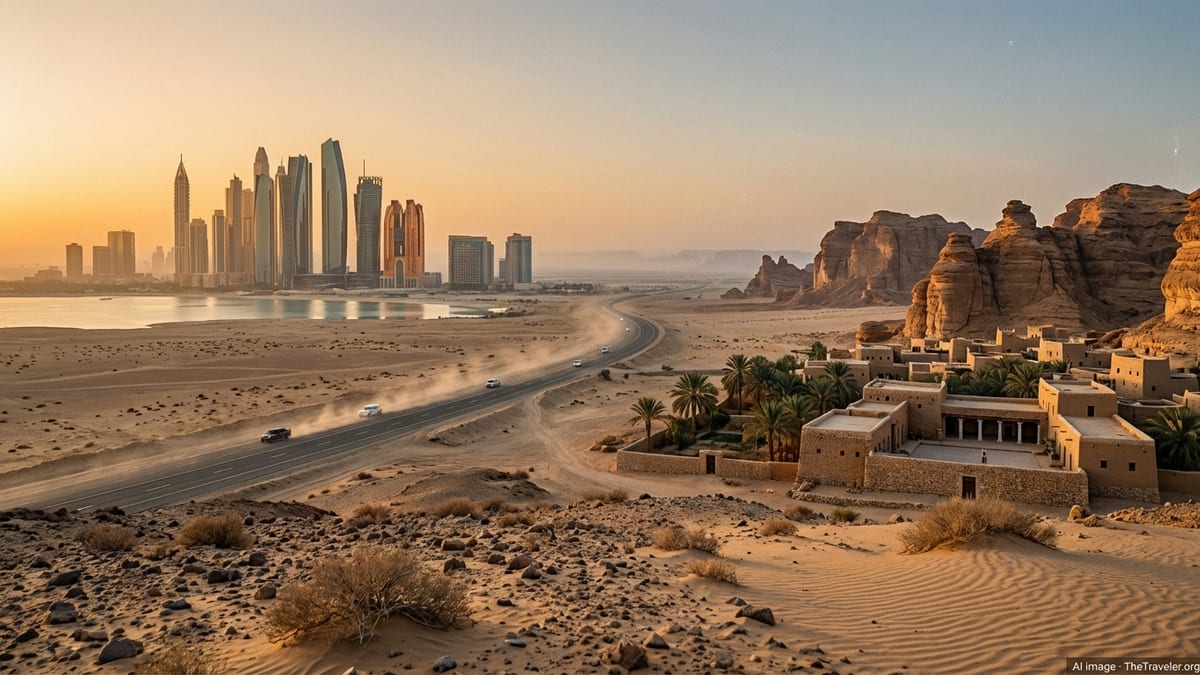
Saudi Arabia has arrived later to international tourism but is moving quickly. Under Vision 2030 the kingdom is positioning itself as a cultural and heritage destination anchored in Islamic history, desert landscapes and carefully master-planned giga-projects. Developments such as AlUla, Diriyah near Riyadh and the Red Sea resorts seek to combine archaeological sites, traditional architecture and luxury hospitality. The tone in Saudi Arabia remains more conservative, but there is a clear push to make the country feel more open, particularly to organized tours and high-spending visitors interested in heritage, nature and large-scale events.
From a traveler’s perspective, the UAE feels more polished and familiar as a holiday hub, with long experience hosting tourists from all over the world and a service culture that is deeply international. Saudi Arabia offers a sense of discovery and novelty, with destinations that are still evolving and often less crowded. Those looking for a tried-and-tested resort formula may gravitate toward the UAE, while travelers drawn to frontier destinations and cultural depth may find Saudi Arabia’s emerging tourism landscape more compelling.
Visas, Entry Rules and Practical Formalities
Entry procedures are a key consideration when choosing between Saudi Arabia and the UAE, especially for independent travelers. The UAE has spent years refining user-friendly systems that make Dubai and Abu Dhabi simple stopover or short-break options. Many nationalities receive a free visa on arrival for stays that typically range from 30 to 90 days, and airlines based in the UAE have long promoted quick transit through their hubs. For numerous visitors, the process can feel almost as seamless as arriving in a European or Southeast Asian hub airport.
Saudi Arabia has pivoted aggressively from a largely closed system to a more open electronic visa regime. The introduction of a tourist e-visa for dozens of nationalities, expansion of visa-on-arrival categories and new stopover programs tied to the national airline have lowered the threshold for visiting. Processing is usually online, and approvals can be fast, though requirements and eligible nationalities may still feel more restrictive than in the UAE. For pilgrims, specialized visas for Hajj and Umrah remain a separate channel with their own quotas and rules.
Both countries have clear regulations on prohibited items, photography in sensitive areas, and conduct at airports and border posts. Travelers to either destination should expect electronic screening and, in some cases, questions about travel history in conflict zones. In the current security climate, additional screening, document checks and waiting times are likely. It is also prudent to have hotel bookings and return or onward tickets easily accessible on arrival, as border officials in both Saudi Arabia and the UAE may request proof of plans and accommodation.
Culture, Dress Codes and Social Norms
Cultural expectations often shape traveler comfort more deeply than infrastructure. The UAE presents itself as relatively liberal for the region, with Dubai in particular projecting a cosmopolitan lifestyle of beach clubs, international restaurants and mixed-gender socializing. That said, it remains a conservative society at its core, influenced by Islamic law and local custom. Public displays of affection can attract unwanted attention, alcohol is only permitted in licensed venues, and there are strict rules around offensive behavior, including on social media. Dress codes are relaxed in many tourist areas, with beachwear common on hotel beaches and at pools, but more modest clothing is advisable in malls, historic districts and especially outside Dubai and Abu Dhabi’s main resort zones.
Saudi Arabia is more conservative, though social norms have softened in recent years. The requirement for foreign women to wear an abaya has been relaxed, but modest clothing that covers shoulders and knees is still strongly recommended, particularly outside the largest cities. Gender segregation persists in some settings, and public conduct is expected to align with conservative values. Alcohol remains completely banned, in contrast to the controlled but widespread availability in the UAE’s hotels and licensed venues. Travelers should also be mindful of local sensitivities around religion, photography of people, and political discussion.
For many visitors, these differences define the type of trip they imagine. Those prioritizing nightlife, bars and a looser dress code often find the UAE easier. Travelers especially interested in Islamic history, pilgrimage or experiencing a society in the midst of rapid social transformation may feel drawn to Saudi Arabia. In both cases, respectful behavior, modest attire in nonresort settings and careful use of social media are essential to avoid legal or social problems.
Cities, Landscapes and Signature Experiences
Urban experiences in the UAE are anchored by Dubai and Abu Dhabi. Dubai offers a dense concentration of iconic towers, artificial islands, giant malls and waterfront promenades. Visitors can move in a single day from desert dune drives to shopping, to rooftop bars, to indoor theme parks. Abu Dhabi combines its own skyscrapers and malls with flagship cultural institutions, a long beachfront corniche and nearby desert retreats. The overall effect is one of modern urban convenience, heavy air conditioning and a pace of life geared toward visitors as much as residents.
Saudi Arabia’s cities feel different. Riyadh is sprawling and highly car-oriented, with mega-projects such as Diriyah and new downtown developments under construction to create more walkable, visitor-friendly districts. Jeddah on the Red Sea has a historic old town with traditional coral stone architecture alongside modern seafront towers. Smaller cities and planned developments, including parts of the Red Sea coast and the NEOM zone, are being designed to showcase modern architecture within dramatic natural surroundings, although many of the most ambitious concepts remain in phased development.
When it comes to landscapes, Saudi Arabia has the clear advantage in terms of variety and scale. Travelers can encounter monumental sandstone formations around AlUla, volcanic fields, terraced villages in the southwest highlands and a long Red Sea coastline with coral reefs and largely undeveloped beaches. The UAE’s desert, while striking, is more limited in extent for casual visitors, and much of its coastline is already urbanized or shaped into artificial islands. Nature-oriented travelers, hikers and those seeking dramatic geological scenery are likely to find Saudi Arabia more rewarding once conditions allow for broader exploration.
Signature experiences reflect these contrasts. In the UAE, visitors typically combine desert safaris, dhow cruises, beach days and mall visits with contemporary attractions such as museums, observation decks and themed resorts. In Saudi Arabia, standout experiences include exploring UNESCO-listed heritage sites, attending seasonal cultural festivals, visiting restored mud-brick towns or staying in luxury camps set among sandstone canyons and remote dunes. Both destinations offer hot air ballooning, desert stargazing and various forms of adventure tourism, but Saudi Arabia’s experiences tend to feel more tied to place, while the UAE’s are often designed to be globally recognizable and easily consumed.
Costs, Accommodation and On-the-Ground Logistics
Costs in both Saudi Arabia and the UAE can vary widely, but they are generally on the higher side relative to many other regions. The UAE has a well-developed ladder of accommodation options, from ultra-luxury beachfront resorts and branded city hotels to midrange chains and more modest guesthouses and apartments. Dubai and Abu Dhabi can be expensive in peak season, but competitive airline connectivity and a high volume of rooms mean that deals are often available, especially in the shoulder months or for longer stays.
Saudi Arabia’s accommodation landscape is changing quickly. In cities such as Riyadh and Jeddah, there are already many international hotel brands alongside local chains and serviced apartments. New high-end resorts on the Red Sea and in heritage areas like AlUla and Diriyah are targeting affluent travelers, with price points comparable to or higher than equivalent UAE luxury stays. Budget options can sometimes be more limited in emerging tourist regions, and distances between destinations inside Saudi Arabia can be significant, which can add to transport costs.
On-the-ground logistics also differ. The UAE benefits from compact geography and excellent roads, making it relatively simple to combine desert, beach and city experiences in a short trip. Public transport has expanded, particularly in Dubai, and ride-hailing services are widespread. Saudi Arabia covers a much larger area, so domestic flights often replace long road journeys, and travelers visiting multiple regions may need to plan complex itineraries. Driving between cities is possible on modern highways, but the scale of the country demands more time and careful route planning than a typical UAE holiday.
For daily expenses such as dining, local transport and entry to attractions, both destinations range from moderately expensive to high, depending on choices. International fast food and mall restaurants provide relatively predictable prices, while fine dining and exclusive experiences quickly raise the budget. Travelers seeking value in either country can look to local eateries, markets away from flagship malls and midrange hotels that cater primarily to business travelers rather than resort guests.
Who Each Destination Suits Best
Choosing between Saudi Arabia and the UAE ultimately comes down to matching the destination with the traveler’s priorities and risk tolerance. In quieter geopolitical periods, the UAE has traditionally excelled for first-time visitors to the Gulf, families looking for predictable resort holidays, and travelers who value nightlife, international dining and straightforward logistics. Its major cities function like global hubs that happen to be set in the desert, and visitors can experience the region’s climate and skyline without dramatically adjusting their lifestyle expectations.
Saudi Arabia, by contrast, is best suited in normal times to travelers who are more curious about local culture, comfortable with conservative norms and willing to accept some infrastructural and regulatory fluidity as large projects come online. Pilgrims and those deeply interested in Islamic history have obvious reasons to prioritize the kingdom, while adventure travelers may be drawn to its expansive deserts, mountains and heritage sites. The sense of novelty that characterizes Saudi Arabia’s tourism push can be a strong attraction for those who enjoy destinations at an earlier stage of their global tourism development.
For many travelers, a dual-country itinerary has often been appealing in theory: a few days in Dubai or Abu Dhabi for urban excitement, combined with a longer exploration of Saudi Arabia’s heritage regions or pilgrimage sites. In the current security environment, however, multi-country itineraries across the Gulf carry additional complexity and risk, with rapidly changing flight schedules and potential border restrictions. Until conditions stabilize, even experienced travelers may find it wiser to concentrate on one country, keep plans flexible and build in generous time buffers.
The Takeaway
Saudi Arabia and the United Arab Emirates represent two distinct faces of the Gulf’s tourism ambitions. The UAE offers refined, mature city and beach experiences designed for global visitors, anchored by Dubai and Abu Dhabi’s skylines, malls and waterfronts. Saudi Arabia is building a different narrative, drawing on centuries of history, vast natural landscapes and carefully branded giga-projects to position itself as a cultural and adventure destination. Each country has strengths that appeal to different kinds of travelers, from nightlife seekers and luxury shoppers to heritage enthusiasts and desert explorers.
In more stable times, the UAE tends to be the easier, more predictable choice for a conventional holiday, while Saudi Arabia rewards those looking for deeper cultural immersion and less conventional routes. At the moment, however, both destinations are heavily affected by regional tensions. Comprehensive travel insurance, careful monitoring of official advisories and a willingness to postpone or redirect plans are essential for anyone considering trips to either country. For now, the better destination may be the one that can be visited at a later date when the region’s skies and streets are calmer.
FAQ
Q1. Is it safe to travel to Saudi Arabia or the UAE right now?
Travel conditions are highly fluid due to regional conflict, with some governments advising against nonessential travel. Always check your foreign ministry’s latest guidance and airline updates before planning or departing.
Q2. Which is better for a first-time visitor to the Gulf, Saudi Arabia or the UAE?
In normal times, the UAE is generally more straightforward for first-time visitors thanks to its established tourism infrastructure, liberal resort atmosphere and simple entry procedures. Saudi Arabia suits travelers who prioritize culture, heritage and a more conservative environment.
Q3. How do visa rules differ between Saudi Arabia and the UAE?
The UAE offers visa-free or visa-on-arrival access to many nationalities, especially for short stays. Saudi Arabia now provides an e-visa and expanded visa-on-arrival options for selected nationalities, but eligibility and requirements can be more restrictive and should be checked in advance.
Q4. Which country is more conservative in terms of dress and behavior?
Saudi Arabia is more conservative overall, with stronger expectations around modest dress and public conduct. The UAE is relatively liberal in tourist zones, especially Dubai, but still expects modest attire in public places and adherence to local laws on alcohol and behavior.
Q5. Where will I find better beaches and resorts?
The UAE currently has a larger number of established beachfront resorts, particularly in Dubai, Abu Dhabi and Ras Al Khaimah. Saudi Arabia is rapidly developing high-end resorts on its Red Sea coast, which offer impressive natural settings but are still expanding in number.
Q6. Which destination is more suitable for cultural and historical tourism?
Saudi Arabia offers deeper engagement with Islamic history and Arabian heritage, with sites such as AlUla, Diriyah and historic districts in Jeddah and Riyadh. The UAE has notable cultural attractions and museums but leans more toward modern, curated experiences.
Q7. How do costs compare between Saudi Arabia and the UAE?
Both destinations can be expensive, especially for high-end accommodation and dining. The UAE has a broader range of hotel categories that can make value hunting easier, while Saudi Arabia’s emerging tourist regions may have fewer budget choices but more scope for off-peak deals as capacity grows.
Q8. Is alcohol available in both countries?
Alcohol is widely available in licensed venues such as hotels and certain restaurants in the UAE, though public intoxication and drinking outside licensed areas are illegal. In Saudi Arabia, alcohol is banned, and travelers should not attempt to bring it in or consume it.
Q9. Can I easily combine visits to Saudi Arabia and the UAE in one trip?
Under stable conditions it is possible to combine both, often via hub airports such as Dubai, Abu Dhabi or Riyadh. Given current tensions, however, multi-country itineraries may face higher disruption risk, and many travelers may prefer to focus on one country at a time.
Q10. Which destination is better for families with children?
The UAE is generally more convenient for families, with a wide choice of resorts, theme parks and family-friendly attractions concentrated in compact areas. Saudi Arabia is developing family-focused offerings, but activities may be more spread out and require longer internal journeys.