

More news on this day
As the Caribbean continues to dominate the global cruise market, Saudi Arabia is rapidly assembling the ingredients for an alternative playground at sea, investing billions in ships, ports and private islands along its Red Sea coast.
Get the latest news straight to your inbox!
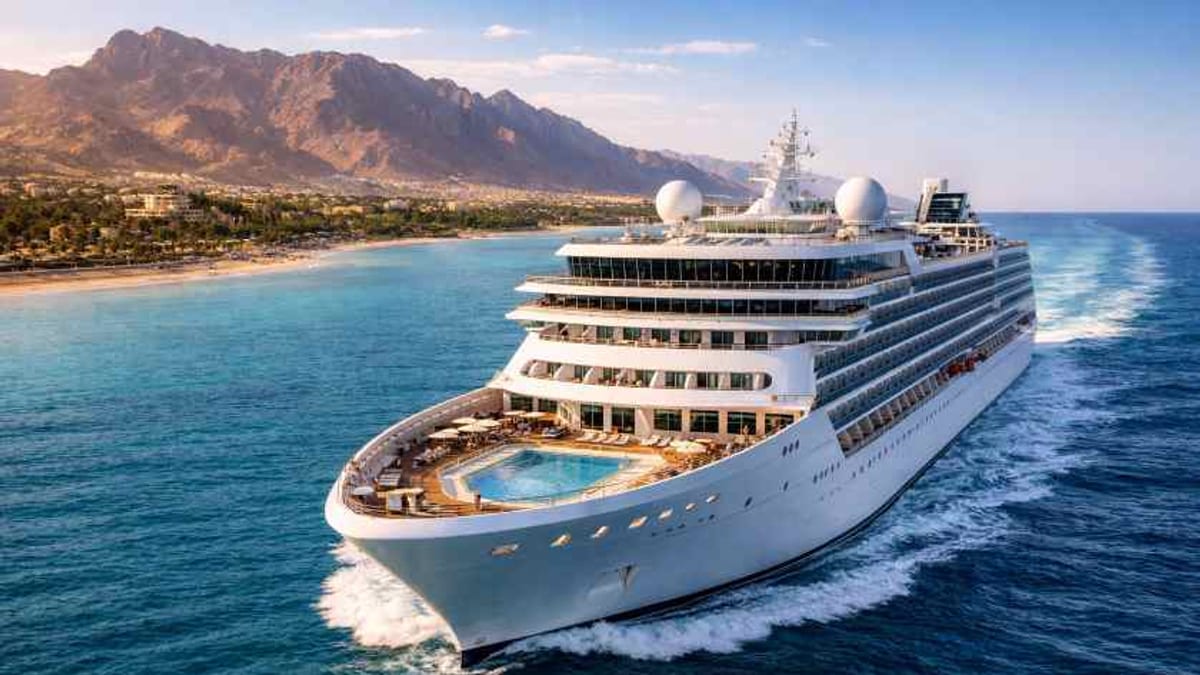
Image by International Cruise News: Latest Cruise Line & Cruise Ship News
From Niche Red Sea Calls to National Strategy
Publicly available data shows that the Caribbean still accounts for the largest share of global cruise capacity, with recent industry reports estimating its slice of the market at close to 40 percent of worldwide deployment. By comparison, the Indian Ocean and Red Sea together represent only a small fraction of overall capacity, underscoring how nascent Saudi Arabia’s cruise ambitions remain.
Saudi policymakers are nonetheless treating cruise tourism as a strategic pillar within the country’s Vision 2030 plan to diversify the economy beyond oil. Government-backed entities are investing in port upgrades, destination development and marketing to position the Red Sea as a year round cruising region that can capture winter sun demand currently funneled primarily into the Caribbean and parts of the Mediterranean.
Market research on the Middle East and Africa cruise segment indicates that the region still represents a modest share of global passengers but is growing faster than several mature markets. Analysts highlight new regional and coastal itineraries, including along the Saudi coast, as among the most dynamic segments, supported by rising demand from both regional travelers and long haul guests seeking new routes.
This shift reflects a broader recalibration in the cruise industry. While lines remain heavily invested in North American and Caribbean itineraries, operators and destination governments are exploring alternatives amid port congestion, capacity constraints and changing customer expectations in established markets.
Aroya Cruises Puts a Saudi Flag on the Funnel
The most visible symbol of Saudi Arabia’s cruise ambitions is AROYA Cruises, a new brand created by Cruise Saudi, itself owned by the country’s Public Investment Fund. According to corporate announcements, the line has been launched to help meet long term targets of attracting more than one million cruise passengers annually and creating tens of thousands of tourism related jobs by the mid 2030s.
The brand’s first ship, AROYA, entered service following its acquisition and refit from an Asian operator. Public information indicates that the vessel sailed its inaugural itinerary from Jeddah in December 2024, offering short Red Sea voyages designed primarily for regional travelers and first time cruisers. The product is being pitched as a Saudi inspired experience, with Arabic language service, regional cuisine and itineraries that showcase domestic heritage sites and coastal landscapes.
Future fleet plans have not been fully detailed, but statements from Cruise Saudi executives and local media coverage suggest an ambition to add at least one more vessel before 2030, alongside seasonal charters and partnerships with international lines. The strategy mirrors moves in other emerging cruise hubs, where domestically branded operators are being positioned alongside international players to anchor homeport growth.
For global cruise companies, the emergence of a national line backed by a deep pocketed sovereign investor signals that Saudi Arabia intends to play a long game. A dedicated brand gives the country more control over deployment, pricing and onboard product, while also serving as a marketing tool for the broader Red Sea destination.
Ports, Private Islands and the Red Sea Map
At the heart of the expansion is a rapid build out of cruise capable infrastructure along the Saudi coast. Reports indicate that Cruise Saudi plans to develop around ten destinations for cruise calls, combining existing commercial ports with new terminals and resort style stops. Operational gateways already include Jeddah on the Red Sea, Yanbu further north and Dammam on the Gulf coast, with additional sites in various stages of planning and construction.
Recent coverage in regional business media highlights work on new dedicated cruise ports and marinas, as well as the adaptation of existing facilities to handle passenger vessels. Jeddah Islamic Port, long a cargo hub, has seen rising cruise activity alongside broader modernization works. Other ports, such as Yanbu, have been promoted as access points to historic inland cities and desert landscapes, broadening the appeal of itineraries beyond coastal sightseeing.
Private destinations are central to the strategy. A new private island in the Red Sea, developed with backing from the Public Investment Fund, is being positioned as an exclusive stop for AROYA Cruises and visiting international lines. Marketing materials emphasize beaches, marine wildlife and controlled visitor flows, echoing the private island model that has become a cornerstone of Caribbean deployment for the biggest cruise companies.
Farther north, the futuristic Neom development and its island of Sindalah are being framed as ultra luxury yachting and cruise gateways. Open source information on Neom indicates that maritime components, including a high end marina and terminal facilities, are intended to attract both small luxury vessels and larger mainstream ships, creating a chain of anchor points along the northern Red Sea.
Caribbean Scale, Red Sea Growth
Industry data makes clear that Saudi Arabia’s cruise sector is still small compared with the Caribbean, where major operators such as Carnival Corporation and Royal Caribbean Group deploy entire fleets on year round itineraries. Caribbean demand is fed by established air links, a dense network of ports and decades of brand recognition, while private islands and exclusive resort enclaves continue to draw repeat visitors.
Analysts nonetheless point to several factors that could help Red Sea cruising grow faster than mature markets, even if it remains smaller in absolute terms for the foreseeable future. These include proximity to large source markets in Europe, the Gulf and wider Middle East, visa reforms that facilitate short stay visits, and investment in airports and tourism infrastructure in cities including Jeddah and Riyadh.
Market forecasts for the broader Middle East and Africa cruise industry project solid compound annual growth rates over the next decade, driven by new ships, terminals and marketing alliances. Within that regional picture, Saudi Arabia is cited as one of the principal drivers of capacity growth, particularly as AROYA Cruises beds in and more international lines reintroduce Red Sea itineraries when security conditions allow.
Some industry observers also note that environmental and social pressures facing mass tourism destinations in the Caribbean could prompt cruise companies to balance their portfolios by developing alternative regions. The Red Sea’s coral reefs and relatively undeveloped coastline are considered both an opportunity and a responsibility, pushing Saudi planners to talk increasingly about managed growth and sustainability in official communications.
Security, Sustainability and the Road Ahead
Despite the optimism, the Red Sea is far from a risk free bet. Geopolitical tensions and security incidents along key shipping lanes have disrupted cargo and passenger traffic at times, prompting itinerary changes and re routings for vessels that would otherwise transit the Suez Canal. Travel advisories and operational considerations continue to influence how quickly and how broadly cruise lines commit ships to the area.
Saudi Arabia’s strategy is unfolding against that backdrop. Public information on port development and new itineraries is often accompanied by references to safety investments, coordination with regional partners and the gradual pacing of deployment. Industry analysts suggest that, in the near term, growth is likely to focus on closed loop Red Sea cruises and regional source markets rather than complex repositioning itineraries.
Sustainability is another critical lens. The Red Sea is home to some of the world’s most resilient coral systems, and environmental groups have raised concerns about the impact of intensive coastal development and cruise traffic. Project documents and official messaging around Red Sea tourism increasingly highlight marine protected areas, low impact design and strict carrying capacities, although the effectiveness of those measures will depend on enforcement as volumes rise.
For travelers, the contrast with the Caribbean is becoming more pronounced. Where Caribbean cruising offers a familiar circuit of long established ports and highly developed private islands, Saudi itineraries currently promise a mix of new ports, relatively uncrowded beaches and access to archaeological and desert sites that are only now appearing on mainstream cruise maps. Whether that proposition can scale while preserving the very qualities that make it distinctive will be a key storyline in cruising over the next decade.