

More news on this day
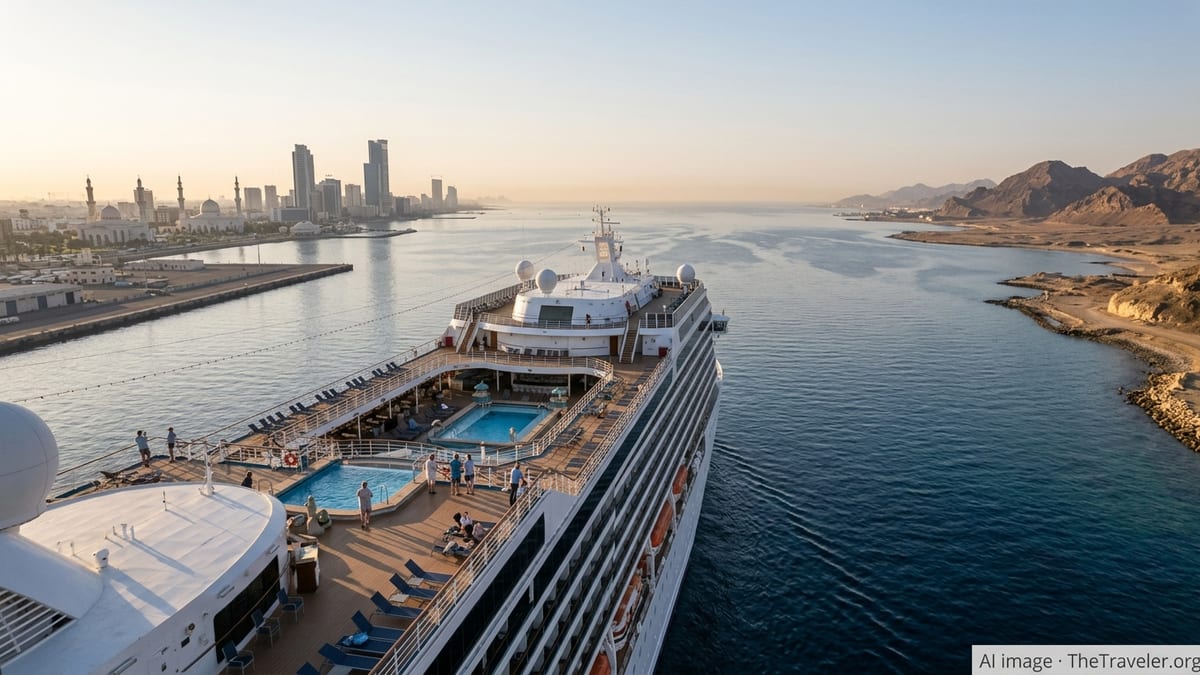
Saudi Arabia is rapidly scaling up its presence on the global cruise map, with newly launched Red Sea voyages, expanded Arabian Gulf itineraries and a growing network of ports and private islands signaling a decisive push to become a major player in international cruise tourism.
Get the latest news straight to your inbox!
From Vision 2030 to a New Cruise Powerhouse
Saudi Arabia’s cruise expansion is closely aligned with the country’s Vision 2030 diversification agenda, which places tourism at the center of long-term economic planning. Publicly available information shows that Cruise Saudi, backed by the Public Investment Fund, has been tasked with building a complete cruise ecosystem from ports and terminals to shore experiences across the kingdom’s long coastlines.
Reports indicate that the company is targeting the development of 10 destinations along the Red Sea by 2030, transforming previously underused coastal stretches into cruise-ready gateways. Operational ports such as Jeddah, Yanbu and Dammam already serve international and regional lines, while additional sites are being prepared to support a sustained increase in ship calls over the next several seasons.
This government-led drive is intended to reposition Saudi Arabia from a transit corridor between Europe and Asia into a stand-alone cruise destination. The strategy focuses on leveraging the country’s cultural heritage sites, desert landscapes and coral-rich waters, while coordinating infrastructure upgrades with major hotel and resort projects unfolding along both the Red Sea and the Arabian Gulf.
Red Sea Itineraries Anchor a New Leisure Coast
The Red Sea is emerging as the focal point of Saudi Arabia’s cruise revolution, with itineraries combining historic port cities and new luxury developments. Jeddah, long a gateway for pilgrims and traders, is now positioned as a key embarkation point for regional cruises linking Saudi ports with Egyptian and Jordanian shores.
Cruise Saudi’s own brand, AROYA Cruises, launched dedicated Red Sea sailings in late 2024, offering short and week-long itineraries that call at destinations such as Jeddah, Yanbu and private-island stops marketed as secluded beach escapes. According to published coverage, these routes are designed to appeal to both international travelers and a growing base of regional guests seeking cruise holidays closer to home.
International cruise operators are also expanding their presence in the wider Red Sea basin, with brochures and schedules for the 2024 to 2026 seasons highlighting itineraries that link Saudi Arabia with Egyptian ports like Safaga and Sharm El Sheikh and Jordan’s Aqaba. These offerings underline a broader effort to position the Red Sea as a multi-country cruising corridor, plugging Saudi Arabia into existing Mediterranean and Suez Canal traffic patterns while creating new winter-sun alternatives to the Caribbean.
Arabian Gulf Routes Strengthen Regional Cruise Networks
While the Red Sea provides Saudi Arabia with a dramatic new leisure coastline, the Arabian Gulf is consolidating its role as a regional cruise hub. Dammam on the kingdom’s east coast is increasingly featured in itineraries that link Dubai, Abu Dhabi, Doha, Bahrain and Muscat, creating circular routes that touch multiple Gulf Cooperation Council states.
Public schedules for AROYA Cruises and other operators show new winter itineraries that start or call in Saudi Arabia before continuing to established Gulf cruise ports. These routes are designed to mesh with strong aviation links through regional hubs, enabling fly-cruise packages that target European and Asian source markets.
As more ships are deployed to the Gulf, port calls in Saudi Arabia are expected to become a regular feature of week-long and mini-cruise programs. This integration into wider Gulf cruise networks allows the kingdom to benefit from existing demand while it builds its own brand recognition as a cruise destination, rather than relying solely on point-to-point beach tourism.
Private Islands, Luxury Resorts and Regenerative Tourism
A distinctive element of Saudi Arabia’s cruise strategy is the emphasis on private islands and high-end coastal resorts designed to support what planners describe as regenerative tourism. Red Sea Global, the developer behind flagship coastal projects, is opening a series of ultra-luxury properties, with new resorts debuting on islands off the kingdom’s west coast.
According to company statements and industry reporting, Cruise Saudi already operates Saba Beach as a private island destination and has announced plans for additional cruise-focused islands. These secluded stops are being developed with controlled visitor numbers, marina facilities and curated shore excursions that highlight coral reefs, marine life and low-impact beach experiences.
The broader Red Sea destination is being positioned as a low-density, high-value tourism zone, with new branded hotels, golf courses and wellness retreats timed to come online alongside cruise expansion. This combination of ship-based access and resort-based stays is intended to encourage visitors to extend their time in the country, blending sea voyages with onshore stays at coastal or desert properties.
Global Lines Respond to Growing Demand
The rapid growth in Saudi cruise infrastructure is prompting a response from established global cruise operators. Industry announcements over the past two years indicate that major lines are adding more Middle East departures and adjusting winter deployments to include Red Sea and Gulf ports, citing rising demand for warm-weather itineraries outside traditional markets.
For cruise companies, the appeal lies in the ability to create new seven- to ten-night routes that combine Saudi Arabia with neighboring countries, offering a mix of modern skylines, desert excursions and historical sites. Publicly available itineraries highlight shore experiences such as visits to UNESCO-listed archaeological locations, snorkeling on Red Sea reefs and desert safaris outside major Gulf cities.
Analysts following regional tourism trends suggest that as more ships homeport in Jeddah, Dubai or Abu Dhabi and call at Saudi ports on both coasts, the Middle East’s share of global cruise capacity is likely to edge upward through the late 2020s. The result is a more diversified global cruise map in which the Red Sea and Arabian Gulf function not just as transit zones but as destinations in their own right.