

More news on this day
Formula 1 faces a sizeable near term revenue gap after the Bahrain and Saudi Arabian Grands Prix were pulled from the April 2026 calendar, yet financial data and long term contracts indicate that much of the Middle Eastern hosting income is more likely to be delayed than permanently wiped out.
Get the latest news straight to your inbox!
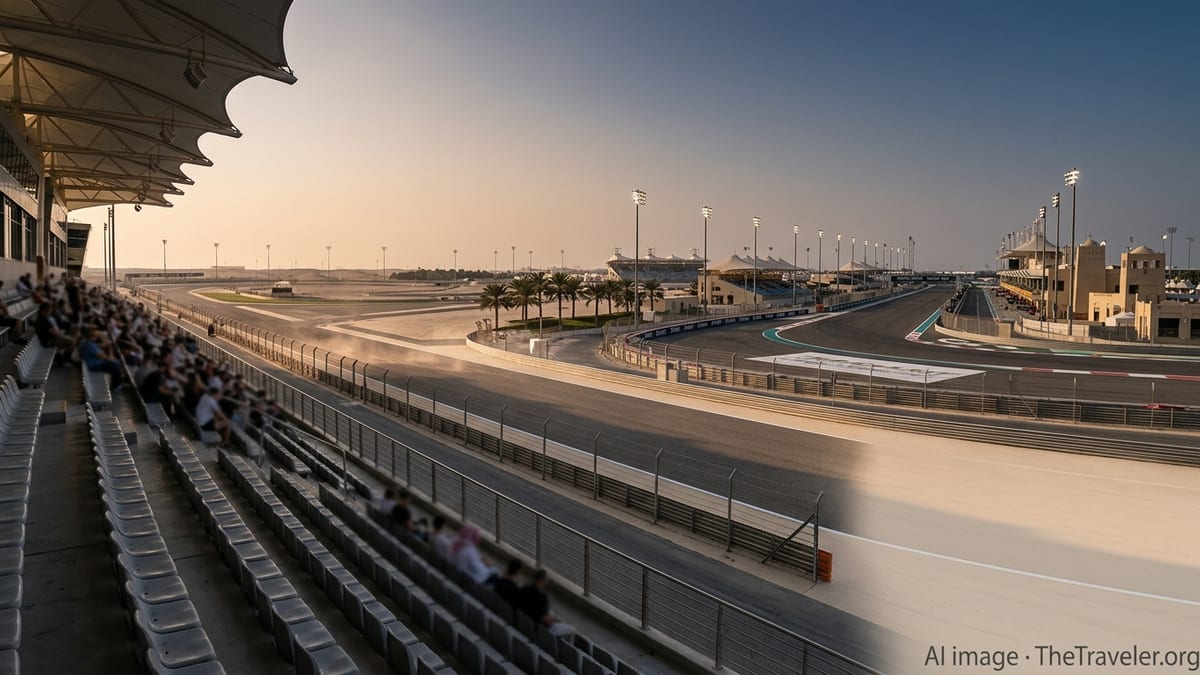
Calendar Shock Meets Long Term Contracts
The removal of the Bahrain and Saudi Arabian Grands Prix from their April 2026 slots has left Formula 1 without two of its most lucrative early season rounds. Reports indicate that together the pair contribute well over 100 million dollars in annual hosting and associated commercial fees, placing them at the upper end of the championship’s race promotion income.
Despite the immediate hole in this year’s schedule, publicly available information shows that both events are secured by lengthy contracts underwritten at state level. Bahrain’s deal to host Formula 1 at the Sakhir circuit runs until at least 2036, while Saudi Arabia is tied into a long term agreement reported to be worth tens of millions of dollars per season. The underlying message is that the commercial relationships remain intact even if the 2026 races do not take place on their original dates.
Formula 1’s own filings describe race promotion revenue as a contractual stream with multi year escalators rather than an ad hoc series of one off payments. That structure supports the view that Bahrain and Saudi Arabia sit within a broader, predictable income framework for the sport, making any loss in 2026 more a question of timing and accounting recognition than of broken partnerships.
In practical terms, the April cancellations shift the debate from whether Formula 1 will continue to race in the Gulf to when those events can be rescheduled or rolled into future seasons, and how the agreed fees are treated in the meantime.
Revenue Recognition and “Deferred, Not Lost” Income
Liberty Media’s recent financial reports highlight how Formula 1 books race promotion income across a season. Primary revenue is typically recognised as events take place, with each Grand Prix unlocking a portion of contracted fees. When races drop from the calendar, that portion is not recognised in the period, contributing to lower reported race promotion revenue.
However, the same documents stress that promoter contracts are generally long term, with fixed or inflation linked annual increases. For races backed by national governments keen to retain their place on the calendar, analysts and specialist motorsport business outlets suggest that outright termination is unlikely. Instead, fees may be reprofiled, credited against future editions or amended through renegotiation, turning what would have been 2026 income into deferred revenue in later years.
The situation contrasts with stand alone events promoted by Formula 1 itself, such as the Las Vegas Grand Prix, where the championship bears more operational risk. In the case of Bahrain and Saudi Arabia, the commercial model is closer to a classic rights holder and promoter relationship, giving both sides scope to adjust timing and structure of payments without ending the underlying deal.
Viewed through this lens, the phrase “losses deferred, not lost” reflects the likelihood that most of the contractual value of the Gulf races will still be realised over the life of the agreements, even if 2026’s figures show a temporary dip.
Impact on Teams, Prize Money and Cost Caps
Short term, the absence of two high paying races is expected to reduce the pool of cash available for distribution to teams, since Formula 1 allocates a significant share of annual profits to prize money. Previous quarterly results have shown how even a single missing event can affect race promotion and other revenues, particularly in the first half of a season.
A smaller calendar also means fewer opportunities to sell high margin hospitality, fan experiences and on site sponsorship activations in the Gulf, which have become important to the sport’s revenue mix. Bahrain’s season opening status in recent years and Saudi Arabia’s night race spectacle have both been leveraged to attract premium guests and corporate partners, heightening the financial sting of their absence.
Under the financial regulations for teams, any reduction in centrally distributed income can pressure budgets, especially for outfits operating close to the cost cap. While the cap itself is fixed by regulation, reduced prize money may force some competitors to trim development programmes or seek additional sponsorship to maintain planned spending levels.
Even so, the long term nature of the Bahrain and Saudi Arabian contracts offers some reassurance for teams and investors. If hosting fees are deferred rather than cancelled outright, there is scope for prize money to recover in future seasons as the events return or fees are smoothed across remaining contract years.
Regional Tourism Ambitions Keep the Door Open
The Gulf’s wider tourism and diversification strategies are another reason why analysts expect Bahrain and Saudi Arabia to remain part of Formula 1’s long game. Both countries have invested heavily in positioning themselves as international events hubs, using grands prix as flagship showcases for new infrastructure, hospitality and urban development.
Studies of major sporting events in the region point to tourism promotion, destination branding and foreign investment as core motivations for funding long term hosting deals. In Bahrain’s case, the race at Sakhir has become an established pillar of the country’s annual events calendar, while Saudi Arabia uses the Jeddah Corniche event as part of a broader push to market the Red Sea coast to international visitors.
Against that backdrop, a one year disruption is unlikely to signal a change of strategic direction. Instead, public commentary from regional media and business outlets points to a determination to bring the races back when conditions allow, bolstered by sunk investment in circuits, hotels and transport links.
For Formula 1, that commitment supports a cautious optimism that missing 2026 hosting fees will be compensated by extended terms, revised escalators or additional commercial opportunities when Bahrain and Saudi Arabia return to the schedule.
Fans and the Global Shape of the 2026 Season
For travelling fans and local spectators, the immediate consequence is the loss of two popular early season trips that have become fixtures on the modern Formula 1 map. Bahrain’s desert setting and Saudi Arabia’s waterfront night race both attract international visitors who often combine the Grand Prix with wider Gulf itineraries.
Travel industry analysts note that early season Middle Eastern rounds serve as anchor points for tour operators selling long weekend packages, premium hospitality suites and corporate incentive travel tied to motorsport. The 2026 cancellations disrupt that pattern, but the expectation that the races will return underpins continued interest from aviation and hotel groups in the wider region.
On the sporting side, the reduction in races reshapes competitive dynamics for 2026, with fewer opportunities for teams to score points and test new upgrades in race conditions. Yet the long term expansion of the calendar in other regions, coupled with the resilience of Gulf contracts, suggests that Formula 1’s global footprint remains intact, even if this season’s journey to Bahrain and Saudi Arabia is temporarily on hold.
For now, the financial narrative is one of short term pain offset by long term security. As the championship navigates a volatile geopolitical backdrop, the Middle Eastern grands prix illustrate how deeply embedded multi year hosting deals can turn apparent losses into income that is postponed rather than permanently erased.