

More news on this day
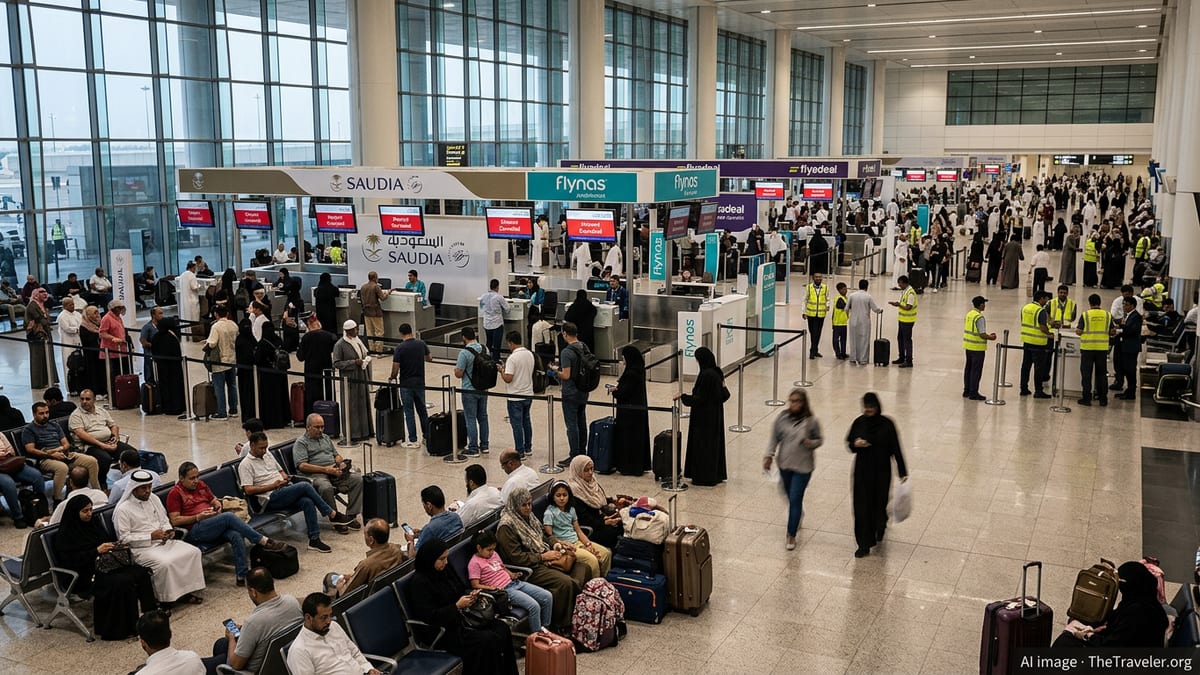
Hundreds of passengers traveling with Saudia, Flynas and Flyadeal faced hours of disruption this week as at least 392 delays and 94 cancellations rippled across Saudi Arabia’s busiest air hubs, snarling journeys through Riyadh, Dammam, Jeddah, Medina and the gateway to Mecca.
Get the latest news straight to your inbox!
Regional Turmoil Triggers Fresh Wave of Flight Disruptions
The latest disruption follows weeks of turbulence for Middle East aviation as airspace closures, rerouting and safety-driven schedule cuts continue to affect carriers across the region. In Saudi Arabia, the knock-on impact has now crystallized into one of the most acute single surges in operational disruption reported so far, centered on the country’s main domestic and pilgrimage corridors.
Industry data and airport schedule snapshots reviewed in recent days show Saudia, Flynas and Flyadeal among the most heavily affected operators, with a combined 392 flight delays and 94 outright cancellations affecting services touching Riyadh, Jeddah, Dammam, Medina and the broader Mecca region. The figures capture a compressed window of disruption but illustrate the scale of strain on Saudi Arabia’s rapidly expanding aviation ecosystem.
The spike comes against the backdrop of wider Middle East airspace restrictions and re-routed traffic flows that have added flight time, tightened crew duty limits and strained aircraft rotations. While Saudi domestic routes have generally been more resilient than international links, the current wave of delays and cancellations is now clearly being felt by passengers traveling within the Kingdom as well as those connecting onward to regional and global destinations.
Aviation analysts say the pattern of disruption suggests a mix of factors, including regional safety considerations, temporary capacity constraints and bottlenecks at busy terminals already undergoing infrastructure changes. In practical terms, it has translated into long queues at check in, congested security lanes and crowded boarding areas as rolling delays cascade across daily schedules.
Riyadh and Jeddah Bear the Brunt as Pilgrimage Demand Builds
Riyadh’s King Khalid International Airport and Jeddah’s King Abdulaziz International Airport, the country’s two primary gateways, have carried a disproportionate share of the disruption. Together they account for the majority of the 392 recorded delays, with passengers reporting waits of two to five hours and, in some cases, missed onward connections when aircraft arrived after curfew or crew duty limits were reached.
Riyadh, which is in the midst of a multi-year modernization and terminal reshuffle, has already experienced pockets of operational strain in recent months. The current wave of delays has intensified pressure on ground handling, gate management and baggage systems, especially for airlines like Saudia, Flynas and Flyadeal that operate dense banks of domestic departures through the capital.
In Jeddah, the impact is being felt most acutely by Umrah pilgrims and travelers heading to or from Mecca. As regional tensions and rerouted flights compress available slots, some services have been pushed into tighter turnaround windows, leaving little margin for recovery when an inbound aircraft arrives behind schedule. For passengers, that has meant extended waits in departure halls and nervous checks of departure boards as estimated times of departure shifted repeatedly.
Airport officials and airline representatives have stressed that safety remains the overriding priority and that crews cannot operate beyond regulated duty hours, even when terminals are crowded with stranded travelers. However, the concentration of delays on high-demand corridors such as Riyadh–Jeddah, Riyadh–Dammam and Jeddah–Medina has made the disruption particularly visible to domestic flyers.
Dammam and Medina Highlight Network Vulnerabilities
At Dammam’s King Fahd International Airport and Medina’s Prince Mohammad bin Abdulaziz International Airport, the cumulative disruption has been smaller in raw numbers but still significant for affected passengers. Both hubs serve as critical nodes for domestic and regional connectivity, and even a modest number of cancellations can quickly cascade into missed connections and overcrowded later flights.
In Dammam, delays have tended to cluster around flights linking the Eastern Province with Riyadh and Jeddah, as well as selected services feeding into Gulf and South Asian routes operated by partner and codeshare airlines. When an early-morning departure is cancelled or heavily delayed, subsequent waves of departures can see load factors spike as rebooked travelers vie for limited remaining seats.
Medina, which plays an outsized role during peak pilgrimage periods, has also seen its schedule compressed by the current disruption. While many flights have operated with only minor delays, cancellations on short-haul regional services have left some travelers scrambling to reconfigure itineraries at short notice, particularly those relying on tight windows to meet group tour schedules or onward international flights from Jeddah.
The situation underscores how interconnected the Kingdom’s air network has become. Even when primary hubs like Riyadh and Jeddah bear the numerical brunt of disruptions, smaller airports such as Medina and Dammam can experience amplified passenger stress due to fewer alternative departures and more limited ground transport options to other gateways.
Saudia, Flynas and Flyadeal Scramble to Reprotect Passengers
For Saudia, Flynas and Flyadeal, the immediate challenge has been to re-accommodate passengers from 94 cancelled flights while managing knock-on delays across hundreds more services. Airline contact centers and digital channels have faced surging volumes as travelers seek clarity on whether their flights are operating, how to rebook and what compensation or waivers might apply.
Saudia, the national carrier, has been at the forefront of operational adjustments, trimming or suspending certain international routes in recent weeks while attempting to preserve domestic connectivity. Travel advisories have urged passengers to arrive early, monitor flight status closely and allow extra time for transits, with some itineraries re-routed via alternative regional gateways to avoid congested airspace.
Flynas and Flyadeal, both key players in the Kingdom’s low cost segment, have been juggling dense point to point networks that leave limited slack when aircraft or crews are out of position. Budget carriers are particularly exposed during regional crises because their business models rely on quick turnarounds and high aircraft utilization, making recovery from multi hour delays more complex.
Across all three airlines, waivers have been selectively introduced for passengers whose flights fall within the most heavily impacted windows, allowing date changes without standard fees on a case by case basis. However, with seats on alternative departures at a premium, many travelers have still faced multi day waits to secure new itineraries, especially on popular routes linked to pilgrimage or school holidays.
What Travelers Through Saudi Hubs Should Expect Next
With regional tensions and airspace constraints still unresolved, aviation experts caution that disruption across Saudi Arabia’s major airports could persist in waves over the coming days. While the specific tally of 392 delays and 94 cancellations reflects a particular recent surge, similar patterns of last minute schedule changes and rolling delays remain possible as airlines navigate evolving operational constraints.
Passengers transiting Riyadh, Dammam, Jeddah, Medina and the broader Mecca area in the near term should be prepared for potential changes even after online check in, and give themselves generous buffers for connections, especially when switching between carriers or terminals. Many travelers have already begun booking earlier departures than strictly necessary to offset the risk of extended queues or unplanned re-screening during terminal changes.
On the ground, airports are working to deploy additional staff during peak periods, redirect passengers between crowded zones and improve real time communication through terminal screens and public announcements. However, crowded scenes in departure halls and at boarding gates are likely to remain a feature of travel through Saudi hubs while the broader regional aviation environment remains unsettled.
For now, the experience of hundreds of passengers caught up in this latest wave of 392 delays and 94 cancellations serves as a sharp reminder of how quickly Middle East air travel conditions can change, and how dependent even routine domestic journeys have become on the stability of regional skies.