

More news on this day
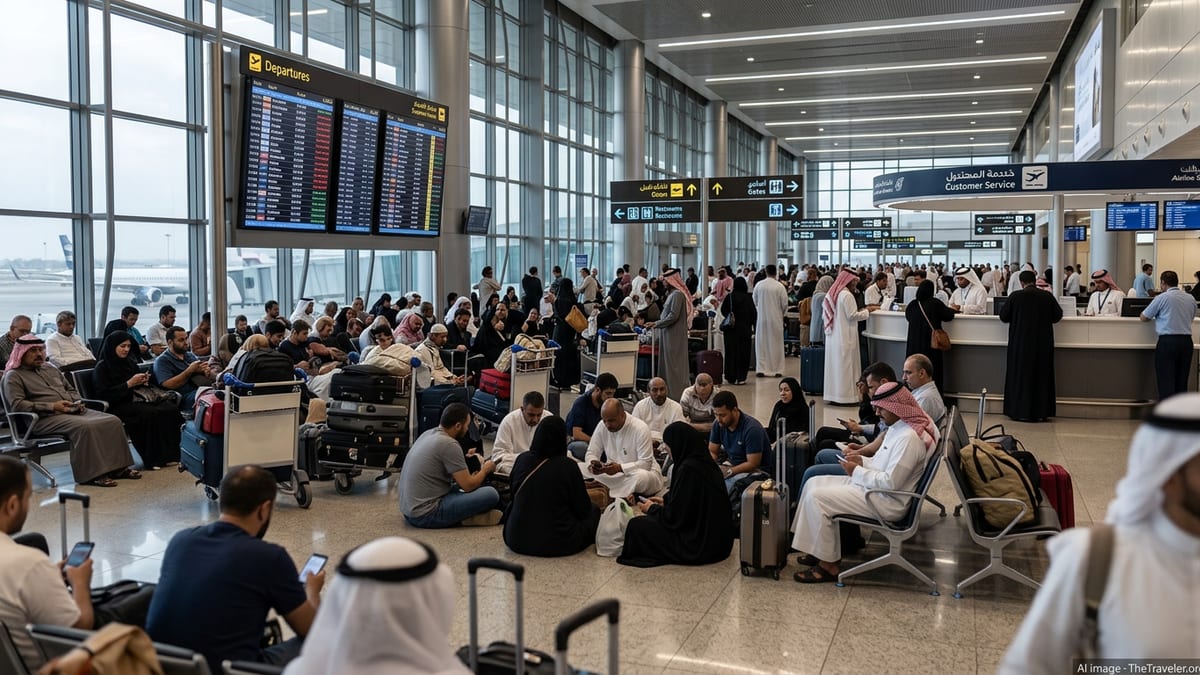
Hundreds of passengers were left stranded across Saudi Arabia on Saturday as major carriers including Saudia, Flynas and Emirates canceled more than 130 flights and recorded at least 305 delays, crippling operations at key hubs in Riyadh, Jeddah, Dammam, Madinah and several regional airports.
Widespread Disruption Across Saudi Aviation Hubs
The latest wave of cancellations and delays hit just as weekend travel was peaking, with operational data showing scores of grounded aircraft and long backlogs at check in, security and boarding gates. King Khalid International Airport in Riyadh, King Abdulaziz International Airport in Jeddah, King Fahd International Airport in Dammam and Prince Mohammad bin Abdulaziz International Airport in Madinah reported some of the heaviest disruption.
According to preliminary tallies from aviation tracking platforms and airport sources, at least 130 scheduled services were canceled across the kingdom while more than 305 flights were delayed, with knock on effects rippling across the wider Gulf and into Europe, Africa and South Asia. Saudia and low cost carrier Flynas were among the worst affected operators, while Emirates and other regional airlines also trimmed or reshuffled services.
The pattern of disruption followed several days of instability in regional airspace, with carriers having already suspended or rerouted flights to nearby destinations. Saturday’s figures underline how fragile schedules remain, particularly at busy transfer hubs such as Riyadh and Jeddah that connect pilgrims, expatriate workers and business travelers with destinations worldwide.
Airport officials said contingency plans were activated overnight, with additional staff drafted to assist at information counters and boarding gates. Despite those measures, passengers reported growing queues, limited seating and confusion over which services would eventually operate.
Stranded Passengers Face Long Waits and Uncertain Itineraries
For travelers caught in the middle of the disruption, the numbers translated into hours of waiting and fast changing plans. Families attempting to reach onward connections in Dubai, Doha and Istanbul, as well as long haul services to London, Cairo and major South Asian cities, found themselves stuck in crowded terminals with little clarity on rebooking options.
Many passengers in Riyadh and Jeddah described scenes of exhausted travelers stretched out on terminal floors or trying to sleep upright in departure lounges as late night cancellations were posted. Some reported receiving short notice text messages advising them not to proceed to the airport, while others said they arrived to find their flights marked as delayed several times before finally being canceled.
At King Khalid International Airport, travelers spoke of packed customer service lines as they sought hotel vouchers, meal coupons and new itineraries. While some airlines arranged overnight accommodation and transfers into the city, others could offer only later departures several days ahead, leaving budget conscious passengers reluctant to pay out of pocket for additional nights in nearby hotels.
Similar scenes played out in Dammam and Madinah, where a high proportion of passengers were pilgrims and visiting families. The disruption has been particularly challenging for travelers with expiring visas or fixed reporting dates for work, many of whom now face costly last minute changes and missed commitments.
Airlines Cite Regional Airspace Restrictions and Safety Protocols
Airlines operating in and out of Saudi Arabia continued to point to evolving regional security conditions and temporary airspace restrictions as the primary drivers behind the latest disruptions. Saudia and Flynas had already extended suspensions on a number of regional routes in recent days, while Emirates and other Gulf carriers have been operating trimmed schedules or special repatriation services.
Carriers have stressed that safety remains the overriding priority, noting that any change in airspace availability requires rapid adjustments to established flight plans, crew rotations and aircraft positioning. Those cascading shifts make it more difficult to operate full schedules and often force last minute cancellations, particularly on short haul sectors connecting Gulf and Levant cities.
Industry analysts note that the complexity of Saudi Arabia’s fast expanding aviation network adds another layer of vulnerability when disruptions occur. With Riyadh, Jeddah, Dammam and Madinah all serving as important domestic and international transfer points, schedule changes in one hub can quickly spread across multiple airlines and destinations, amplifying the number of affected passengers.
Despite the scale of Saturday’s disruption, airlines have emphasized that they are working to restore more predictable operations over the coming days. However, they caution that conditions remain fluid and that further adjustments are possible depending on how regional airspace restrictions evolve.
Official Advice: Check Flight Status Before Heading to the Airport
Saudi aviation authorities and airport operators urged travelers to closely monitor flight status and to avoid heading to the airport without a confirmed departure. With check in counters and security lanes already under strain, officials warned that passengers arriving for flights that have been canceled or significantly delayed risk further crowding already busy terminals.
Airlines reiterated that they are contacting affected customers through the details linked to their bookings and encouraged passengers to update contact information in their profiles to receive real time alerts. Travelers who booked through online travel agencies or third party agents were advised to coordinate directly with those intermediaries for rebooking and refund options.
Consumer advocates in the region have also reminded passengers to familiarize themselves with the conditions of carriage of their chosen airline, including entitlements to meals, accommodation and alternative transportation during extended disruptions. While compensation rules vary by carrier and route, documentation of delays, cancellations and additional expenses can be crucial when filing claims.
For now, officials recommend that anyone with nonessential travel over the next several days consider flexible arrangements or potential date changes where possible. Even passengers whose flights remain scheduled are being told to allow extra time at the airport in anticipation of longer queues and occasional last minute gate or timing changes.
Ongoing Uncertainty for Saudi Arabia’s Busy Travel Corridors
The latest cancellations and delays mark another setback for Saudi Arabia’s ambitions to position itself as a seamless global aviation hub connecting Asia, Africa and Europe. In recent years the kingdom has invested heavily in modernizing airports and expanding airline fleets, with Saudia and low cost carriers such as Flynas playing central roles in that strategy.
Repeated disruption across key corridors, however, underscores the exposure of the region’s air transport system to wider geopolitical tensions and security events. Routes linking Riyadh, Jeddah and Dammam with neighboring Gulf capitals, as well as major transit hubs further afield, remain particularly vulnerable to sudden changes in airspace availability.
Travel industry observers say the next several weeks will be critical for rebuilding confidence among both residents and international visitors who depend on Saudi Arabia’s air network for business trips, religious journeys and leisure travel. Clear communication from airlines, predictable schedules and visible support for stranded passengers will be key factors in how the current episode is remembered.
For the thousands still stuck in terminals or waiting on new itineraries, though, the focus remains firmly on finding a way out. Until regional skies fully stabilize and backlogs ease, many travelers across Riyadh, Jeddah, Dammam, Madinah and beyond are likely to face a journey that is longer, more complicated and far more stressful than they had planned.