

More news on this day
Hundreds of air travelers were stranded across Saudi Arabia today as flight-tracking data showed 39 cancellations and 254 delays affecting services in and out of Riyadh, Jeddah, Medina, and Dammam, disrupting operations for Saudia, Emirates, Egypt Air, Gulf Air, Flynas, KLM, Wizz Air UK, and several other carriers.
Get the latest news straight to your inbox!
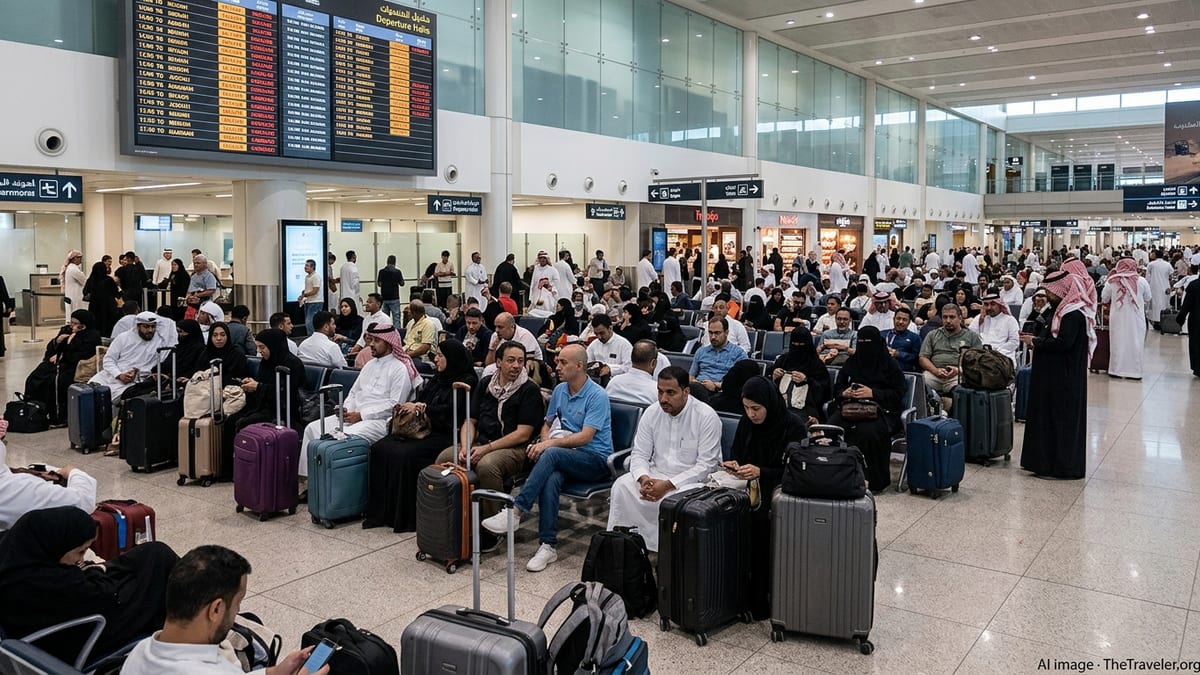
Severe Disruptions Across Saudi Arabia’s Main Hubs
Publicly available airport boards and flight-tracking platforms for March 22 indicated widespread disruption across King Khalid International Airport in Riyadh, King Abdulaziz International Airport in Jeddah, Prince Mohammad bin Abdulaziz International Airport in Medina, and King Fahd International Airport in Dammam. The combined tally of 39 cancellations and 254 delays covered both domestic and international routes, with knock-on effects for connections across the Middle East, Europe, Asia, and Africa.
The disruption followed weeks of instability in regional air traffic patterns, with earlier closures and restrictions in surrounding airspace already putting pressure on Saudi Arabia’s role as a key east–west aviation corridor. Today’s operational strain appeared to magnify existing congestion, as aircraft and crews remained out of position while airlines attempted to rebuild their schedules.
At departure halls in Riyadh and Jeddah, status boards for several hours were dominated by “delayed” markers, and some services were repeatedly rescheduled before ultimately being canceled. In Dammam and Medina, shorter-haul regional flights were particularly affected, leaving passengers with limited same-day alternatives and forcing rebookings days ahead in some instances.
Multiple Airlines Hit, From Flag Carriers To Low-Cost Operators
The disruption did not spare any single segment of the market. The Saudi flag carrier Saudia saw a significant share of today’s irregular operations, reflecting its large domestic and international footprint. Regional and global players including Emirates, Egypt Air, Gulf Air, Flynas, KLM, and others also experienced cancellations and extended delays on flights operating to and from the four Saudi hubs.
Low-cost and leisure-focused airlines were especially exposed on popular religious and regional routes. Recent public discussion has already highlighted schedule cuts and cancellations by Wizz Air UK on Saudi routes, and today’s figures underscored the volatility now facing budget-conscious travelers using secondary carriers for Umrah or regional business trips.
Long-haul passengers connecting through Saudi airports were among the hardest hit, particularly those relying on tight transfer windows. With departure times slipping by several hours in some cases, onward connections to Europe, North America, and East Asia were missed, triggering complex re-routing, overnight stays, and extended travel times for passengers already in transit.
Knock-On Effects Of Regional Airspace Constraints
According to recent industry analysis, Saudi Arabia has been carrying an unusually heavy share of traffic after earlier disruptions and closures impacted alternative east–west corridors. Air traffic control congestion, diversions, and rerouting through Saudi airspace have all contributed to elevated pressure on the country’s main hubs throughout March.
Today’s wave of cancellations and delays appeared to be part of this broader pattern, in which operational complexity has increased markedly for airlines trying to keep aircraft, crew, and slots aligned. With neighboring hubs such as Dubai, Doha, and Kuwait also managing large backlogs of disrupted travelers in recent weeks, airlines have had limited flexibility to absorb fresh schedule shocks.
Travel advisories issued earlier in March described a highly fluid operating environment, with aircraft and crews frequently stranded in outstation airports far from their original bases. That dislocation has made it more difficult for carriers to recover even when conditions temporarily stabilize, contributing to an ongoing cycle of rolling delays and short-notice cancellations.
Passenger Experience: Long Queues, Uncertainty, And Limited Alternatives
For passengers on the ground in Saudi Arabia today, the most visible effects were long queues at airline service desks, crowded seating areas around departure gates, and repeated changes to departure times displayed on information screens. Travelers attempting to rebook reported limited seat availability on near-term departures, particularly on high-demand routes linking Saudi cities to Gulf and South Asian destinations.
Publicly shared accounts from recent days already pointed to travelers opting for alternative modes of transport on shorter domestic legs, including rail or road links between Riyadh and Dammam, amid reports of “massively delayed” services and multiple last-minute cancellations on some internal routes. Today’s wider disruption is likely to reinforce that trend for passengers with flexible schedules.
Some travelers arriving from abroad also encountered difficulty securing new connections onward to religious centers such as Medina or to smaller domestic airports, as airlines prioritized restoring core routes and repositioning aircraft. For those with time-sensitive plans tied to business meetings, visa windows, or pilgrimage dates, the uncertainty added an extra layer of stress to journeys already lengthened by earlier regional disruptions.
What Travelers Should Expect In The Coming Days
Airline advisories and industry bulletins issued this month have consistently framed the situation in and around Saudi airspace as highly dynamic, with recovery likely to be uneven and gradual. While today’s totals of canceled and delayed flights may fluctuate in the short term, experts expect lingering congestion as carriers work through backlogs of displaced passengers and reposition aircraft and crews.
Publicly available guidance from travel and risk consultancies continues to recommend that passengers build in additional buffer time for connections through Riyadh, Jeddah, Medina, and Dammam, and to monitor airline communications closely in the 24 hours before departure. Same-day schedule changes remain a realistic possibility even for flights that appear to be operating normally on booking platforms.
For visitors planning trips involving multiple Saudi cities or onward connections to nearby Gulf hubs, contingency planning has become increasingly important. Flexible tickets, comprehensive travel insurance that explicitly covers disruption, and readiness to switch to alternative routings or ground transport within the kingdom can significantly reduce the impact of sudden schedule changes while the region’s aviation network remains under strain.