

More news on this day
Air travel across Saudi Arabia has faced fresh disruption as Gulf Air, Emirates, KLM, British Airways and Air France cancelled 38 flights and delayed many more, affecting key hubs in Riyadh, Jeddah, Dammam and Medina amid ongoing regional airspace and security concerns.
Get the latest news straight to your inbox!
Regional Tensions Trigger Fresh Wave of Airline Disruptions
Publicly available aviation data and operational briefings indicate that carriers serving Saudi Arabia have been forced to cancel and reroute services as airlines reassess exposure to volatile Middle East airspace. Recent industry reports describe a tightening network of airspace restrictions and route adjustments, with major European and Gulf airlines trimming schedules to and from the Gulf region and beyond.
Within this broader context, at least 38 flights operated by Gulf Air, Emirates, KLM, British Airways and Air France have been cancelled on routes touching Saudi gateways, alongside a wider pattern of delays and extended flight times. Many affected flights are linked to onward connections through large hubs such as Dubai, Amsterdam, London and Paris, compounding the impact on passengers whose journeys begin or end in Saudi Arabia.
The latest disruptions build on a sequence of cancellations reported through early and mid March 2026, as airlines respond to changing risk assessments and temporary airspace closures. Briefings aimed at corporate and logistics planners note that carriers are continuously updating schedules, meaning day to day variations in departures and arrivals at Saudi airports have become more common.
Although many services into Saudi Arabia continue to operate, the cumulative effect of cancellations, diversions and delays has created a highly fluid travel environment for international passengers, particularly those relying on multi leg itineraries through European and Gulf hubs.
Impact on Major Saudi Gateways: Riyadh, Jeddah, Dammam and Medina
Riyadh, Jeddah, Dammam and Medina have all experienced knock on effects as airlines restructure their networks. Internationally focused briefings highlight that Dammam and Riyadh have featured in multiple cancellation notices and schedule suspensions from European carriers, with KLM and other airlines reducing flights to regional hubs that typically feed traffic into Saudi Arabia.
Riyadh’s King Khalid International Airport and Jeddah’s King Abdulaziz International Airport, both central to Saudi Arabia’s long haul connectivity, have seen selected international frequencies curtailed or retimed. Passengers connecting via European gateways such as Amsterdam, London Heathrow and Paris Charles de Gaulle have been among those most exposed to last minute schedule changes.
Dammam’s King Fahd International Airport, an important gateway for eastern Saudi Arabia and a key point for both passenger and freight flows, has been cited in recent operational summaries as part of broader Gulf network adjustments. These changes include rerouted services that avoid certain airspace corridors and a thinning of frequencies on some European and regional links, which in turn can delay or disrupt travel plans for both business and leisure travellers.
Medina, a significant religious destination, has also experienced indirect disruption as aircraft and crew are repositioned, and as airlines prioritise certain core trunk routes over secondary frequencies. While many pilgrims and visitors are still able to reach the city, itineraries have in some cases become longer, with additional stops or extended layovers.
Gulf Air and Emirates Adjust Networks Amid Constraints
Publicly available information from regional aviation briefings shows that Gulf Air and Emirates have been prominent among Gulf based airlines making tactical schedule changes. Gulf Air, which uses Bahrain as a regional hub, has adjusted services feeding into Saudi cities including Dammam and Riyadh, as it balances regional demand with altered routing options and crew duty constraints.
Emirates, operating out of Dubai International Airport, has been affected by the wider pattern of airspace restrictions and high demand at its main hub. Reports on the carrier’s operations indicate that selected flights serving Saudi Arabia, or carrying Saudi bound passengers via Dubai, have been cancelled or significantly delayed on certain days, contributing to the overall tally of 38 affected flights.
These network changes have also impacted connecting traffic beyond the Gulf. Travellers heading from Saudi Arabia to Europe, Asia Pacific or the Americas via Bahrain or Dubai have in some cases encountered rebookings, extended transit times or overnight stays when onward connections could not be maintained. Travel agents and booking platforms have reported a noticeable uptick in reissue and reaccommodation requests linked to Gulf hub disruptions.
Although both Gulf Air and Emirates continue to operate a substantial number of flights into and out of Saudi Arabia, the pattern of selective cancellations underscores how quickly regional conditions can ripple through seemingly stable schedules, particularly for passengers relying on tightly timed connections.
European Carriers Scale Back Middle East Operations
European airlines, including KLM, British Airways and Air France, have also played a central role in the latest wave of disruptions affecting Saudi travellers. Aviation analysis documents note that KLM has suspended or reduced flights to several Gulf destinations, including Dubai and other regional airports that act as stepping stones into Saudi Arabia, as part of a broader safety driven adjustment of routes.
British Airways and Air France have similarly trimmed or paused selected services across the wider Middle East network, especially on routes passing near or through airspace assessed as higher risk. While many of these adjustments directly concern cities such as Tel Aviv, Dubai or Beirut, they indirectly reduce connectivity options for passengers travelling between Saudi Arabia and Europe.
As a result, Saudi based travellers who would typically fly non stop or one stop to major European capitals have, on some days, faced fewer available seats and longer alternative routings. Reaccommodation often involves rebooking passengers on partner airlines within alliances or on different departure days, increasing the likelihood of extended stays or missed onward engagements.
Industry coverage suggests that European carriers are reviewing their Middle East schedules on a rolling basis, with the prospect of further short notice adjustments if regional security assessments change. This rolling review process can create uncertainty for travellers planning imminent trips, even when flights remain listed as operating.
Travellers Confront Delays, Rerouting and Uncertainty
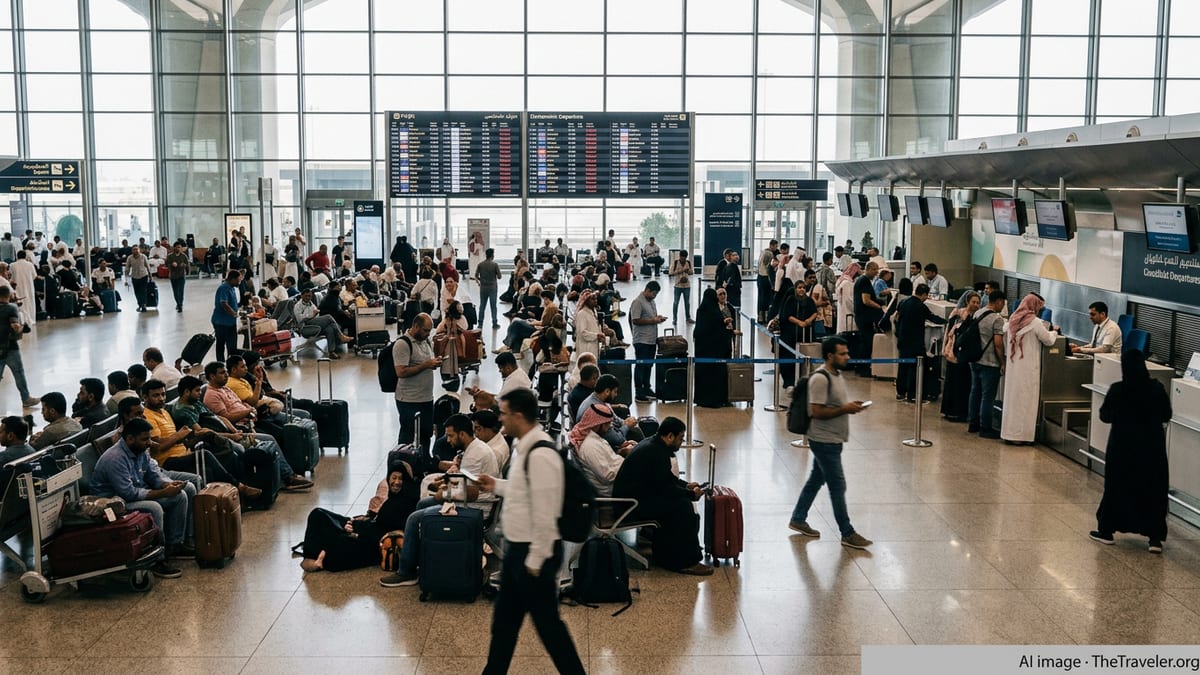
For passengers in Riyadh, Jeddah, Dammam and Medina, the practical consequence of these 38 cancellations and multiple delays has been a mix of long waits in terminals, unexpected overnight stops and short notice schedule changes. Social media posts and anecdotal accounts compiled in recent news coverage describe crowds at check in counters and transfer desks as travellers seek alternative routes.
With airlines applying revised safety buffers and longer routings around restricted areas, flights that do operate can experience extended journey times. Longer flight durations place pressure on crew duty limits, which can trigger additional knock on delays or force aircraft substitutions, further complicating operations at busy Saudi airports.
Travel industry commentary indicates that flexible tickets and travel insurance with disruption coverage have become more valuable for journeys involving the Gulf region. Passengers are being encouraged, via public advisories and airline notices, to monitor their bookings closely and to allow extra time for connections, particularly when travelling during peak periods or on itineraries requiring multiple transits.
While it remains unclear how long the current pattern of cancellations and delays will persist, publicly available operational briefings suggest that airlines serving Saudi Arabia are likely to continue reviewing their schedules frequently in the coming weeks, meaning travellers may face an elevated risk of disruption on short and medium haul routes alike.