

More news on this day
Major regional and international carriers serving Saudi Arabia, including Flynas, Flyadeal, Air France and Scoot, are extending a wave of flight cancellations and schedule cuts into mid-April, as conflict-driven airspace restrictions and higher operating risks continue to disrupt travel across the Middle East.
Get the latest news straight to your inbox!
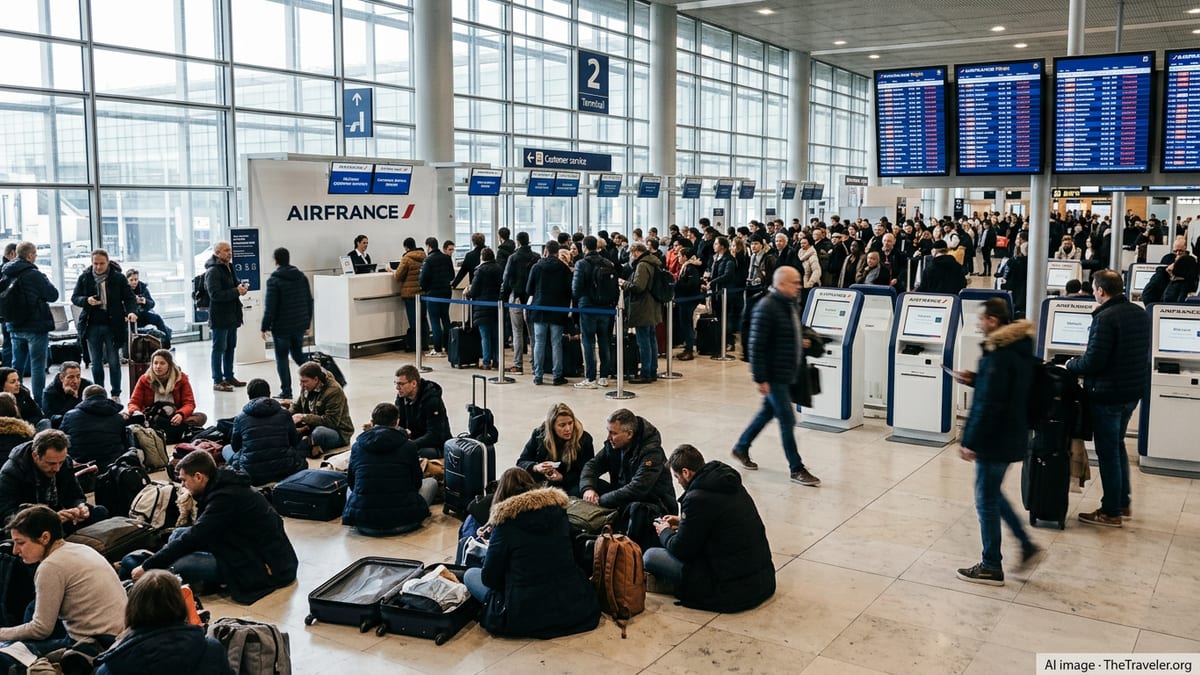
Carriers widen suspensions on Saudi-linked routes
Recent operational updates from airline booking systems and public timetables show Flynas and Flyadeal maintaining a series of cancellations on selected Saudi domestic and regional routes, particularly services that usually overfly or connect through airspace affected by the current conflict. The pattern includes scrubbed frequencies on high-demand corridors and the removal of some flights from sale entirely through at least the middle of April.
International operators are also adjusting their Saudi schedules. Publicly available flight-search data and media monitoring indicate that Air France has pulled a number of Paris connections that typically feed Saudi-bound passengers via regional hubs, while low cost carrier Scoot has removed or reduced several frequencies that connect Southeast Asia with Jeddah and other Saudi gateways. In each case, the changes primarily affect departures through roughly the second and third weeks of April.
The continuing disruptions follow several rounds of short-notice cancellations in March, when airlines first reacted to rapidly changing airspace permissions and security assessments. While the current extensions are more structured, they still leave many passengers facing last-minute rebookings, longer itineraries or the need to postpone travel altogether.
In parallel, Saudi Arabia’s national carrier Saudia has already prolonged suspensions to a number of regional destinations, highlighting that the wider Kingdom aviation network remains under pressure. Industry trackers report that dozens of flights touching Jeddah, Riyadh, Dammam and Medina have been affected in recent weeks as carriers reassess routings and capacity.
Conflict, airspace limits and cost pressures drive decisions
The latest cancellations are closely tied to the wider airspace crisis that emerged as the war involving Iran, Israel and the United States escalated in early March. Parts of the Gulf and Levant region have seen full or partial closures of flight information regions, alongside tight restrictions and rerouting requirements on remaining corridors. Aviation advisories circulated to airlines emphasize heightened security risk and the potential for sudden closures affecting overflight permissions.
Airlines serving Saudi Arabia must either suspend some services or operate substantially longer routings that detour around sensitive areas, adding flight time, fuel burn and crew costs. For low cost carriers such as Flynas, Flyadeal and Scoot, thin margins on many point to point services make extended detours commercially difficult to sustain, especially on shorter routes where extra flying time quickly erodes profitability.
Full service airlines including Air France are also facing cost and operational challenges. Some long haul services that would ordinarily route over or near Iranian or Iraqi airspace have been diverted onto more southerly tracks, limiting available capacity and reducing flexibility to maintain every planned frequency. Carriers have responded by prioritizing core trunk routes while trimming or temporarily suspending others that rely heavily on connecting flows into or out of Saudi Arabia.
Security considerations remain central to these decisions. Travel risk bulletins aimed at corporate clients describe the situation as highly fluid, with the potential for further missile or drone attacks prompting additional airspace changes on short notice. Extending cancellations into mid-April allows airlines to stabilize schedules, reduce ad hoc last minute changes and give passengers a clearer picture of what is likely to operate.
Passenger impact across Saudi gateways
Travelers using Saudi Arabia’s major airports are already experiencing the practical effects of these schedule changes. Reports from Jeddah and Riyadh highlight clusters of same day cancellations and a growing list of delayed departures, particularly on routes that rely on regional connections or that intersect with congested alternative corridors around the Red Sea and northern Africa.
At Queen Alia International Airport in Amman, operational statistics from late March showed multiple cancellations and a high share of delayed flights for carriers including Flynas, underlining how Saudi based airlines are exposed not only at home hubs but also at neighboring transit points. Travelers flying between Saudi Arabia and Jordan, in particular, have faced rolling schedule changes as airlines adjust to shifting airspace availability.
On the ground, passengers describe being rebooked several times, often at short notice, as airlines extend their cancellation windows in line with updated operational assessments. Some travelers have opted to reroute through alternative hubs that retain more robust connectivity to Saudi Arabia, while others have postponed nonessential trips until later in the spring in the hope that conditions will stabilize.
Religious travel has also felt the strain. The run up to Ramadan and the associated Umrah peak normally brings a surge of demand into Jeddah and Medina. With Scoot and other Asia based airlines trimming services and Flynas and Flyadeal limiting some frequencies, pilgrims from Southeast Asia and parts of Europe have encountered fewer non stop or one stop options and, in some cases, higher fares on remaining flights.
How Flynas, Flyadeal, Air France and Scoot are adjusting
Flynas, one of Saudi Arabia’s largest low cost carriers, has adopted a mixed strategy of outright cancellations and frequency reductions. Publicly available March and April schedules show gaps where daily services once operated on key domestic and regional routes, replaced in some cases with less frequent flights or time of day shifts designed to concentrate capacity when demand is highest.
Flyadeal, the low cost arm of Saudia Group, is following a similar pattern. While many of its core domestic routes remain in operation, a number of short haul regional flights have been temporarily suspended or consolidated. Aviation analysts note that these moves help the airline preserve fleet and crew utilization efficiency while still maintaining critical connectivity inside the Kingdom.
For Air France, the disruption is felt mainly through the broader network that feeds Saudi bound travelers onto connecting flights via European or Gulf hubs. Industry schedule data and booking platforms indicate that selected services likely to carry significant Saudi traffic have disappeared from sale or show as unavailable through at least mid-April, suggesting an extended pause while the carrier evaluates routing options.
Scoot, which links Southeast Asian cities with Jeddah on a low cost model, has cut or suspended some departures where airspace closures lengthen journeys to the point that turnarounds become harder to operate within crew duty limits. Travel industry coverage notes that the airline is focusing on preserving a limited but reliable schedule rather than operating a larger program vulnerable to late disruptions.
What travelers to and from Saudi Arabia should do now
For passengers with bookings on Flynas, Flyadeal, Air France or Scoot in the first half of April, travel advisors recommend close and repeated monitoring of flight status. Airline apps and booking management tools are being updated frequently as carriers fine tune their schedules in response to operational bulletins and evolving airspace conditions.
Travel insurers and risk consultants are generally advising corporate and leisure travelers alike to allow extra buffer time for connections and to be prepared for short notice changes, particularly on itineraries that rely on regional hubs outside Saudi Arabia. Where possible, travelers with critical time sensitive trips are being encouraged to secure alternative routings on carriers and corridors that appear less exposed to sudden closures.
Given the likelihood that cancellations will remain elevated at least into mid-April, some passengers are choosing flexible tickets or fares that allow voluntary changes without heavy penalties. Others are opting to delay nonessential travel to later in the year, when airlines and regulators may have had more time to adapt routings and schedules to a prolonged period of restricted airspace.
With the broader conflict still unresolved and aviation authorities maintaining tight oversight of key corridors, the situation for Saudi linked air travel remains uncertain. For now, the extended cancellations by Flynas, Flyadeal, Air France and Scoot underscore that the fallout from the regional crisis continues to ripple through airline networks, and that further timetable adjustments remain possible as the mid-April horizon approaches.