

More news on this day
Saudi Arabia has expanded a crucial visa extension scheme to cover travelers from Turkey, joining India, Bangladesh, Syria, Yemen, Iraq, and several other states whose nationals have been stranded by fast-moving security crises, disrupted air corridors, and shifting border controls across the wider Middle East and South Asia.
Get the latest news straight to your inbox!
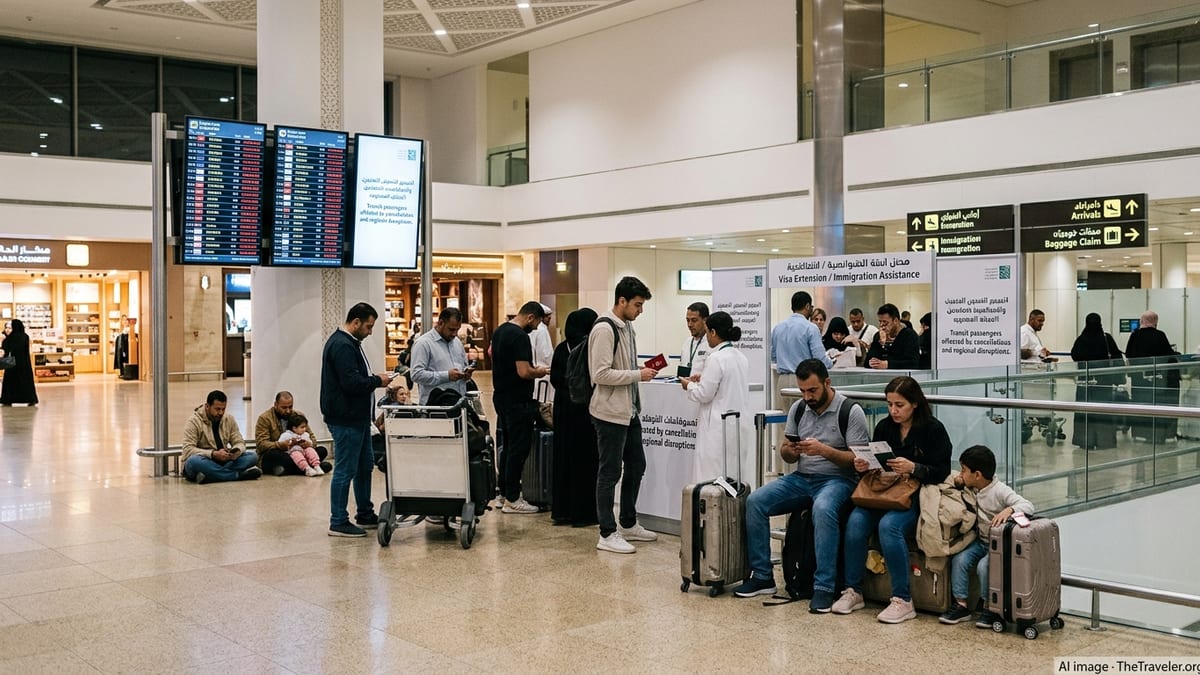
Riyadh Widens Safety Net for Stranded Foreign Nationals
Publicly available information from Middle East travel and immigration advisories indicates that Saudi Arabia has moved to broaden its visa relief framework, allowing additional groups of foreign visitors whose journeys were derailed by regional turmoil to extend their stays without facing immediate overstay penalties. Turkey is now understood to be the latest country effectively folded into this evolving safety net, which had initially focused on travelers from India, Bangladesh, Syria, Yemen, Iraq, and a cluster of other high-outflow states.
The expanded measures are framed as a temporary response to mounting operational challenges for airlines and airports around the region, including conflict-related airspace closures, last-minute schedule changes, and stricter visa rules adopted by some Gulf and transit hubs. As a result, many travelers who entered Saudi Arabia as pilgrims, workers in transit, or short-stay visitors have found themselves unable to depart as planned, risking bans or fines under standard immigration rules.
According to regional travel industry coverage, the latest Saudi steps are aimed at preventing vulnerable travelers from being trapped in a legal gray zone when connecting flights vanish or land routes become unsafe. By offering time-limited visa extensions, officials are giving carriers and foreign consulates more breathing room to organize alternative routings or repatriation services for affected nationals.
While detailed implementation guidelines can differ between nationalities, observers note that the trajectory of recent decisions points toward a more flexible, case-by-case handling of overstays in situations where conflict or disruption can be clearly documented.
Turkey Added to a Growing List of Affected Countries
Travel and migration specialists tracking Saudi policy shifts report that Turkish citizens have now joined nationals from India, Bangladesh, Syria, Yemen, Iraq, and others in benefiting from the extension pathway. The inclusion reflects the role of Turkey as both a key departure point and a diversion hub for routes linking Europe, the Gulf, and conflict zones in Iraq and Syria.
Commercial aviation data compiled over recent months shows that carriers flying between Turkey and Saudi Arabia have faced intermittent disruptions tied to wider security tensions and changing overflight permissions. In several cases, travelers who transited Saudi territory en route to third countries have been forced to stay longer than their visa validity allowed after onward flights were canceled or rerouted.
The new flexibility provides these passengers with a legal bridge to remain in the kingdom while they secure alternative travel. According to regional media coverage, Turkish passport holders who entered on visit, Umrah, or short-stay visas and can show proof of canceled or delayed onward journeys are now more likely to be offered streamlined renewal or extension options rather than immediate immigration penalties.
Analysts note that bringing Turkey into the fold also helps align Saudi Arabia’s response with broader patterns of intra-regional travel. With Istanbul and other Turkish cities serving as major layover points for South Asian and Middle Eastern travelers, disruptions on one segment of the network can quickly cascade, leaving mixed-nationality groups stranded inside Saudi Arabia when schedules suddenly shift.
Ongoing Conflicts and Airspace Closures Drive Policy Shifts
The underlying drivers of the visa extension relief remain rooted in a patchwork of conflicts, retaliatory strikes, and shifting security postures across the region. Humanitarian organizations and aviation risk consultancies highlight that recent escalations have affected air routes touching Iraq, Syria, and parts of the eastern Mediterranean, while maritime insecurity has complicated freight and passenger movements through key Red Sea and Gulf corridors.
In this environment, Saudi Arabia has emerged as both a destination and an unplanned temporary refuge for travelers whose original routes skirted conflict zones. For many citizens of India, Bangladesh, Yemen, Syria, Iraq, and now Turkey, Saudi cities have become unintended holding points while airlines recalculate safe corridors and governments negotiate overflight arrangements.
Regional analysts point out that this situation has also intersected with domestic priorities around crowd management, especially during peak religious travel seasons such as Ramadan and the Hajj period. By pairing stricter controls on new visa issuance for certain routes with more generous extensions for those already in-country, Saudi authorities appear to be seeking a balance between border security, public order, and humanitarian considerations.
The latest extension measures are therefore seen as part of a broader attempt to adapt long-standing migration frameworks to an era of more volatile, politically charged mobility. As long as the security environment remains unpredictable, observers expect further fine-tuning of who qualifies for relief and how long such stays can be extended.
Human Impact: Pilgrims, Workers, and Families in Limbo
Behind the policy language and airport statistics lies a deeply personal story for stranded travelers. Accounts collected by regional newspapers and community organizations describe families from South Asia and the Levant arriving in Saudi Arabia for pilgrimage, short-term work, or onward transit, only to see their return flights repeatedly pushed back or canceled without clear alternatives.
For many of these travelers, overstaying a visa is not simply a bureaucratic infraction but a potential trigger for fines, deportation, or multi-year reentry bans that could cut them off from future job opportunities or religious travel. The introduction of time-limited visa extensions has therefore been interpreted by migrant advocacy groups as a modest but urgent lifeline that reduces the immediate fear of falling out of legal status.
Turkey’s inclusion is particularly relevant for mixed families and business travelers who rely on Istanbul as a gateway between Europe and the Middle East. Public reporting indicates that some Turkish nationals who became stuck in Saudi Arabia after their connections were disrupted had struggled to navigate standard extension channels, which were not designed for sudden mass disruptions across multiple nationalities.
The expanded relief framework provides these travelers with a clearer path to maintain lawful presence while consular officials, airlines, and employers piece together alternative itineraries. Although gaps and inconsistencies in implementation continue to be reported, the overall direction has been welcomed by travel agents and community networks trying to assist those caught mid-journey.
Next Steps for Travelers and Industry Stakeholders
Travel experts advise that nationals of the affected countries, including Turkey, India, Bangladesh, Syria, Yemen, and Iraq, monitor official Saudi government portals, airline advisories, and consular notices for the most current guidance on eligibility, documentation, and deadlines for visa extensions. Requirements can differ based on visa category, length of stay, and the specific circumstances of the disruption.
Airlines operating in and out of Saudi Arabia are also adjusting their contingency planning, with some carriers reportedly allocating additional staff and resources at Saudi airports to support passengers needing emergency rebooking or immigration assistance. Travel agencies in origin countries are being encouraged to warn clients about the potential for rapid schedule changes and to highlight the availability of the extension mechanism in case onward routes collapse.
Policy commentators suggest that the Saudi experience could become a reference point for other transit hubs facing similar dilemmas as conflicts and climate-related events increase the volatility of global air travel. By explicitly recognizing that certain overstays stem from events outside passengers’ control, the kingdom is testing an approach that blends legal pragmatism with limited humanitarian relief.
For now, travelers from Turkey and the broader group of named countries find themselves navigating a more complex landscape but with a slightly wider margin for error. While the visa extension relief does not resolve the deeper causes of regional instability, it offers a critical, if temporary, buffer for those whose journeys to or through Saudi territory have been abruptly cut short.