

More news on this day
Saudia is rolling out 20 additional flights between Riyadh, Jeddah and key Red Sea destinations during the Eid Al Fitr holiday period, in a move that reflects surging domestic travel demand and the growing importance of the Red Sea coast in Saudi Arabia’s tourism strategy.
Get the latest news straight to your inbox!
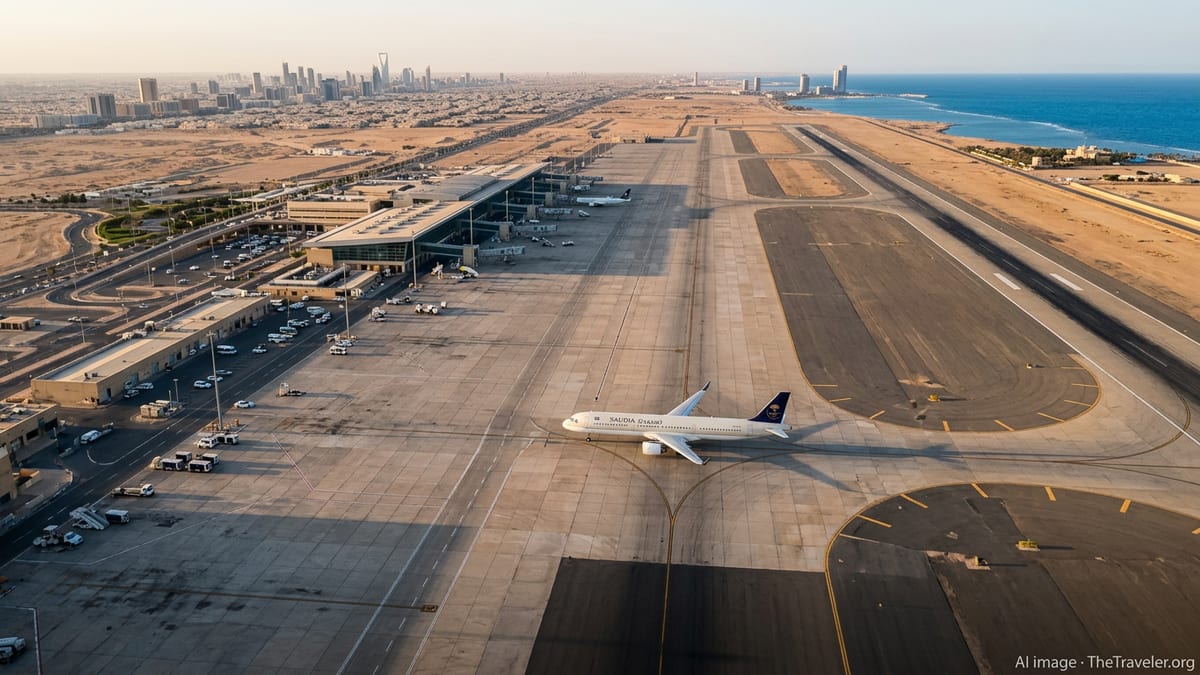
Extra Capacity to Connect Major Hubs With Red Sea Resorts
According to publicly available schedule information and recent promotional material, the new Eid Al Fitr flights will operate as supplementary services on top of Saudia’s regular network, linking the capital Riyadh and Jeddah with emerging leisure spots on the Red Sea. The temporary expansion is designed to absorb a spike in bookings from residents and visitors planning combined city, religious and beach-focused itineraries over the holiday.
Industry reporting on Saudi Arabia’s aviation sector shows that domestic air travel has risen sharply as new tourist offerings come online along the Red Sea coast, including large-scale resort developments and marine leisure infrastructure. The airline’s decision to layer additional frequencies on the high-traffic Riyadh–Jeddah corridor, with connections onward to coastal destinations, aligns with these broader trends in passenger behavior.
Schedule data indicates that the extra flights are timed to peak travel days surrounding the Eid break, when demand for both early departures and late-evening returns is historically strongest. This pattern is expected to ease pressure on existing services, reduce the risk of last-seat pricing for families and groups, and provide more flexibility for travelers combining Red Sea stays with visits to Makkah and Medina via Jeddah.
Travel analysts note that the move also helps maintain momentum at newly developed Red Sea airports and resorts, where aviation connectivity is a critical factor in sustaining occupancy and justifying ongoing investment in hotel, marina and entertainment facilities.
Eid Travel Surge Highlights Red Sea’s New Role
Recent tourism and aviation data for Saudi Arabia point to a structural increase in holiday travel, particularly during Eid periods. Reports on passenger volumes at Riyadh’s King Khalid International Airport and Jeddah’s King Abdulaziz International Airport describe double-digit growth in domestic movements, supported by national campaigns encouraging residents to vacation within the Kingdom.
The Red Sea coastline has become central to this strategy, with publicly available information highlighting substantial increases in visitor numbers to Jeddah’s waterfront, island resorts and nearby coastal projects. Analysts view the extra Eid flights as part of a broader pattern in which airlines expand seasonal capacity to support emerging leisure clusters, helping to shift perceptions of Saudi Arabia from a primarily religious destination to a multi-segment tourism market.
Holiday demand is also being driven by a growing appetite for short domestic getaways that combine cultural experiences with coastal relaxation. Travel market studies describe strong interest in itineraries that link Riyadh’s urban attractions with time on the Red Sea, often routed through Jeddah as a natural gateway. Additional frequencies during Eid are expected to make such combinations more accessible, especially for travelers booking closer to departure.
By concentrating extra capacity on routes that feed into the Red Sea, Saudia is effectively using the holiday surge to further embed these destinations in domestic travel habits. Over time, this can help stabilize shoulder-season demand and support year-round operations for hotels, restaurants and activity providers along the coast.
Supporting Vision 2030 Tourism Targets
Saudi Arabia’s national tourism strategy sets ambitious targets for visitor numbers and sector contribution to gross domestic product by 2030, with aviation connectivity identified as a key enabler. Published analyses of the country’s tourism performance show steady growth in both domestic and international arrivals, with coastal destinations playing a larger role each year.
Saudia, as the national carrier, has been referenced in market commentary as a central player in delivering these goals through increased frequencies, new routes and targeted capacity boosts around major events and holidays. The introduction of 20 additional Eid Al Fitr flights between Riyadh, Jeddah and Red Sea destinations fits this pattern by directly addressing peak-period bottlenecks and making it easier for travelers to reach newly developed resort areas.
Industry observers note that such adjustments, while temporary, have longer-term implications for route planning and airport development. Strong performance on these extra flights can support the case for more permanent frequency upgrades, expanded terminal facilities and additional ground transport links at both major hubs and secondary coastal airports.
The expansion is also consistent with a wider push to diversify Saudi Arabia’s tourism portfolio beyond religious travel. Public data on hotel pipelines, investment incentives and marketing campaigns shows a growing emphasis on beach resorts, marine activities and family leisure products, for which dependable, high-frequency air links are essential.
Benefits for Domestic Travelers and the Aviation Ecosystem
For domestic travelers, the additional Eid flights are expected to translate into broader choice of departure times, improved availability on high-demand days and potentially more competitive pricing across the network as capacity rises. Travel booking platforms and fare trackers typically report sharp upward pressure on prices around Eid; extra inventory on core trunk routes can mitigate some of that impact.
The move also brings advantages for the wider aviation ecosystem in Saudi Arabia. Higher flight volumes between Riyadh, Jeddah and Red Sea destinations generate additional activity for airport operators, ground handlers, catering providers and maintenance suppliers. Industry analyses of the Kingdom’s aviation sector emphasize these indirect benefits as part of the rationale for continued investment in hubs and regional airports.
For hotels and resorts along the Red Sea, greater seat availability during Eid increases the likelihood that properties can trade at or near full occupancy for the duration of the holiday. Sector reports indicate that reliable air access is one of the most important factors influencing tour operator decisions and dynamic packaging by online travel agencies, especially for newly launched destinations that are still building brand awareness.
At the same time, extra services during peak periods provide an opportunity for Saudia to test operational resilience, refine schedules and assess traveler preferences across different times of day and connection windows. Insights gained from these Eid operations can inform future capacity planning, both for domestic routes and for international services that feed into Red Sea destinations via Riyadh and Jeddah.
Strengthening Saudi Arabia’s Position as a Regional Holiday Hub
Across the wider Middle East, airlines increasingly use holiday periods to showcase new destinations and reinforce their home markets as regional travel hubs. Observers of Gulf aviation trends point to a steady rise in special-event and seasonal flights tied to religious holidays, school breaks and major entertainment festivals.
Within this context, Saudia’s decision to introduce 20 extra Eid Al Fitr flights focused on the Riyadh–Jeddah corridor and onward Red Sea connections underscores Saudi Arabia’s intent to compete more actively for regional leisure traffic. By improving access to its own coastal destinations, the Kingdom positions itself as a viable alternative to more established beach markets nearby.
Travel trend reports suggest that as awareness of Saudi Arabia’s Red Sea offerings grows, particularly among travelers in the Gulf, Europe and Asia, demand for seamless itineraries that combine international arrivals with domestic connections will continue to increase. Additional holiday flights between the main hubs and the coast help lay the groundwork for such growth by normalizing higher-capacity operations and familiarizing travelers with new airport gateways.
While the extra Eid services are time-limited, analysts expect similar measures to recur around peak seasons as Saudi Arabia advances its tourism agenda. Each incremental capacity increase contributes to a broader restructuring of travel patterns in the region, with the Red Sea emerging as a central pillar of the Kingdom’s evolving tourism landscape.