

More news on this day
Saudi flag carrier Saudia will mount a 44-flight surge over the upcoming Eid holidays on routes connecting Riyadh, Jeddah and the emerging Red Sea resort coastline, a capacity boost that spotlights both surging domestic demand and Saudi Arabia’s broader ambition to draw 150 million visitors a year by 2030.
Get the latest news straight to your inbox!
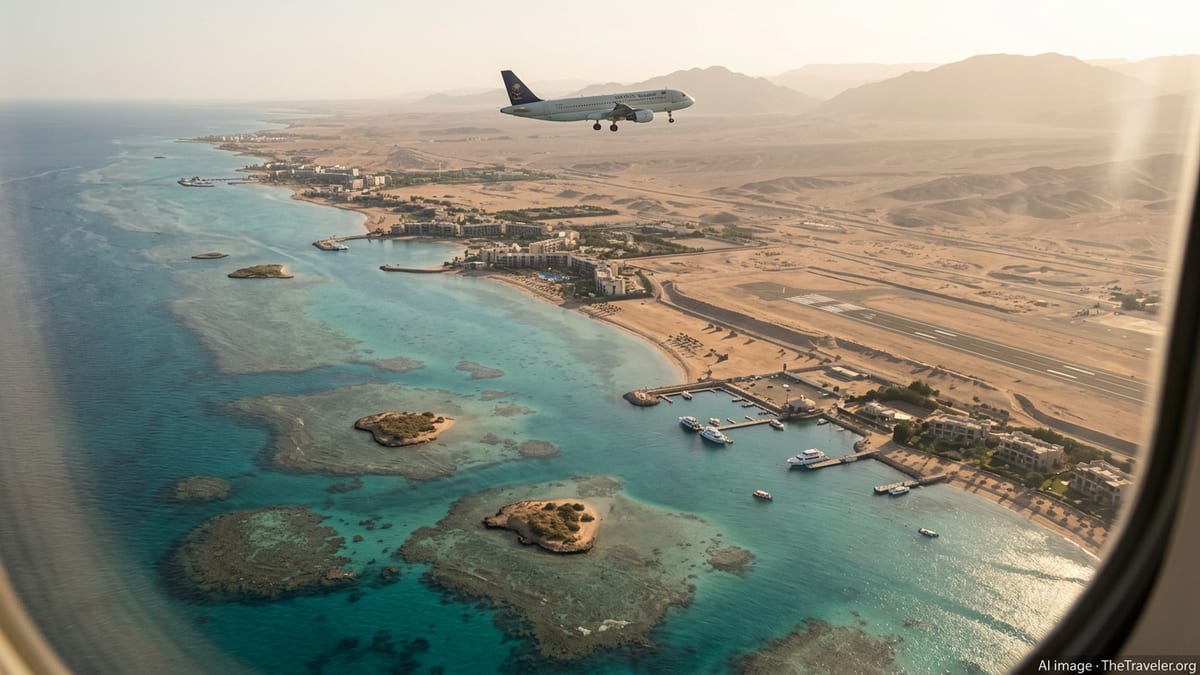
Short-Term Eid Surge Targets Long-Term Tourism Ambitions
Saudia’s decision to deploy 44 additional flights during the Eid period on core domestic corridors is designed to absorb a sharp spike in leisure and family travel while reinforcing new holiday habits around Saudi Arabia’s fast-developing coastal resorts. The extra services, focused on the Riyadh to Jeddah trunk route and links from both cities to Red Sea airports serving new luxury projects, effectively turn Eid into a live test of how the national aviation system will handle heavier tourism peaks in the years ahead.
The airline has already emerged as a primary tool in the kingdom’s drive to reposition itself as a global leisure destination. Record visitor numbers in 2023 and 2024 prompted policymakers to raise their original 2030 tourism target from 100 million to 150 million annual domestic and international visits, accelerating timelines for both carriers and airports. Saudia’s Eid schedule extension is being closely watched by officials as evidence of how quickly additional capacity can be mobilized around religious and school holiday windows.
Analysts note that Eid has traditionally been dominated by trips for family reunions or outbound holidays to neighboring Gulf states. The new pattern, with Saudia pushing more seats into routes that funnel passengers toward domestic beach, marine and heritage projects, underscores how the government wants more of that seasonal spending to remain inside the kingdom. The 44-flight boost is small in absolute terms but symbolically important, as it signals a pivot from a purely religious and visiting-friends-and-relatives market toward a broader leisure portfolio anchored in the Red Sea coastline.
Riyadh, Jeddah and the Red Sea Form a New Golden Triangle
The additional Eid flights revolve around a three-node network: Riyadh as political and business capital, Jeddah as the historic gateway to Mecca and a major coastal city, and the Red Sea resorts as the new leisure frontier. Saudia is increasing frequencies on Riyadh–Jeddah to handle domestic connections while bolstering nonstop services from both hubs to Red Sea gateways, including the recently opened Red Sea International Airport that serves flagship island and lagoon developments.
For the carrier, concentrating extra capacity on these axes helps cement a travel pattern officials hope will become standard for domestic tourists and, over time, international travelers. Visitors arriving in Riyadh for business or events are being encouraged to tag on short leisure breaks on the Red Sea, while pilgrims transiting through Jeddah and nearby airports are being courted with stopover stays at coastal or heritage destinations. The Eid surge allows Saudia to refine connection times, ground handling and baggage flows between these nodes under peak load.
Tourism planners view this triangle as central to the broader Saudi Aviation Strategy, which calls for tripling annual passenger throughput and more than doubling the number of routes by 2030. While a new mega-hub at King Salman International Airport in Riyadh is still under construction, the interim strategy leans on Saudia and existing airports to knit together domestic destinations quickly. Seasonal capacity spikes such as the 44 Eid flights effectively prefigure the higher-frequency schedules that could become routine once the new hub and expanded coastal airports are fully online.
Red Sea Resorts Move From Blueprint to Busy Holiday Reality
The strongest signal from Saudia’s Eid plan is its confidence that the Red Sea is shifting from a construction story to a functioning holiday corridor. In the last two years, the first phase of island resorts, eco-lodges and marina developments backed by Red Sea Global and other state-linked developers has quietly opened to paying guests, supported by a new coastal road network and dedicated seaplane and boat transfers. By funnelling more Eid travelers directly into these gateways, Saudia is helping to normalize the Red Sea as a mainstream option for Saudi families who might previously have chosen Dubai, Bahrain or further afield for their holiday.
Stakeholders say the extra flights will allow resorts to trial higher occupancy scenarios and full-service experiences during one of the busiest periods on the regional calendar. That, in turn, feeds back into operational planning for everything from marine transport and excursion capacity to staffing and supply chains in remote island locations. If the Red Sea can run smoothly at Eid peaks, operators argue, it sends a reassuring message to future international guests weighing whether to book week-long stays there rather than in competing Mediterranean or Indian Ocean destinations.
Environmental and social considerations are also under scrutiny as volumes rise. Developers have promoted the Red Sea projects as models of low-impact, regenerative tourism, with tight controls on visitor numbers and strict building codes. The Eid boost in air seats will test whether those guardrails can hold as domestic demand intensifies. Transport specialists note that the real challenge is not only air capacity but also ensuring that last-mile connections from airports to islands and lagoons remain seamless without overwhelming fragile coral and coastal ecosystems that are central to the Red Sea’s appeal.
Saudia’s Growth Mirrors a Rapidly Expanding Tourism Base
Saudia’s Eid move comes against a backdrop of robust growth in Saudi visitor numbers, which have already surpassed earlier 2030 forecasts. Official data show that the kingdom has crossed the 100 million-visit threshold ahead of schedule, buoyed by a combination of religious travel, domestic leisure, business events and the arrival of more regional carriers into secondary cities. International consultancies now regularly cite Saudi Arabia as one of the fastest growing large tourism markets worldwide, with tourism’s contribution to gross domestic product and employment climbing accordingly.
The national tourism strategy calls for more than 150 million visits by the end of the decade, with around 70 million international arrivals and the rest domestic trips. To support that ramp-up, Saudi authorities are investing heavily in airports, airlines and digital infrastructure, from streamlined e-visa platforms to integrated destination marketing. Saudia, together with low-cost sister brands and foreign partners, is expected to shoulder a substantial share of the required seat growth, especially on routes linking new tourism projects with Riyadh and Jeddah.
Industry observers point out that the 44 Eid flights, while modest in number, illustrate how flexible scheduling and targeted domestic boosts can help the kingdom smooth seasonal peaks and prevent bottlenecks that might discourage repeat visits. If travelers experience reliable on-time performance and straightforward connections during busy holidays, confidence in Saudi Arabia’s emerging tourism ecosystem is likely to grow. Conversely, any visible stress points during such surges will inform future investments in airport capacity, air traffic management and customer service training.
Balancing Infrastructure, Demand and Experience on the Road to 2030
Saudi planners are increasingly explicit that aviation capacity, hospitality supply and visitor experience must grow in tandem if the 150 million-visit target is to be achieved without diluting quality. Selected hospitality market reports have already flagged a shortage of midscale rooms in some cities, even as luxury projects gather pace. The Eid surge, with its focus on high-demand routes, will offer a granular picture of which segments and destinations face the tightest constraints as domestic travel patterns evolve.
The government’s response has been to encourage diversified investment, from religious tourism corridors in Mecca and Madinah to entertainment hubs such as Qiddiya and cultural districts in Diriyah and AlUla. Saudia’s network planning is being closely coordinated with these projects, with new or additional flights timed around key festivals, sporting events and school holidays. The 44 extra Eid services are part of that calendar-based coordination, offering a preview of how aviation schedules will be used as levers to spread demand more evenly across the year and across the country.
As Saudi Arabia moves deeper into its tourism transformation, episodes like Saudia’s Eid expansion will serve as barometers of whether the kingdom can turn ambitious master plans into reliable everyday travel experiences. For now, the expanded holiday schedule between Riyadh, Jeddah and the Red Sea signals confidence that domestic travelers are ready to embrace the kingdom’s own shores and heritage sites. The real test will be whether similar surges, replicated at larger scale and across more routes, can be sustained all the way to 2030 without losing sight of service quality or the environmental assets that underpin Saudi Arabia’s new tourism brand.