

More news on this day
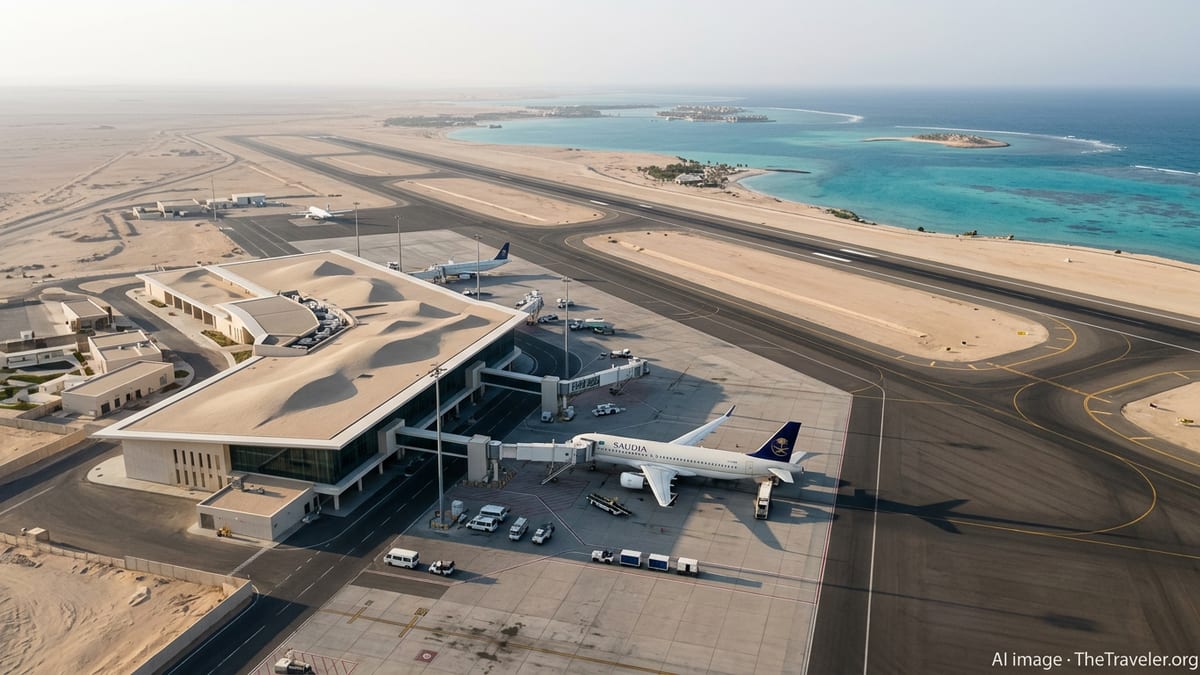
Saudi Arabia’s national carrier Saudia is expanding services to the Red Sea International Airport ahead of the Eid travel peak, reinforcing air links between Riyadh, Jeddah and the kingdom’s flagship luxury tourism coastline as new resorts open across the region.
Get the latest news straight to your inbox!
Stronger Domestic Links to the Red Sea Ahead of Eid
Publicly available flight data shows that Saudia now operates a growing schedule of nonstop services from Riyadh and Jeddah to Red Sea International Airport, the dedicated gateway to Saudi Arabia’s emerging Red Sea tourism cluster. The services build on initial twice-weekly operations launched in 2023 and have gradually increased in frequency as resorts, infrastructure and visitor demand scale up.
Red Sea International Airport opened to its first commercial flight from Riyadh in September 2023, followed shortly by links from Jeddah. Since then, schedules published by aviation data providers indicate that Saudia has expanded to multiple weekly departures on both city pairs, with additional capacity commonly timed around peak leisure periods such as school holidays and religious festivals including Eid.
The ramp-up comes as Saudi Arabia targets a sharp rise in visitor numbers under its Vision 2030 tourism strategy. By boosting connectivity from the capital and the country’s main Red Sea hub, Saudia is positioning the new coastal destination as an easy add-on to domestic trips and as a central part of family travel planning during the Eid holidays.
Connecting Key Hubs With New Luxury Destinations
The enhanced Saudia services are designed to plug Riyadh and Jeddah directly into a network of new high-end beach and island resorts spread along Saudi Arabia’s northwest Red Sea coast. Red Sea International Airport sits between the coastal towns of Umluj and Al Wajh and serves headline developments including Shura Island, Ummahat Island, Sheybarah Island and the wider Red Sea destination being delivered by Red Sea Global.
Open-source tourism and aviation information shows that several marquee properties have already opened or are welcoming guests in phases, among them ultra-luxury resorts operated under international brands on Ummahat and Sheybarah islands. More hotels are scheduled to open through 2025 and 2026, extending the range of stays from regenerative nature-focused escapes to wellness, diving and yachting experiences.
By widening the choice of departure times and days from Riyadh and Jeddah, Saudia’s expanded schedule is expected to make it easier for domestic travelers to coordinate short breaks and long Eid holidays without needing to transit through other regional hubs. The strengthened air bridge also supports international itineraries that route via Riyadh or Jeddah before continuing to the Red Sea.
Competitive Eid Options Amid Growing International Access
The increase in Saudia’s flights to the Red Sea region comes as international carriers add their own services to Red Sea International Airport, intensifying competition for Eid and summer travelers. Published route announcements show that Qatar Airways has launched three weekly flights from Doha, while Flydubai has introduced and then stepped up services from Dubai, collectively giving the airport a mix of domestic and regional links.
This broader network means that visitors from Europe, Asia and the wider Middle East can now access Saudi Arabia’s Red Sea coastline either on Saudia via Riyadh and Jeddah or through alternative hubs such as Doha and Dubai. For Saudia, more frequent domestic flights during peak periods offer a way to defend market share, feed its long-haul network and present attractive through-fares that combine pilgrimage, city stays and beach holidays over Eid.
Industry commentary suggests that as capacity grows, airlines are likely to fine-tune schedules to match booking trends, shifting aircraft types and flight times to capture family groups, premium leisure travelers and short-stay guests. Saudia’s current pattern of regular connections from both major Saudi cities positions it as a central player in this evolving market.
What Eid Travelers Need to Know
For travelers planning Eid trips in 2026, the expanded Saudia services translate into more departure options and potentially smoother connections to Red Sea resorts. Schedules published on booking platforms indicate multiple weekly frequencies from both Riyadh and Jeddah to Red Sea International Airport, though exact times and aircraft types vary by season.
Industry guidance highlights that demand for Red Sea holidays is strongest around Eid and school breaks, which can lead to rapid sell-outs on preferred travel days. Travelers looking to combine the Red Sea with visits to Makkah, Madinah or city breaks in Riyadh and Jeddah are advised by travel providers to secure flights and accommodation well in advance to access the widest choice of timings and room categories.
Once at Red Sea International Airport, guests transfer onward by road, boat or seaplane to island and coastal properties, depending on resort location. Travel information released by destination stakeholders emphasizes a focus on seamless last-mile transfers and on protecting sensitive marine and desert ecosystems, which may include staggered check-in windows and restrictions on day-trip visitor numbers.
Supporting Saudi Arabia’s Wider Tourism Ambitions
Saudia’s growing presence at Red Sea International Airport forms part of a larger realignment of Saudi aviation and tourism. Government and industry reports describe the Red Sea destination, alongside projects such as AlUla and Amaala, as key pillars of a strategy to attract tens of millions of leisure visitors annually by the end of the decade, diversify the economy and create new jobs in hospitality and services.
The airline has publicly framed its route development as supporting Saudi Arabia’s expanding calendar of events and tourism offerings, from sporting fixtures to cultural festivals and luxury coastal escapes. Additional flights between Riyadh, Jeddah and the Red Sea region during peak periods like Eid are consistent with that message, helping move visitors efficiently between inland cities, holy sites and the coast.
As more resorts open and awareness of the Red Sea destination grows, aviation analysts expect further adjustments to capacity, frequencies and international partnerships. For now, Saudia’s expanded domestic services mean that Eid travelers in 2026 have more ways than ever to reach Saudi Arabia’s newest stretch of high-profile shoreline.