

More news on this day
Travellers across Saudi Arabia are facing prolonged disruption as suspensions and cancellations by Saudia and Gulf Air ripple through the country’s aviation network, leaving passengers stranded and schedules in disarray at major hubs in Riyadh, Jeddah, Dammam and smaller airports such as Sakakah.
Get the latest news straight to your inbox!
Flight Suspensions Intensify Regional Air Travel Turmoil
Published coverage on regional aviation shows that flight suspensions by Saudia and Gulf Air form part of a wider pattern of disruption linked to ongoing tensions and airspace restrictions across the Gulf and wider Middle East. Saudia has curtailed or suspended multiple regional routes in recent weeks, particularly to neighboring Gulf capitals and conflict-adjacent destinations, while Gulf Air’s operations from its Manama hub remain sharply reduced, with flights reportedly halted or heavily curtailed on several key corridors.
Operational updates compiled by industry trackers indicate that Gulf Air has suspended or significantly reduced operations to and from Bahrain, with cascading effects on its connecting traffic into Saudi Arabia. Saudia, meanwhile, has extended the suspension of selected services to destinations such as Amman, Kuwait City, Abu Dhabi, Dubai, Doha and Bahrain, effectively severing important short-haul links that typically feed passengers into Saudi airports for onward travel.
Within that broader context, reports referencing 36 suspended flights highlight a snapshot of a fast-moving situation in which schedules are being redrawn on a rolling basis. The suspended services include both point-to-point routes and feeder flights that normally support religious travel, labor migration and business trips, leaving aircraft and crews out of position and complicating recovery efforts for both airlines.
Although some carriers in the region have begun cautiously resuming limited services along designated “safe corridors,” publicly available information suggests that capacity remains well below normal levels. This partial resumption offers only sporadic relief to travelers in Saudi Arabia who continue to encounter last-minute changes, rolling delays and outright cancellations on itineraries involving Saudia, Gulf Air and their codeshare partners.
Major Saudi Hubs Struggle With Congestion and Uncertainty
Saudi Arabia’s largest airports are absorbing much of the passenger fallout. King Khalid International Airport in Riyadh, King Abdulaziz International Airport in Jeddah and King Fahd International Airport in Dammam are all handling disrupted itineraries as travelers attempt to rebook or reroute around closed or congested airspace. Aviation-focused analyses describe unusually high congestion at these hubs as airlines consolidate flights and funnel passengers onto a reduced number of operating routes.
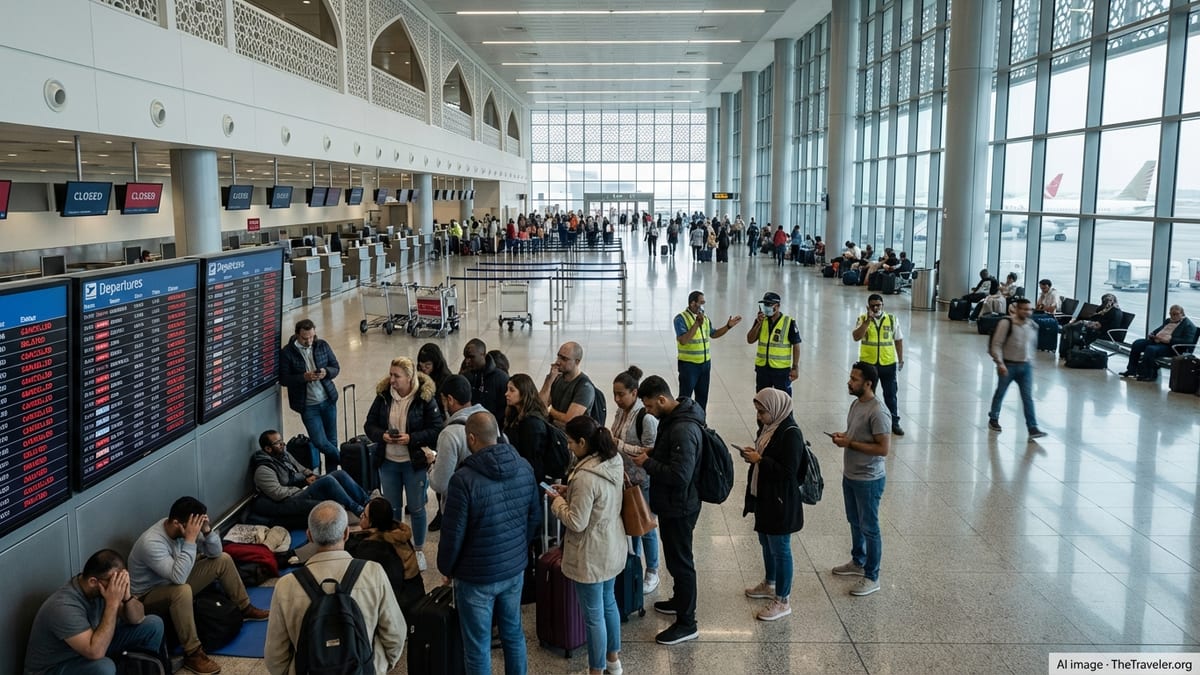
Riyadh and Jeddah, in particular, function as critical transfer points for Saudia’s international and domestic network. When regional flights are suspended, passengers who would normally connect seamlessly through these hubs instead face extended layovers, reissued tickets and, in some cases, overnight stays in terminal areas while they wait for rare available seats. Social media posts and traveler accounts describe long queues at rebooking desks and crowded departure halls as people seek clarity on whether their flights will operate.
Dammam’s King Fahd International Airport has emerged as both a pressure point and a lifeline. Publicly available reports indicate that while certain routes to and from Dammam have been affected by regional airspace closures, the airport remains an important alternative gateway for passengers trying to exit or enter the Gulf region. This has shifted additional demand onto domestic links between Dammam, Riyadh and Jeddah, further stretching already constrained capacity.
Compounding the situation, the irregular pattern of delays makes advance planning difficult. Travelers arriving at Saudi hubs often find that a flight showing as scheduled hours earlier may move into a delayed status multiple times before being cancelled outright. This rolling disruption has created what some travel analysts describe as a “stop-start” operating environment, in which airlines can restore only fragments of their usual schedules from one day to the next.
Smaller Airports Like Sakakah Feel the Knock-on Effects
While attention naturally focuses on major gateways, smaller Saudi airports such as those serving Sakakah in the northern Al Jawf region are also feeling the strain. These secondary airports rely heavily on a limited number of daily flights operated by Saudia and other domestic carriers to connect residents and visiting workers to the primary hubs at Riyadh, Jeddah and Dammam.
When Saudia suspends or reshuffles regional flights, aircraft and crew availability for thinner domestic routes can be affected, leading to cancellations or consolidation of services at airports like Sakakah. Publicly accessible timetables and traveler postings suggest that some passengers in outlying regions are experiencing extended waits for replacement flights, with options sometimes limited to the next available service one or two days later.
The impact is particularly acute for time-sensitive journeys related to medical appointments, education and business commitments that depend on reliable domestic links. In several parts of northern and eastern Saudi Arabia, the suspension of international and regional connections has therefore translated into a second layer of disruption, as domestic schedules are revised to accommodate shifting priorities within airline fleets.
Ground transport alternatives are available in some cases, but long distances between regional cities and the main hubs limit their practicality. For many passengers in Sakakah and similar destinations, securing a confirmed seat on a rescheduled flight remains the only realistic option, prolonging the period of uncertainty and contributing to the overall sense of being stranded.
Stranded Travellers Turn to Workarounds and Alternative Routes
As direct flight options contract, travellers stuck in Saudi Arabia and neighboring states are increasingly turning to improvised itineraries. Travel advisories and media coverage describe passengers stitching together routes via secondary hubs that remain open, including using Saudi Arabia’s domestic network to reach cities where limited international services continue to operate.
Some travelers are reportedly making use of overland links, such as road connections from Saudi Arabia to Bahrain or other neighboring countries, in an effort to reach airports with outbound capacity. However, fluctuating border procedures, variable road conditions and the unpredictability of flight schedules at the far end of these journeys mean such workarounds can involve considerable risk and additional cost.
International carriers outside the immediate crisis zone are also adjusting their schedules in response to regional airspace constraints. Industry reports note that some European and Asian airlines have suspended flights to multiple Gulf destinations or rerouted aircraft along longer paths that skirt affected airspace. This has reduced the number of long-haul seats available to travelers trying to depart from Riyadh, Jeddah or Dammam, even when those airports remain technically open.
At the same time, a limited number of relief and additional services have been introduced by certain airlines to help clear backlogs of stranded passengers. While these extra flights provide some relief, they do not fully offset the network-wide capacity shortfall created by the suspension of Saudia and Gulf Air services and by wider regional restrictions.
Guidance for Passengers Amid Ongoing Volatility
Travel organizations and consumer advocates are advising passengers in Saudi Arabia to adopt a highly flexible approach to trip planning while the disruptions continue. Publicly available guidance emphasizes the importance of monitoring airline apps and official communication channels frequently, as departure times and routing can change with little notice.
Passengers holding Saudia or Gulf Air tickets are being encouraged, through open advisories and news coverage, to verify whether their flights fall within the affected suspension windows and to explore rebooking options at the earliest opportunity. In many cases, airlines are waiving certain change fees or offering travel vouchers, although the availability of alternative flights remains limited due to aircraft and crew constraints.
For those yet to commence travel, analysts recommend considering itineraries that build in longer connection times, avoid non-essential transits through the most affected hubs and remain fully refundable where possible. Travelers already in transit through Riyadh, Jeddah, Dammam or Sakakah are advised to prepare for longer airport stays, including making contingency plans for accommodation and essential supplies in case of overnight delays.
With no clear timeline for a full return to normal operations, the suspension of 36 flights by Saudia and Gulf Air illustrates how rapidly evolving regional dynamics can disrupt even well-established air corridors. For now, passengers across Saudi Arabia face an environment where patience, flexibility and constant information checks are essential parts of any journey.