

More news on this day
Extended flight suspensions by Saudi flag carrier Saudia and Bahrain-based Gulf Air are rippling across Saudi Arabia’s airports, leaving thousands of travelers stranded as regional airspace disruptions continue to upend Gulf aviation.
Get the latest news straight to your inbox!
Regional Turmoil Knocks Out Key Gulf Routes
Weeks of instability across Middle East airspace have fed into an unprecedented shake-up of scheduled services, with Saudi Arabia’s main gateways increasingly affected. Publicly available information shows that Saudia has halted multiple regional routes, while Gulf Air’s long running suspension at its Bahrain hub has sharply restricted its ability to move passengers through the Gulf.
Data compiled by aviation tracking services and industry publications indicates that closures and risk advisories over parts of Iran, Iraq and the wider Gulf have pushed airlines to cut or reroute flights, severing some of the most heavily used corridors between Asia, Europe and the Middle East. For Saudi Arabia, which had emerged as a relatively stable bridge in earlier stages of the crisis, the latest suspensions mark a significant escalation in disruption.
Travel trade coverage and operational bulletins point to more than 13,000 flights cancelled across the region since late February, leaving over 20,000 passengers unable to reach their destinations. Saudia and Gulf Air are among the carriers most directly affected on short haul Gulf sectors, a segment where frequent business and visiting friends and relatives traffic is now struggling to find alternatives.
The impact has extended well beyond hub cities, as missed connections cascade into secondary markets and onward itineraries. Passengers who started their journeys in Asia, Africa or Europe are often discovering problems only when they attempt to transit via Saudi or Gulf points that are no longer served on their original tickets.
Saudia Extends Suspensions Across the Gulf
Saudia’s network adjustments have become more severe in recent days. Saudi media reports and airline notices show that the carrier has extended the suspension of flights to and from several key Gulf and regional capitals, including Amman, Kuwait City, Abu Dhabi, Dubai, Doha and Bahrain, with some services now cancelled into mid March and others into mid month on a rolling basis.
Additional suspensions affecting routes to Moscow and Peshawar further reduce the options available to passengers using Saudi Arabia as a transit point between Asia and Europe. The airline has described the measures in public updates as precautionary responses to regional developments, with ongoing internal reviews to determine when limited operations can resume on a city by city basis.
Saudi Arabia’s airports, notably Riyadh’s King Khalid International Airport and Jeddah’s King Abdulaziz International Airport, had initially absorbed additional traffic as neighboring hubs imposed restrictions. Recent travel advisories and independent reporting now highlight congestion, long queues at transfer desks and a sharp rise in missed onward connections as Saudia’s own schedule is pared back.
Passengers holding Saudia tickets are being urged in public guidance to monitor airline channels before heading to the airport, rather than relying on earlier itineraries. In practice, this has meant repeated rebookings, extended layovers and, for some travelers, unplanned overnight stays as they wait for available seats on the few remaining services still operating.
Gulf Air’s Bahrain Grounding Pushes Traffic Into Saudi Arabia
Gulf Air, the national carrier of Bahrain and a codeshare partner of Saudia, is facing even more acute disruption. Industry circulars and travel advisories describe its operations at Bahrain International Airport as effectively under a total grounding policy, with regular passenger flights suspended until further notice as Bahraini airspace remains tightly controlled.
With Bahrain largely offline for scheduled passenger movements, Gulf Air has shifted part of its activity into Saudi territory. Recent travel coverage notes that the airline has expanded operations from King Fahd International Airport in Dammam, promoting limited services to long haul destinations such as Paris, Cairo, London and Manila. This move is intended to provide a temporary outlet for demand, but capacity remains far below pre crisis levels.
The lack of a clear restart timeline in Bahrain is compounding uncertainty for passengers who purchased itineraries centered on Gulf Air’s hub model. Reddit forums and travel community posts over the past weeks describe customers repeatedly rebooking or seeking refunds on tickets originally routed via Bahrain, with many now attempting to reroute through Dammam or Saudi Arabia’s larger hubs instead.
Even where alternative flights exist, these options often involve higher fares, longer routings and complex reissuance conditions. Travelers who secured promotional fares on Gulf Air or Saudia earlier in the year are discovering that equivalent seats on other carriers are either sold out or priced significantly higher, adding a financial burden to the logistical disruption.
Thousands Stranded at Saudi Airports
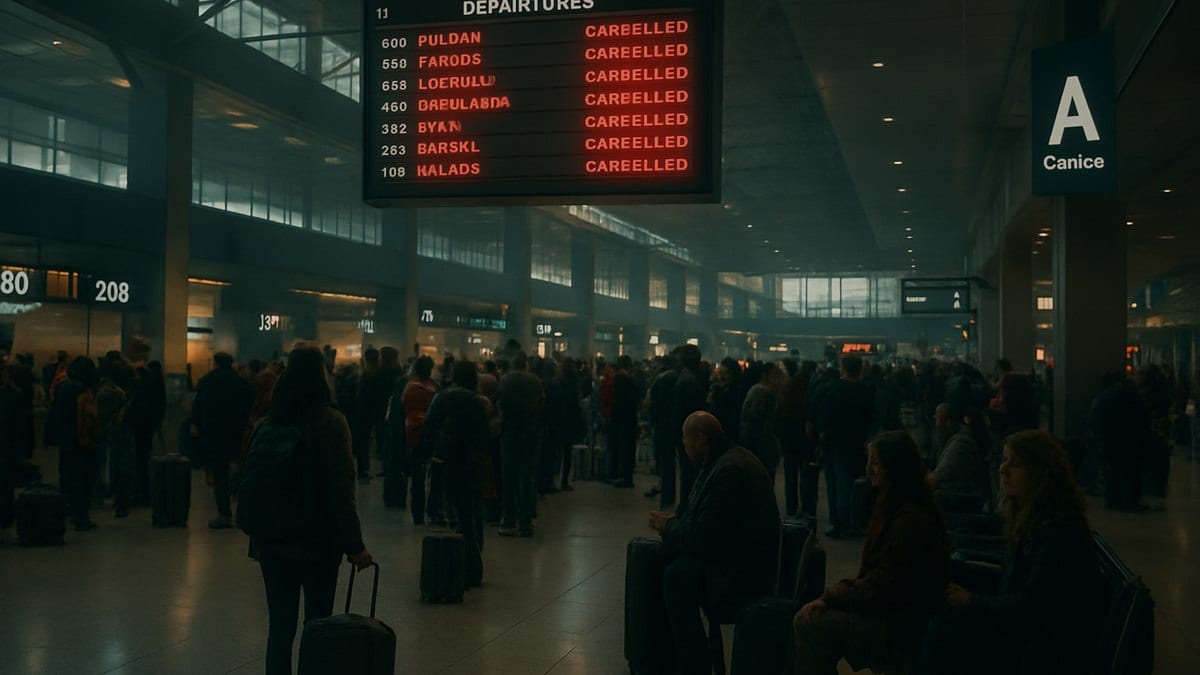
Across Saudi Arabia, the knock on effects of the Saudia and Gulf Air suspensions are most visible in crowded terminals and long queues at help desks. Travel industry reporting points to thousands of passengers stranded in recent weeks at Riyadh, Jeddah and Dammam, as well as at smaller airports that rely heavily on regional links now on hold.
Observers describe scenes of families camped out in waiting areas with luggage trolleys and carry on bags, while solo travelers shuffle between airline counters and ground handling offices in search of new itineraries. In many cases, passengers report learning about cancellations only hours before departure, leaving little time to arrange visas, accommodation or surface transport alternatives.
Saudi Arabia’s position as one of the few remaining east west corridors earlier in the crisis had drawn additional connecting traffic through its airports. As Saudia trims services and Gulf Air’s Bahrain hub remains suspended, those same travelers are now facing a shortage of remaining options. This has been particularly challenging for those with time sensitive commitments, such as exams, medical appointments or work obligations, who may be unable to postpone their journeys.
For travelers attempting to exit neighboring states where airports are closed or heavily restricted, Saudi Arabia has also become a critical overland gateway. Travel advisories highlight the King Fahd Causeway between Bahrain and the Eastern Province as one of the few viable routes for those seeking flights out of Dammam or Riyadh, though capacity on these onward services is tight and subject to sudden change.
Uncertain Outlook as Risk Review Nears
The immediate future for Saudia and Gulf Air passengers remains unclear. A regional flight risk review, tied to conflict zone assessments by European and international aviation safety bodies, is expected around April 10, 2026. Industry analyses suggest that this date could shape how long the current wave of suspensions lasts, but there is no guarantee of rapid normalization.
Airline monitoring sites and travel risk consultants emphasize that carriers are likely to proceed cautiously, even if some advisories are relaxed. Saudia has already signaled in its public statements that any resumption will be gradual and based on ongoing security evaluations. For Gulf Air, the reopening of Bahrain’s airspace and airport to regular traffic is a prerequisite before a meaningful hub operation can return.
Until those decisions are made, passengers booked on Saudia or Gulf Air services in and out of Saudi Arabia face a period of continued uncertainty. Travel agents and online booking platforms are encouraging customers to check the latest airline notices, consider flexible tickets and, where possible, plan for additional time and contingency funds in case of last minute schedule changes.
With regional tensions still high and airspace restrictions subject to rapid revisions, the only clear trend for now is volatility. For the thousands of travelers currently stranded at Saudi airports or trying to plan imminent trips, that volatility has already translated into disrupted plans, unexpected expenses and an anxious wait for clearer skies.