

More news on this day
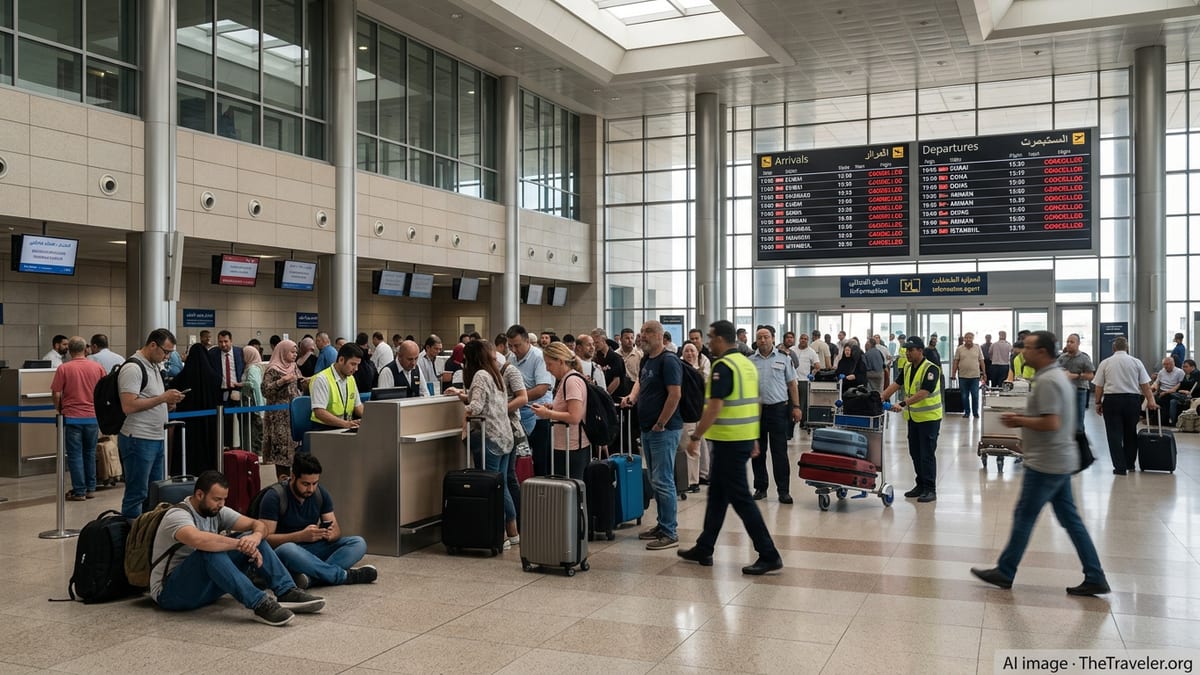
Air travellers across Saudi Arabia, Jordan, Lebanon and Spain faced another turbulent weekend as at least 20 flight cancellations and 28 significant delays on Saudia and Royal Jordanian left passengers stranded in Cairo, Riyadh, Barcelona and several regional hubs.
Get the latest news straight to your inbox!
Regional Disruption Tied to Ongoing Middle East Volatility
Published coverage of flight-tracking data and airport operations indicates that the latest wave of disruption is unfolding against a backdrop of broader instability in Middle East airspace that began in late February 2026. Since then, thousands of flights across the region have been cancelled or rerouted as airlines adapt to shifting safety assessments and temporary airspace restrictions.
Recent analyses by aviation and travel intelligence outlets show that Saudi Arabia and Jordan have remained technically open for commercial traffic but subject to frequent short-notice schedule changes. Lebanon has experienced persistent delays linked to capacity constraints and staffing pressures, while services between the Middle East and Europe, including Spain, have seen rolling timetable adjustments rather than full suspension.
Within this wider pattern, Saudia and Royal Jordanian have been operating reduced or modified schedules on several routes, particularly those touching regional conflict zones or overflight corridors. The combination of precautionary rerouting, aircraft repositioning and crew duty-time limitations has translated into a cluster of cancellations and late departures at key airports, disproportionately affecting transit passengers and multi-leg itineraries.
Industry commentary suggests that airlines in the region are prioritising network resilience and safety over strict timetable adherence, a strategy that helps keep core routes open but leaves travellers vulnerable to last-minute disruption, especially on connecting journeys through Riyadh, Amman and neighbouring hubs.
Impact on Saudia and Royal Jordanian Operations
According to aggregated flight-status reports and published travel-industry summaries, Saudia and Royal Jordanian together account for at least 20 cancellations and 28 delays across the current disruption window, with further minor schedule changes still being recorded. The figures include flights touching Saudi Arabia, Jordan, Lebanon and Spain, particularly services that link Riyadh, Jeddah and Amman with Mediterranean destinations such as Barcelona and Beirut.
Data compiled from airport departure boards and commercial flight trackers shows that Saudia has cancelled or heavily delayed several services linking Riyadh with regional gateways, while some onward connections into North Africa and southern Europe have operated with extended delays. Royal Jordanian, which maintains a network that includes Barcelona and Beirut, has recorded a smaller number of outright cancellations but a noticeable increase in late departures and arrivals, especially on routes transiting Amman.
Travel advisories and airline operations updates describe both carriers as operating under constrained conditions rather than full suspension. Saudia has adjusted frequencies and timings on certain Gulf and Levant routes, while Royal Jordanian has resumed most services after earlier airspace closures but continues to list some destinations as restricted or temporarily limited. This pattern has created pockets of severe disruption even as headline schedules appear largely intact on booking platforms.
Observers in the aviation sector note that short-notice operational changes can be particularly challenging for legacy carriers that rely on tightly timed connections at hub airports. When one long-haul or regional leg suffers a significant delay, aircraft and crew rotations can be thrown off for subsequent sectors, amplifying the impact in cities that may seem geographically distant from the original trigger.
Airports from Cairo to Barcelona Feel the Strain
The knock-on effects of these cancellations and delays have been especially visible at Cairo, Riyadh, Amman and Barcelona, where passengers reported extended queues at transfer desks, crowded departure halls and rapidly changing gate information. Airport information screens and public flight-status feeds show clusters of delayed departures associated with Saudia and Royal Jordanian, often grouped around peak connection banks.
In Cairo, publicly available data points to a mix of delayed regional departures and late-arriving inbound flights that upset carefully planned connection windows. Riyadh, a major hub for Saudia, has experienced waves of delays that ripple through its departure banks, affecting both regional and long-haul services. Amman’s main airport continues to operate, but regional travel bulletins emphasise elevated rates of delay and rescheduling on flights in and out of Jordan.
On the European side, Barcelona has emerged as a visible pressure point. Royal Jordanian’s services to the Catalan capital, combined with arrivals from other Middle Eastern carriers, are funnelling disrupted passengers into a major Schengen gateway. Airport operations logs and media coverage describe passengers facing missed connections onto intra-European flights as arrival delays from the Middle East cascade into local schedules.
Lebanon’s main international gateway has not seen the same volume of cancellations as some Gulf airports, but its role as a regional spoke means that delays to and from Beirut feed back into the broader network. Reduced staffing levels and constrained airport capacity, highlighted in recent logistics and freight bulletins, add another layer of complexity to keeping passenger operations running smoothly.
Passenger Experience: Stranded Journeys and Limited Options
Reports from travellers on social platforms, aviation forums and consumer-rights channels depict a familiar pattern for those caught in the current disruption. Passengers transiting through Riyadh or Amman on Saudia and Royal Jordanian services describe being informed of multi-hour delays or cancellations only after arriving at the airport, leaving them to scramble for hotel rooms, meal vouchers or alternative flights.
Some travellers connecting onward to Europe through Barcelona recount missed onward legs and overnight stays when inbound flights from the Middle East arrived late in the day. Others on itineraries involving Lebanon or secondary Middle Eastern cities report complex rerouting, featuring additional stops or backtracking via alternative hubs in Turkey or the Gulf, often at short notice and with limited clear information during the rebooking process.
Consumer-rights organisations and air-passenger advisory services note that compensation rules and care obligations vary depending on the jurisdiction and the cause of disruption. Because many current schedule changes are linked, directly or indirectly, to security-related airspace decisions and broader geopolitical tensions, experts caution that statutory cash compensation under European regulations may be limited. However, travellers are still generally entitled to refunds or rebooking when flights are cancelled, along with basic assistance such as meals and accommodation during extended delays, subject to each airline’s conditions of carriage.
Travel forums highlight that passengers with multi-ticket or self-connecting itineraries are particularly exposed. When separate tickets involve Saudia, Royal Jordanian and third-country carriers, a missed sector caused by a delay on one airline may not trigger automatic protection on the next, complicating claims and adding to out-of-pocket expenses for stranded travellers.
What Travellers Can Do as Disruptions Continue
Given the evolving situation, aviation analysts and travel advisers recommend that passengers booked on Saudia and Royal Jordanian routes involving Saudi Arabia, Jordan, Lebanon or Spain monitor their flights frequently in the 24 to 48 hours before departure. Publicly available guidance from both carriers encourages passengers to use official flight-status tools and mobile apps rather than relying solely on third-party booking platforms.
Experts in passenger rights also stress the importance of understanding fare rules and airline policies around cancellations and delays. Royal Jordanian’s published conditions outline options such as rerouting, refunds or travel credits when the airline fails to operate a flight reasonably according to schedule, while Saudia’s customer guidance similarly points travellers toward refunds or rebooking in the event of significant disruption. These provisions typically apply regardless of whether compensation is owed under regional or international regulations.
Travel-industry commentary further suggests that travellers consider building longer connection times, particularly when itineraries pass through Riyadh, Amman or other Middle Eastern hubs en route to Europe. For those yet to book, choosing through-tickets on a single carrier or alliance rather than piecing together separate tickets can provide stronger protection if missed connections occur.
With regional tensions still affecting airspace and airline scheduling decisions, observers expect intermittent disruption to continue in the short term. For passengers on Saudia and Royal Jordanian, flexibility, close monitoring of flight information and a clear understanding of available remedies remain key to navigating a landscape in which even confirmed bookings can change with little warning.