

More news on this day
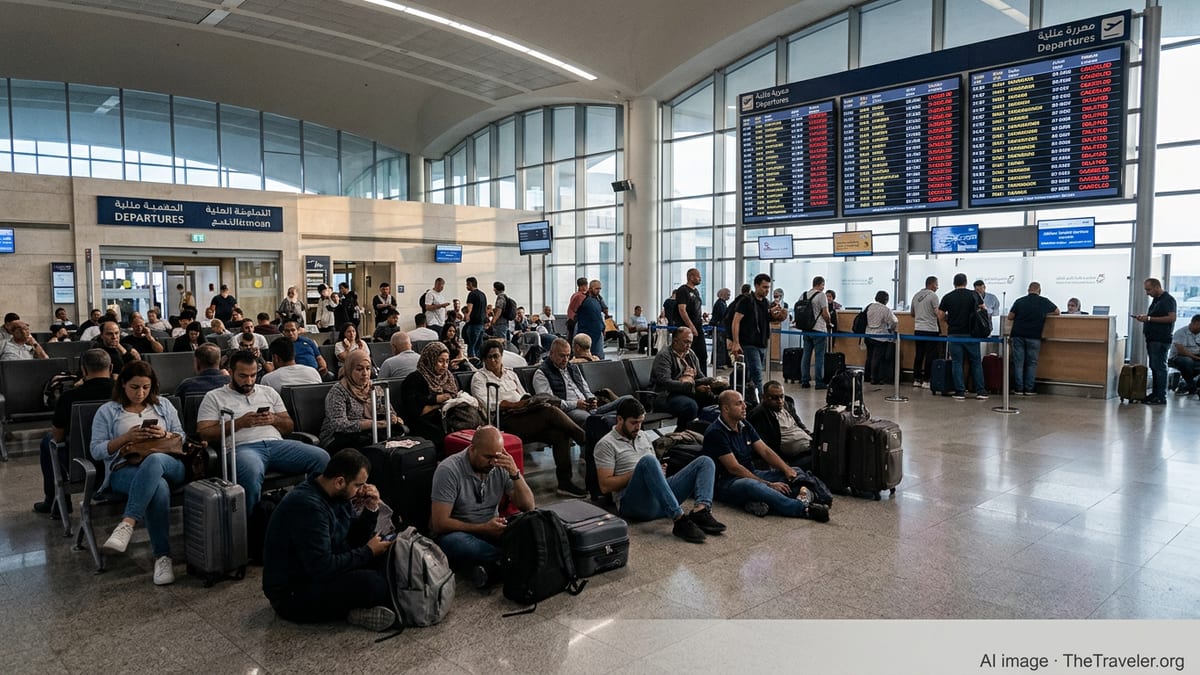
Passengers traveling across the Middle East and into Europe are facing another day of disruption as Saudia and Royal Jordanian record at least 20 cancellations and 28 delays across networks touching Saudi Arabia, Jordan, Lebanon and Spain, causing knock-on chaos at major hubs including Cairo, Riyadh and Barcelona.
Get the latest news straight to your inbox!
Ripple Effects Across Regional and European Hubs
Operational data and published coverage indicate that the latest wave of schedule disruption is part of a broader pattern of instability affecting Middle East air travel in recent weeks. Saudia, Royal Jordanian and other regional carriers have been contending with congested hubs, altered routings and tighter airspace constraints, which together have increased the likelihood of last-minute changes. Flights linking Saudi Arabia and Jordan with key markets in North Africa and southern Europe have been particularly exposed.
In Cairo, one of the region’s busiest transit points, irregular operations in recent days have already led to elevated delay counts for a number of Middle Eastern airlines, including Saudia. Reports from aviation-focused outlets describe days where the carrier logged more than a hundred delayed departures and arrivals at major airports, even when outright cancellations remained comparatively low. That operational strain is now spilling over into secondary routes onward to Lebanon and Spain.
Riyadh’s King Khalid International Airport, a central node for Saudia’s network, has also experienced heavy disruption. Industry trackers highlight days with exceptionally high numbers of late departures for Saudia and its regional peers, with schedules repeatedly compressing during peak bank periods. As airlines attempt to recover, short- and medium-haul services to Amman, Beirut and European gateways such as Barcelona are among the first to see their departure times pushed back or their flights consolidated.
Barcelona, meanwhile, has become a pressure point on the European side of the network. Publicly available flight information shows a pattern of late-arriving aircraft from the Middle East, which in turn disrupts tightly timed turnarounds. When inbound aircraft from Riyadh or Amman arrive well behind schedule, departures back to the region are often delayed further or, in some cases, removed from the schedule entirely, adding to the tally of cancellations and frustrating travelers at both ends of the route.
Passengers Stranded From Riyadh to Beirut and Barcelona
The immediate impact of the current disruption is most visible in the experiences of passengers stranded mid-journey. According to recent travel-industry reports, travelers connecting through Riyadh and Amman have faced extended waits as departure boards fill with delayed or rerouted flights. For some, missed connections in Cairo or Riyadh have meant unplanned overnight stays, while others have had to rebook entirely to reach destinations such as Beirut and Barcelona.
In Jordan, monitoring of operations at Queen Alia International Airport in Amman over the past week shows clusters of delays and a handful of cancellations affecting Royal Jordanian alongside other carriers. Although the overall number of cancelled Royal Jordanian services remains limited on some days, disruptions to even a small segment of the schedule can leave passengers bound for Cairo, Beirut or European destinations without same-day alternatives, particularly when load factors are already high.
Lebanon’s air links are feeling the knock-on effects. With regional airspace patterns in flux and multiple airlines trimming frequencies or adjusting routings, Beirut-bound passengers relying on connections via Amman and Riyadh are encountering longer total journey times and, in some cases, last-minute aircraft changes. When cancellations affect feeder flights out of Cairo or Riyadh, itineraries that hinge on narrow connection windows in Amman can quickly unravel.
In Spain, travelers in Barcelona report unusually crowded customer-service queues and repeated gate changes for flights tied to Middle Eastern hubs. With at least 20 cancellations and dozens of delays reported across Saudia and Royal Jordanian services touching the region, aircraft and crews are frequently out of position, leading to cascading schedule changes over the course of the day. These operational challenges are compounded when arriving aircraft are already delayed from previous segments in Saudi Arabia or Jordan.
Operational Pressures Behind the Disruption
The background to the latest disruption lies in a Middle East aviation system already under strain from broader regional tensions and shifting airspace availability. Aviation analysis platforms have documented sharp capacity cuts and large numbers of cancellations across multiple Gulf and Levant carriers since late February, after conflict-related airspace closures forced airlines to reroute long-haul traffic and in some cases suspend entire city pairs.
These changes have reshaped how aircraft and crews are deployed. With some traditional overflight corridors restricted or closed, carriers including Saudia and Royal Jordanian have had to extend block times, adjust flight paths and rebuild their timetables around more circuitous routings. Even when individual flights to places like Cairo, Riyadh, Amman or Barcelona remain scheduled, the network-wide ripple effects increase the risk of late arrivals, missed slots and crew duty-time constraints that can prompt last-minute cancellations.
Operational data from recent days suggests that Saudia has borne a particularly heavy delay burden at several Middle Eastern hubs, recording high double-digit or even triple-digit counts of late departures on some days. Royal Jordanian, while generally operating a smaller network, has experienced its own spikes in delays and cancellations at Amman and connecting points, including Cairo. When these peaks coincide, the resulting schedule instability can easily translate into disruption across shared markets such as Lebanon and Spain.
Industry observers also point to the compounding effect of airport congestion and resource limitations. Ground-handling capacity, runway availability and air-traffic control constraints at busy airports from Cairo and Riyadh to Barcelona are being tested simultaneously as airlines re-time flights and compress waves of departures into narrower operational windows. Even modest disturbances, such as weather-related slowdowns or technical checks, are therefore more likely to push flights into delay or force carriers to prioritize some sectors over others.
Passenger Rights, Rebooking Options and Practical Advice
For travelers caught up in the current disruption, airline policies and jurisdiction-specific passenger-rights rules determine what support may be available. Saudia and Royal Jordanian outline in their publicly accessible conditions of carriage that, in cases of significant delays or cancellations, they aim to provide updated information at airports and to re-accommodate passengers on the next available flight where space permits. However, the sheer volume of schedule changes in recent weeks means that spare seats can be limited, prolonging the wait for alternative options.
On routes touching the European Union, including flights to and from Barcelona, passengers may be covered by EU consumer-protection rules that set out entitlements to care and, in some circumstances, compensation when flights are delayed or cancelled. Eligibility depends on factors such as the airline’s operating licence, the departure airport and the underlying cause of disruption. In practice, travelers are being encouraged by consumer advisers to keep detailed records of boarding passes, receipts and communication with airlines to support any later claims.
Travel analysts recommend that passengers currently scheduled to fly with Saudia or Royal Jordanian through Cairo, Riyadh, Amman, Beirut or Barcelona monitor their bookings closely in the 24 to 48 hours before departure. Real-time schedule checks and mobile notifications can provide early warning of rolling delays or aircraft substitutions. Where itineraries involve tight connections, especially across multiple carriers, some travelers are opting to request earlier feeder flights or to route via less congested hubs to reduce the risk of misconnection.
There is also a growing emphasis on flexible planning. Booking travel insurance products that explicitly cover carrier-caused delays and cancellations, selecting tickets with more generous change conditions and avoiding extremely short connection windows are among the strategies being discussed in public guidance. While these steps cannot prevent disruption, they may help limit the personal and financial impact when cancellations and delays such as the current batch affecting Saudia and Royal Jordanian sweep across key routes in Saudi Arabia, Jordan, Lebanon and Spain.