

More news on this day
Hundreds of passengers traveling on Saudia and Royal Jordanian services have been left stranded or heavily delayed across Saudi Arabia, Jordan, Lebanon and Spain, as a cluster of at least 20 cancellations and 28 delays ripples through key hubs including Cairo, Riyadh and Barcelona.
Get the latest news straight to your inbox!
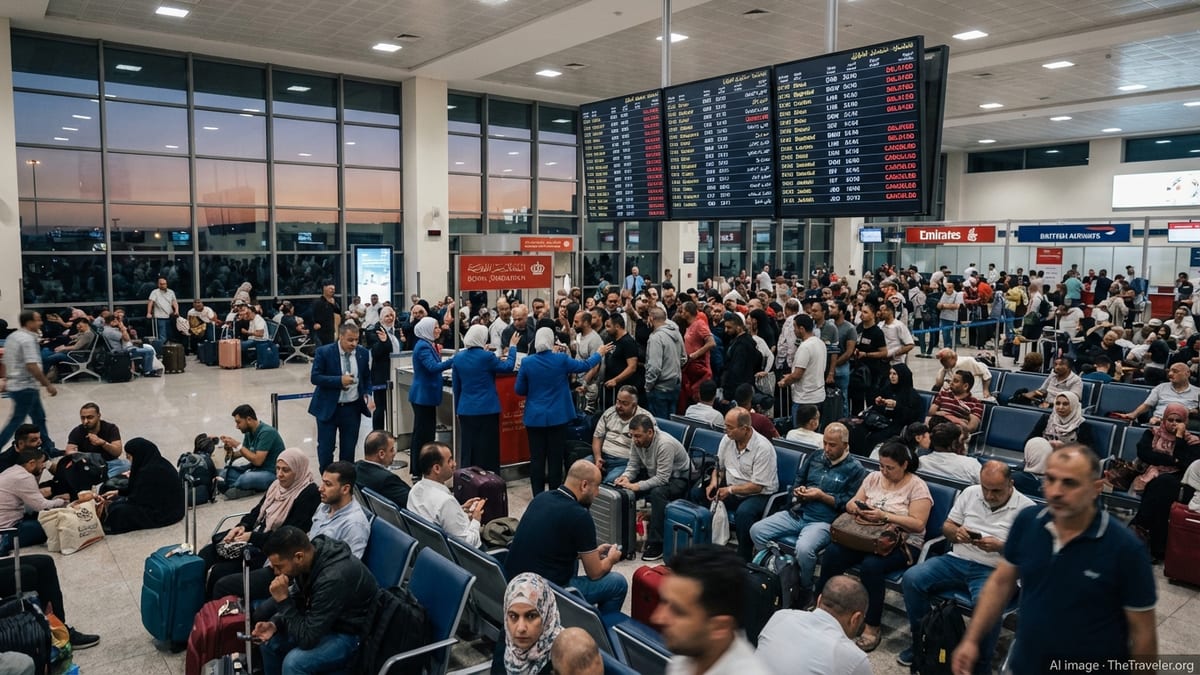
Wave of Disruptions Hits Regional Hubs
Publicly available flight-tracking snapshots and operational summaries for early April indicate that the latest disruption is centered on routes linking Saudi Arabia, Jordan, Lebanon and Spain, with Saudia and Royal Jordanian among the most affected carriers. While disruption has been widespread across multiple airlines in recent days, the current pattern highlights at least 20 cancellations and 28 delays involving these two operators, interrupting itineraries that connect the Middle East with Mediterranean and European gateways.
Riyadh and Cairo have emerged as focal points for the latest disruption, reflecting their role as high-volume connecting hubs. Reports on day-of-travel operations show repeated departure and arrival delays on Saudia services within Saudi Arabia and to regional destinations, while Royal Jordanian’s network through Amman has experienced interruptions that cascade onto services bound for Beirut and European cities.
The knock-on effects are being felt well beyond the primary hubs. Passengers connecting via Riyadh or Amman onto flights for Barcelona and other Spanish destinations have reported extended layovers and missed onward connections, as irregular operations at the main transit points ripple into secondary airports across Europe and the Levant.
Travel-industry monitoring over recent weeks has also pointed to a broader backdrop of operational strain in the region, with multiple Middle Eastern and European carriers adjusting schedules or thinning frequencies in response to airspace restrictions and shifting demand. The latest cluster of cancellations and delays on Saudia and Royal Jordanian appears to be part of that wider pattern, rather than an isolated airline-specific issue.
Saudia Faces Mounting Delays at Riyadh and Beyond
Saudia’s recent operational record shows a higher incidence of delays than outright cancellations, a trend that has again been visible at King Khalid International Airport in Riyadh and other Saudi gateways. Recent daily tallies compiled by aviation news services describe the flag carrier operating the majority of its schedule but with a significant share of services pushed back, sometimes by several hours.
In the present disruption, Saudia is understood to account for a substantial portion of the 28 delayed flights attributed to the two airlines, with late-running departures concentrated on routes linking Riyadh to Cairo, Amman and select European cities. Delays on domestic sectors, particularly those feeding major international departures, have further compounded missed connections for through passengers.
Operational data summaries and traveler reports indicate that, on several days in late March and early April, Saudia registered dozens of delayed movements across its network, even on days when the number of outright cancellations remained relatively low. That pattern has continued into the current episode, contributing to crowded departure areas and extended waiting times for passengers transiting via Riyadh or Jeddah.
Industry analysts note that Saudi hubs are simultaneously managing continued growth in demand and the knock-on effects of regional airspace constraints. This combination can leave little slack in the system, so when disruption does occur, even a limited number of canceled flights can trigger widespread schedule knockbacks and missed onward connections.
Royal Jordanian Disruptions Ripple Through Amman, Beirut and Europe
Royal Jordanian has also seen its operations disrupted, with a portion of the 20 cancellations affecting flights running through its Amman hub and onward to cities such as Beirut and Barcelona. Operational summaries shared in recent days show the airline dealing with both canceled departures and a smaller number of delayed flights, affecting passengers traveling between Jordan, neighboring Arab states and southern Europe.
Travel forums and timetable snapshots suggest that some affected Royal Jordanian services involve routes linking Amman to Cairo and Beirut, which serve as important connecting points for passengers heading on to Europe. Interruptions on these sectors have consequently led to missed or rearranged connections on longer-haul flights to Spanish and other European destinations.
The timing of the latest disruption coincides with a generally strained regional aviation environment, in which carriers have had to adapt to changing airspace availability and shifting traffic flows. Royal Jordanian’s network, which relies heavily on smooth connections through Queen Alia International Airport, is particularly sensitive to any irregular operations on its short- and medium-haul routes, since even modest schedule changes can cause missed onward connections.
Publicly available passenger experiences posted in recent weeks also highlight the complexity of rebooking and compensation processes when disruptions occur, underscoring that while many travelers are eventually accommodated on later flights, they may still face overnight stays, route changes and uncertainty about reimbursement for out-of-pocket expenses.
Barcelona and Mediterranean Routes Exposed to Knock-On Delays
The impact of the disruptions has extended into southern Europe, with Barcelona emerging as one of the key European gateways affected by late arrivals and missed connections. Flights linking Spain with the Middle East rely heavily on punctual feeder services arriving from hubs such as Riyadh, Jeddah and Amman, and any instability upstream can quickly result in rolling delays at destinations like Barcelona.
Monitoring of flight-status boards and published operational data shows that a share of the delayed services associated with Saudia and Royal Jordanian have involved aircraft operating to or from Mediterranean airports. When departures from the Middle East leave hours behind schedule, return sectors often depart late as well, reducing turnaround time and leaving airlines limited flexibility to recover their timetables the same day.
Spanish and European travelers using Barcelona as a starting point for journeys to Saudi Arabia, Jordan or Lebanon have therefore encountered unexpected disruption, with some facing rebooked itineraries that route them through alternative hubs, or being shifted onto partner carriers where interline agreements allow. In cases where same-day alternatives are not available, overnight accommodation and longer layovers have become more common.
Travel planners indicate that this type of cross-regional knock-on effect is particularly challenging for leisure and religious travelers working with fixed dates, such as holiday periods or pilgrimage-related trips. Even when airlines succeed in rerouting passengers within 24 hours, the loss of sightseeing time, prepaid reservations or critical appointments can be significant.
Airspace Tensions and Capacity Constraints Form the Backdrop
The latest disruption affecting Saudia and Royal Jordanian is unfolding against a wider backdrop of airspace closures and regional conflict that has already forced thousands of cancellations across the Middle East since late February. Aviation-focused outlets have documented how ongoing tensions and restricted air corridors have led airlines to reroute or suspend services, especially on links between Asia, the Gulf and Europe.
These structural pressures have reduced overall capacity on some key corridors while lengthening flight times on others. Longer routings require more aircraft time and crew hours for the same number of daily rotations, leaving carriers with less operational slack to absorb routine weather issues, technical delays or crew scheduling challenges. As a result, even localized disruptions involving a few dozen flights can cascade quickly across multiple days and regions.
Industry observers note that airlines in the affected region, including Saudia and Royal Jordanian, have been working within these constraints for several weeks, balancing safety considerations, regulatory requirements and commercial pressures. The present cluster of 20 cancellations and 28 delays appears to be one manifestation of that wider operational stress, particularly on routes linking Cairo, Riyadh, Amman, Beirut and Barcelona.
For passengers, the practical outcome has been a heightened risk that even apparently routine journeys may be subject to late schedule changes, significant delays or rerouting through alternative hubs. As long as airspace availability remains constrained and key corridors are operating close to capacity, travel across this broader region is likely to remain vulnerable to further episodes of disruption.