

More news on this day
Air travelers across Saudi Arabia, Jordan, Lebanon and Spain are facing mounting disruption as Saudia and Royal Jordanian operate through a turbulent regional environment, with reports indicating about 20 cancellations and 28 delays that have stranded passengers from Cairo and Riyadh to Barcelona and Beirut.
Get the latest news straight to your inbox!
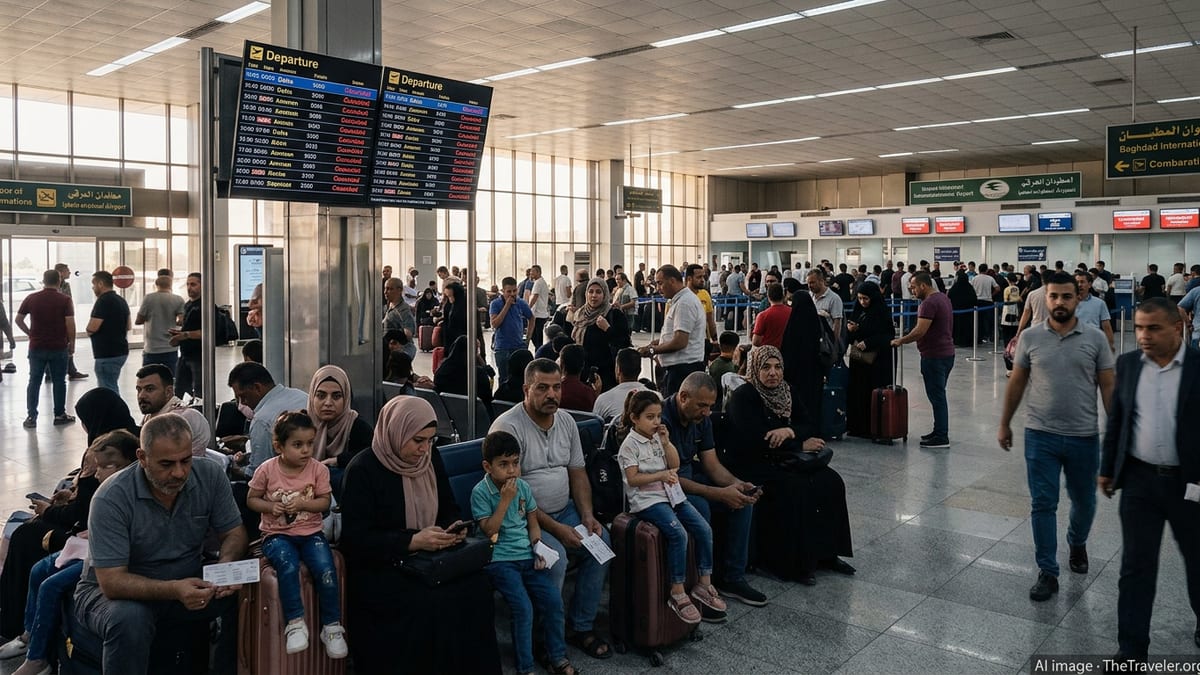
Regional Turmoil Filters Into Airline Schedules
Publicly available information shows that the latest wave of disruption is unfolding against a backdrop of heightened regional tension and shifting airspace restrictions across the Middle East. Reports on recent operations in Saudi Arabia describe Riyadh as one of the few major corridors still open, yet operating under intense strain as airlines reroute services away from neighboring hubs. This has contributed to clusters of cancellations and rolling delays on routes served by Saudia, Royal Jordanian and other regional carriers.
Travel industry updates covering the period from early March 2026 depict a patchwork network of partial suspensions and limited services across the Gulf and Levant. While some airports have temporarily halted most passenger flights, Saudi Arabia and Jordan continue to receive traffic, but with schedules that change at short notice. Against this backdrop, even a count of around 20 cancellations and 28 delays linked to Saudia and Royal Jordanian can translate into hundreds of disrupted itineraries, as missed connections ripple through already fragile networks.
Observers note that these operational challenges are not confined to a single country or airline. Airlines are adjusting routes, trimming frequencies and consolidating flights in response to evolving government advisories and air traffic control capacity. For passengers in Cairo, Riyadh, Amman, Beirut and Barcelona, this has meant longer layovers, last-minute gate changes and, in many cases, unplanned overnight stays.
Travel analysis from aviation consultancies points out that the region’s role as a bridge between Europe, Asia and Africa magnifies the impact of any disruption. Flights involving Saudia’s Saudi hubs and Royal Jordanian’s Amman base have knock-on effects for connecting services into Europe, including Spain, and onward to North America, leaving some travelers stranded far from their final destination.
Pressure Points in Cairo, Riyadh and Amman
In Egypt, Cairo continues to function as a critical link between North Africa and the Gulf, but recent schedules on the Cairo to Riyadh corridor show increased volatility. Data from route planners and flight-tracking platforms for March and early April indicate that Saudia’s services have faced operational adjustments, including cancellations and same-day retimings, as aircraft and crews are repositioned to adapt to regional constraints.
In Riyadh, passengers have reported repeated rescheduling and short-notice changes, with some flights to and from other Saudi cities and regional capitals cancelled more than once before departure. Social media posts and forum discussions from travelers in March describe itineraries that shifted multiple times within a single weekend, illustrating how a modest number of formal cancellations can create a far larger pattern of perceived disruption when combined with rolling delays and aircraft swaps.
At Amman’s Queen Alia International Airport, Royal Jordanian’s home base, recent coverage by travel-focused outlets highlights a concentration of delays and several cancellations in late March. One airport-focused report spoke of nearly 30 delays and a handful of cancellations affecting multiple carriers on a single day, with Royal Jordanian among the airlines impacted. These figures align with the broader picture of at least 28 delays tied to the current disruption cycle across the airline’s regional network.
Amman’s role as a key transit point between the Gulf, Levant and Europe means that disruptions there quickly spread outward. Passengers connecting through Jordan on Royal Jordanian services to European destinations, including Spain, have faced missed onward flights, rebooking challenges and difficulties finding hotel rooms near the airport during peak disruption hours.
Lebanon and Spain Feel the Knock-On Effects
In Lebanon, Beirut’s international airport has been operating with sharply reduced international schedules, according to recent local coverage. Throughout late March, most foreign carriers either suspended or curtailed flights, leaving Middle East Airlines and Royal Jordanian as among the few operators maintaining a presence. Even so, at least one scheduled Royal Jordanian departure from Beirut was reported as delayed and later indicated as cancelled on airport information boards.
These operational realities have narrowed options for travelers trying to reach or depart Lebanon. With limited frequencies and heightened security considerations, a single cancellation can remove the only viable same-day connection onward to Amman, Riyadh or European cities such as Barcelona. Passengers have described long queues at check-in and information desks and an increased reliance on rerouting via alternative hubs where capacity still exists.
Spain is also feeling the downstream impact through Barcelona’s role as a European gateway served by Royal Jordanian and other Middle Eastern carriers. Airline network information lists Barcelona among Royal Jordanian’s destinations from Amman, linking the Spanish city directly into the region’s disrupted air corridors. When flights out of Amman or Riyadh are delayed or cancelled, inbound services to Spain can also run late or be consolidated, complicating onward intra-European connections for leisure and business travelers.
Travel agents in the European market report heightened uncertainty around itineraries that route through the Middle East, including journeys combining Saudia or Royal Jordanian with European partners. Even where Barcelona-bound flights remain scheduled, last-minute changes to departure times and aircraft types have become more common, encouraging passengers to build in additional buffer time or seek more direct alternatives where possible.
Stranded Passengers Confront Patchy Support
The uneven nature of recent disruptions has left many passengers stranded in transit airports with limited clarity about their rights and available assistance. Consumer-oriented travel advisories note that carriers such as Saudia and Royal Jordanian are operating within complex regulatory environments that span Middle Eastern jurisdictions and, in the case of European destinations like Barcelona, the European Union’s passenger rights framework.
Under EU rules, travelers departing from or arriving into the bloc on qualifying airlines may be entitled to care provisions, rebooking and, in some cases, compensation for significant delays or cancellations. However, these protections can be harder to interpret on itineraries that begin in the Middle East, pass through hubs such as Cairo, Riyadh or Amman, and end in Spain or another European state. Published guidance from legal and consumer groups emphasizes the importance of retaining boarding passes, booking confirmations and written records of any disruption.
For flights handled entirely within the Middle East, passenger entitlements are typically governed by national aviation regulations and the individual airline’s conditions of carriage. Royal Jordanian’s publicly available policies on lengthy delays, for example, outline how the carrier aims to provide food, refreshments and, when necessary, accommodation during extended ground waits. Saudia publishes similar guidance on its websites and passenger information materials, but the implementation of these policies can vary depending on the severity and cause of the disruption.
Reports from airport terminals across the region describe situations in which hotel capacity was quickly exhausted and meal vouchers were issued unevenly, leaving some travelers to arrange their own lodging and later seek reimbursement. In other cases, passengers were informed of cancellations only after passing through security, complicating efforts to retrieve checked baggage or rebook on competing carriers.
What Travelers Can Expect in the Coming Weeks
With regional conditions still evolving as of early April 2026, industry commentators expect continued volatility in flight schedules across Saudi Arabia, Jordan, Lebanon and adjoining markets. Saudia and Royal Jordanian are likely to keep adjusting capacity and routing in response to airspace notices, security assessments and coordination with international partners, meaning that further clusters of cancellations and delays cannot be ruled out.
Travel planning platforms and aviation data providers recommend that passengers with imminent trips through Cairo, Riyadh, Amman, Beirut or Barcelona monitor their bookings closely, use airline apps where possible and verify departure times directly with airports on the day of travel. Because some cancellations are being announced only a few days, or even hours, before departure, flexible tickets and comprehensive travel insurance are being highlighted as valuable tools for mitigating financial risk.
Analysts suggest that once airspace restrictions ease and regional hubs regain full operational capacity, schedules involving Saudia and Royal Jordanian should gradually stabilize. However, the backlog of passengers waiting for rebooking, alongside aircraft and crew repositioning, may prolong irregular operations for several days or weeks after any formal easing of constraints.
For now, travelers heading through the affected corridors are being urged by consumer groups and travel advisors to build extra time into itineraries, be prepared for last-minute changes and familiarize themselves with their rights under both local regulations and, where applicable, European passenger protection rules. Until the regional aviation picture becomes clearer, the experience of stranded passengers in Cairo, Riyadh, Barcelona and beyond is likely to remain a defining feature of Middle Eastern air travel.