

More news on this day
Saudi flag carrier Saudia has extended the suspension of flights to Amman, Kuwait and Dubai, widening a regional air travel disruption sparked by escalating tensions and airspace closures across the Gulf and wider Middle East.
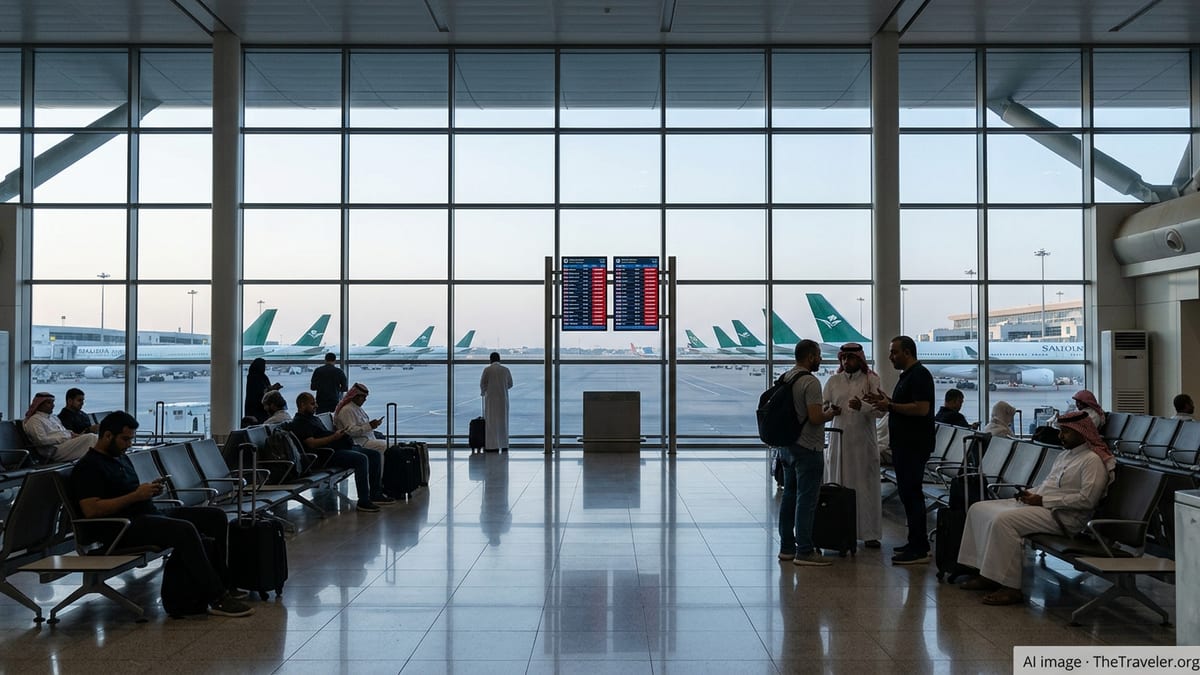
Saudia Widens Cancellations To Eight Key Destinations
In a statement issued late Wednesday, Saudia confirmed it has prolonged the suspension of services to and from Amman, Kuwait and Dubai as part of a broader halt affecting eight destinations across the Middle East, the Gulf and beyond. The measure, the airline said, is a direct response to ongoing security concerns and evolving regional developments that have already forced widespread airspace restrictions.
The suspension now covers routes linking Saudi cities with Amman, Kuwait City, Dubai, Abu Dhabi, Doha, Bahrain, Moscow and Peshawar, and is currently scheduled to remain in place until March 6 at 23:59 GMT. The extension adds at least two more days of disruption for passengers who had been hoping flights would resume after an initial wave of cancellations earlier in the week.
Saudia stressed that passenger safety remains its overriding priority and said operations would only resume once it is satisfied that flying conditions along affected corridors meet required safety standards. The carrier is working through its emergency coordination centre in conjunction with national and international aviation authorities to monitor the situation in real time.
The airline is contacting affected customers via the details attached to their bookings and urging all travellers to verify their flight status before leaving for the airport. Travellers with flexible itineraries are being encouraged to postpone nonessential journeys until the regional picture becomes clearer.
Regional Conflict Ripples Across Gulf Airspace
The move by Saudia comes as military escalation involving the United States, Israel and Iran triggers rolling airspace closures and route restrictions across the region. Authorities in several Gulf states have temporarily shut or tightly constrained key air corridors used by commercial carriers, forcing airlines to cancel or reroute flights at short notice.
Analysts note that the airspace affected sits at the crossroads of some of the world’s busiest long haul routes, linking Europe and North America with Asia, Africa and Australasia. When those corridors are restricted, airlines must either accept substantial detours that increase fuel burn and block time or cancel flights outright, which is what many carriers, including Saudia, now judge to be the safer option.
Flight tracking data over recent days has shown a sharp drop in traffic over parts of the Gulf, Iraq, western Iran and neighboring states, while congestion has increased along alternative paths further south. Industry observers warn that, if the current security situation persists, the operational and financial impact on airlines and airports across the region could quickly mount.
For now, the priority for operators is risk management. Safety teams are constantly reassessing routing options in line with government advisories and international civil aviation guidance. Where any doubt remains, carriers are opting to keep aircraft on the ground rather than expose crews and passengers to additional risk.
Passengers Face Cancellations, Rebookings And Lengthy Delays
For passengers booked on Saudia services to Amman, Kuwait and Dubai, the extension means more uncertainty and potentially significant changes to travel plans. Many travellers had already experienced cancellations over the weekend and early this week, only to see new departure dates pushed back once again as the airline updated its schedule.
Saudia has said affected customers will be offered rebooking on alternative dates or refunds in line with its disruption policies, though specific options vary by ticket type and point of sale. Travel agents in Riyadh and Jeddah report heavy inbound enquiries from passengers seeking clarification on whether they should attempt to route via unaffected cities or postpone their trips altogether.
Airport authorities across the Gulf have advised passengers not to travel to terminals unless they hold a confirmed, operating flight and have been explicitly notified of any new departure time. In previous days, large numbers of travellers had gathered at airports hoping for standby options, adding to congestion at check in halls and service counters as staff worked to manage rebookings.
With the disruption now stretching into multiple days, some travellers are exploring overland alternatives where borders and road networks allow, particularly between parts of Saudi Arabia and Kuwait. However, such options remain limited and subject to their own security and visa considerations, leaving many passengers effectively grounded until commercial services resume.
Knock-On Effects For Tourism And Business Travel
The timing of Saudia’s extended suspensions is particularly sensitive for the tourism and business sectors in Amman, Kuwait City and Dubai, which all rely heavily on inbound traffic from Saudi Arabia and connecting markets across the airline’s network. Tour operators in Jordan and the Gulf say they are fielding a wave of cancellations and date changes for tours, conferences and events scheduled for the first half of March.
In Dubai, where hotel occupancy had been tracking strongly on the back of peak-season demand, some properties are now bracing for a dip in arrivals from key feeder markets affected by the suspensions and wider regional disruption. Corporate travel managers in Saudi Arabia, meanwhile, are postponing nonessential trips and shifting some meetings to virtual platforms until flight schedules stabilize.
Jordanian tourism businesses, many of which depend on short breaks and pilgrimage traffic from the kingdom, also face fresh headwinds after a fragile recovery from the pandemic years. Industry representatives warn that if flight suspensions extend beyond the current March 6 threshold, they could see a more pronounced impact on March and April bookings, particularly from group travel.
Despite the near term challenges, sector executives stress that the underlying appeal of destinations such as Amman and Dubai remains intact. Once airspace restrictions ease and airlines reinstate regular schedules, they expect pent up demand from regional travellers to support a relatively quick rebound, provided the security outlook improves.
Airlines Balance Operational Pressures With Safety Commitments
Saudia’s latest move mirrors decisions by a growing list of regional and international carriers that have either suspended services or sharply curtailed operations through key Gulf hubs. While each airline is taking its own view on risk and rerouting feasibility, there is broad consensus that safety must override commercial considerations in the current environment.
For carriers, the financial implications of multi day suspensions are significant: aircraft and crews are left underutilized, while revenue from high demand routes evaporates. At the same time, customer relations teams face the complex task of handling mass rebookings, managing refunds and maintaining traveller confidence in future journeys.
Aviation experts point out that airlines have, over the past decade, become more adept at modelling geopolitical risk and adjusting networks in response. Dynamic contingency planning, they say, now forms a core part of airline strategy, particularly for carriers based in politically sensitive regions.
With Saudia signalling that it is prepared to extend suspensions further if required, passengers and industry stakeholders alike are watching closely for any shift in the regional security climate. Until then, the airline’s message remains consistent: check before you travel, be prepared for last minute changes, and expect that safety considerations will dictate the pace at which normal service to Amman, Kuwait, Dubai and other affected destinations can be restored.