

More news on this day
Saudia’s ambitious attempt to connect Dammam directly with London Heathrow appears to have been cut short after only a few months of operations, with the route disappearing from public schedules and booking engines despite earlier plans to anchor new tourism flows between Saudi Arabia’s Eastern Province and the UK capital.
Get the latest news straight to your inbox!
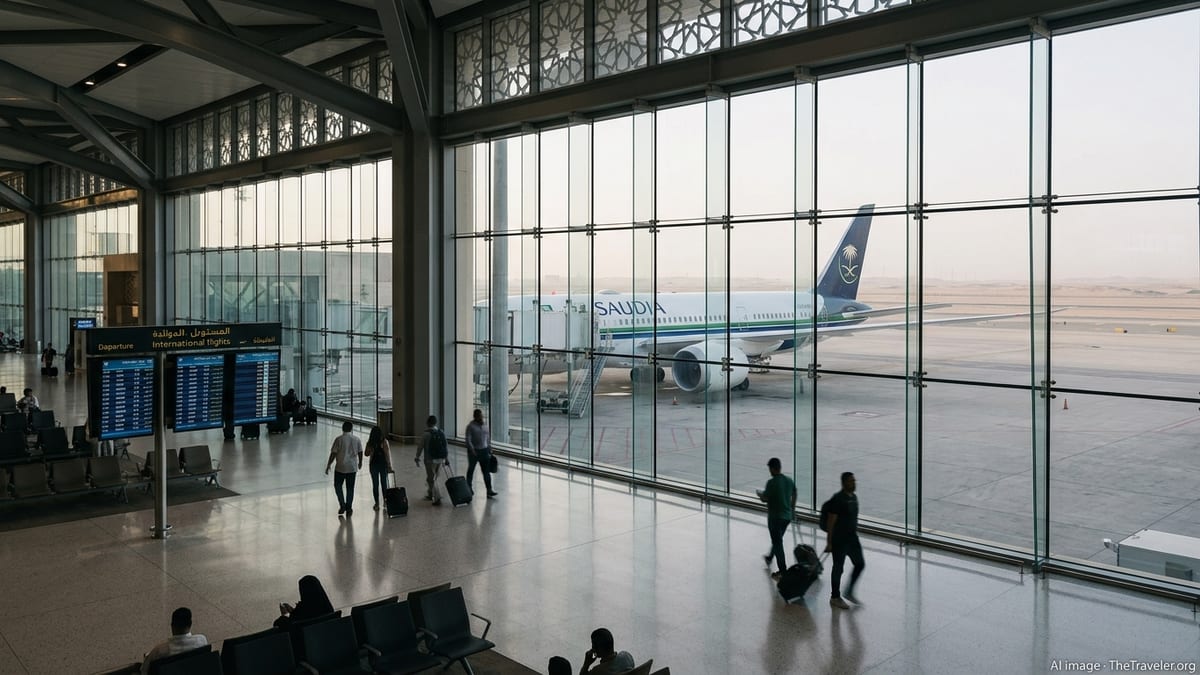
A flagship Eastern Province link that arrived late and ended early
When Saudia and Saudi connectivity bodies unveiled the Dammam–London Heathrow route in mid-2025, the launch was framed as a strategic milestone for the Eastern Province. Announcements highlighted that the service would make Dammam the third Saudi city with nonstop access to Heathrow, complementing existing links from Riyadh and Jeddah and supporting wider tourism and investment goals linked to Vision 2030.
The route finally took off in early November 2025 using Boeing 787 Dreamliner aircraft configured for long-haul premium and leisure traffic. Initial schedules pointed to three flights per week from King Fahd International Airport to Heathrow, with timings aimed at tapping both point-to-point demand and onward connections via London.
After a prolonged build-up involving marketing through Saudi tourism campaigns and airport partners, expectations were high that the service would run across the winter and into the summer 2026 season. Industry coverage at the time described the link as a resumption of Dammam–Heathrow connectivity after a gap of more than a decade, underlining how significant the move was perceived for the region’s global access.
Yet within months of the first departure, aviation data providers and booking platforms began to show gaps and then a full disappearance of the Dammam–Heathrow option, suggesting Saudia had withdrawn the service far sooner than initially anticipated.
Schedule data points to a five‑month operating window
Analysis of timetable filings and public booking tools indicates that Saudia’s Dammam–Heathrow operation effectively lasted for around five months from launch. Early 2026 schedules showed the flights in global distribution systems as part of the late-winter and early-summer pattern, but subsequent updates removed the route from regular availability.
While the carrier has not issued a high-profile public statement about the suspension, the absence of the Dammam–Heathrow pairing in current forward searches is consistent across major meta-search platforms and independent route databases. Observers note that these tools generally mirror airlines’ own inventory and operational plans, providing a clear signal when a route is no longer active.
The short lifespan contrasts with typical long-haul start-ups, which often receive at least a full season or year to mature unless performance is significantly below expectations or external conditions change. In this case, the five-month window suggests that load factors, yields, or broader network considerations may have prompted Saudia to redeploy capacity elsewhere in its expanding long-haul portfolio.
Timetable specialists also point out that the Dammam–Heathrow service went through a period of being filed but effectively “unlisted” before launch, making it visible only through direct flight-number searches rather than standard origin–destination queries. That unusual pattern, followed by a rapid withdrawal, reinforces the impression that the route never fully stabilised in the airline’s network.
Tourism and “Dream” positioning collide with market realities
The Dammam–Heathrow service was closely aligned with Saudi Arabia’s tourism ambitions, with messaging around launch emphasising new holiday and business opportunities in both directions. In the UK, the route promised direct access to Saudi’s Eastern Province coastal destinations and nearby cultural sites, marketed as part of a broader “dream” of discovering lesser-known parts of the Kingdom beyond Riyadh and Jeddah.
On the Saudi side, the service was also positioned as a premium gateway for Eastern Province residents and expatriates heading to London for education, healthcare, and leisure. The use of modern widebody aircraft and the prestige of Heathrow as a European hub were important elements in that positioning, reinforcing Saudia’s image as a growing global carrier.
The early end of the route therefore carries symbolic weight. For local tourism stakeholders who had anticipated a steady flow of British visitors via the new non-stop link, the loss of direct Heathrow access may be perceived as a setback. It also reduces the convenience advantage that Dammam briefly enjoyed over competing Gulf and regional hubs when courting UK outbound travellers.
Industry analysts caution, however, that airline network decisions are highly sensitive to actual booking trends and competitive developments. The Dammam catchment area already benefits from alternative one-stop options to London via Riyadh, Jeddah and neighbouring Gulf hubs, which may have diluted demand for a standalone non-stop product despite its marketing appeal.
Competition, capacity shifts and geopolitical turbulence
The decision to pull back from Dammam–Heathrow also comes against a backdrop of intensifying competition on Saudi–UK corridors and broader operational uncertainty across parts of the Middle East. New entrants and expanded services from Saudi and foreign airlines alike have increased overall seat capacity to London, potentially making it harder for a secondary-origin route to build sustainable market share quickly.
In late 2025, for example, Riyadh saw additional long-haul capacity to Heathrow with new operators joining incumbent carriers. That concentration of services from the capital created more frequent options and potentially more attractive schedules for both Saudi-based and connecting passengers, including those originating in the Eastern Province willing to travel overland or connect domestically.
At the same time, regional disruptions and shifting travel advisories have continued to affect routing choices, with some airlines periodically adjusting schedules, aircraft rotations and stopover patterns. In such an environment, a relatively small three-times-weekly route may be especially vulnerable to cancellation if it does not quickly demonstrate strong financial performance.
Network planners are also under pressure to prioritise aircraft for routes that support national strategic aims while delivering higher yields. Long-haul widebodies such as the Boeing 787 that were operating Dammam–Heathrow can often be reassigned to thicker trunk routes or new destination launches considered more critical to the carrier’s long-term growth plan.
What the loss of the route means for travellers
For travellers in Dammam and the wider Eastern Province, the immediate effect of Saudia’s decision is the removal of the only non-stop option to Heathrow. Passengers now need at least one stop, either through other Saudi gateways or via neighbouring countries, to reach London from King Fahd International Airport.
Price comparison and booking tools currently show connecting itineraries via Riyadh, Jeddah and several Gulf hubs as the primary alternatives. These options vary in travel time and frequency but typically lengthen the journey compared with the former non-stop Dreamliner service, especially for those aiming for tight connections into onward European or North American flights from Heathrow.
Some travellers may benefit from increased choice on competing one-stop routes, including promotions and capacity growth from rival carriers targeting UK–Gulf and UK–Saudi traffic. Others, particularly business travellers and students accustomed to flying directly between the Eastern Province and London during the brief operating window, may view the cancellation as a loss of convenience and comfort.
For now, there is no clear indication in publicly available schedules that Saudia plans to reinstate Dammam–Heathrow in the upcoming seasons. Industry watchers will be monitoring future filings closely to see whether the airline considers a revised version of the route over time, perhaps with seasonal or adjusted frequencies if market conditions improve and demand for Eastern Province tourism from the UK strengthens.