

More news on this day
On the rocky escarpment outside Riyadh, Qiddiya City’s newly opened Six Flags park and fast-rising water world are drawing a wave of Saudi and Gulf families, signaling how the kingdom’s latest theme park alliance is rapidly reshaping the idea of a Middle East holiday.
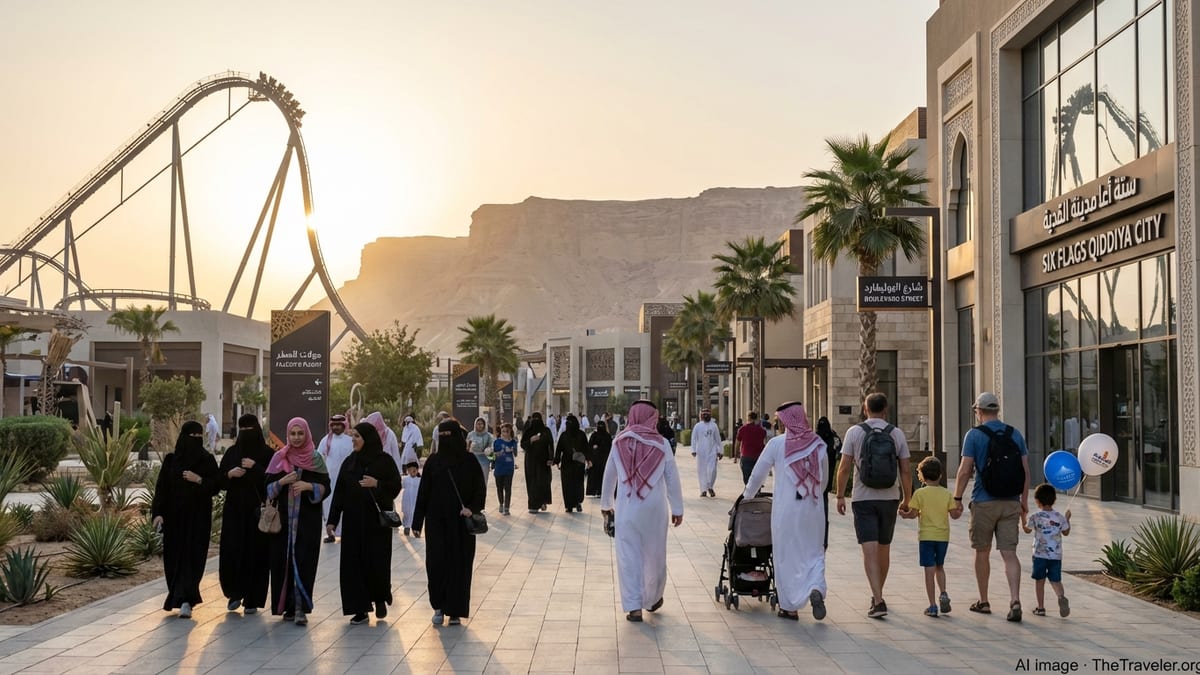
A New Magnet for Saudi Family Travel
Six Flags Qiddiya City, which opened to the public on December 31, 2025, has instantly become one of the most talked-about attractions in Saudi Arabia, offering 28 rides across six themed lands at the heart of the vast Qiddiya giga project. Located about 40 minutes from central Riyadh, the park is the first Six Flags operation outside North America and the flagship visitor draw for a desert entertainment city that planners say will eventually host half a million residents. For Saudi families used to flying to Dubai or Paris for major theme parks, the arrival of a world-scale park on their doorstep is already changing travel plans for 2026 school breaks and Eid holidays.
Ticket prices starting from 325 riyals for adults and 275 riyals for children place the park firmly in the Saudi middle-class family market, a segment national carrier Saudia has been working hard to court with bundled domestic and regional packages. Travel agents in Riyadh and Jeddah say advance interest from families in the Gulf Cooperation Council region has been brisk, with many planning two or three day breaks pairing the park with Riyadh’s shopping districts and winter events. The strategy aligns closely with Saudi Arabia’s wider Vision 2030 tourism targets, which call for tens of millions of annual leisure visitors by the end of the decade.
Within weeks of opening, the park’s social media footprint has amplified its pull. Video clips of teenagers cresting the towering Falcons Flight roller coaster or families drifting through gentler attractions in its themed gardens have flooded regional feeds, helping to position Qiddiya City less as a futuristic concept and more as a tangible weekend destination. Travel consultants say that shift in perception is crucial as the kingdom moves from announcing mega projects to convincing residents and foreign visitors to experience them in person.
Record-Breaking Rides Redefine Desert Thrills
The central lure for many visitors is the park’s collection of record-breaking attractions. Falcons Flight, the signature roller coaster, climbs roughly 195 meters along the edge of the Tuwaiq escarpment before plunging riders to speeds of around 250 kilometers an hour over a track stretching more than four kilometers. Industry specialists say the ride now holds the titles of the world’s tallest, fastest and longest coaster, a deliberate play for global headlines designed to put Qiddiya alongside Orlando and Abu Dhabi on the thrill-seeker map.
Falcons Flight is not an outlier. Four other marquee attractions at Six Flags Qiddiya City set new global benchmarks, from Sirocco Tower, the world’s tallest free-standing shot tower, to Gyrospin, billed as the tallest pendulum ride. The park’s designers and the Qiddiya Investment Company have consistently stressed that those statistics are not merely bragging rights, but part of a larger commercial bet that record-setting hardware will persuade families who might once have flown to Europe or the United States to stay within the region for their big-ticket vacations.
Yet the park’s operators are equally keen to underline the breadth of its offer for younger visitors. Alongside the headlining coasters sit themed areas such as the City of Thrills and Twilight Gardens, with interactive greenhouses, water rides and family coasters pitched at parents who want high production values without extreme speeds. By blending cutting-edge engineering with gentler experiences and character-led environments, Qiddiya’s backers hope to create a park that can absorb multigenerational groups, a staple of Gulf family travel.
Aquarabia and the Rise of a Theme Park Alliance
Next door to Six Flags Qiddiya City, cranes and slide structures tower over the desert at Aquarabia, Saudi Arabia’s first large-scale water theme park and a cornerstone of what officials increasingly describe as a theme park alliance within Qiddiya City. When it opens, expected later in 2026, the water park is slated to feature 22 attractions and a string of record-breaking slides, including Junoon Drop, promoted as the world’s tallest and longest water coaster. Other major rides will include a massive rotating slide wheel, one of the tallest loop slides made from translucent fiberglass and a sprawling mat-racer ride.
Together with Six Flags Qiddiya City, Aquarabia is intended to form a two-park complex that can keep families on site for several days, echoing destination models seen in Florida and the United Arab Emirates. Qiddiya’s planners argue that only a dense cluster of attractions can persuade international visitors to build holidays around Riyadh rather than adding it as a short stopover. In practical terms, that has meant standardizing design language, ticketing systems and operations so that families can move between the theme park and water park with minimal friction.
Six Flags has signed a comprehensive management services agreement to operate both the dry park and Aquarabia, a move that effectively creates a single, coordinated entertainment platform. The agreement, announced in early 2025, covers ride operations, safety protocols, staff training and guest experience strategy, while Qiddiya Investment Company retains ownership and long-term development control. Analysts say the arrangement mirrors global trends in which destination developers bring in specialized international operators to accelerate standards and marketing reach, particularly important in a country racing to build tourism credentials nearly from scratch.
Saudia and the New Domestic Holiday Circuit
As Qiddiya’s gates opened, Saudia and other Saudi carriers moved to weave the new entertainment hub into a broader domestic holiday circuit. Industry sources say Saudia has been quietly testing fare bundles that combine flights, hotel stays in Riyadh and advance-purchase Qiddiya tickets, targeting families from cities such as Jeddah, Dammam and Abha who might otherwise look abroad for school holiday trips. Several Riyadh-based hotels have also rolled out shuttle services and family packages branded around Qiddiya stays, signaling the emergence of a small but growing ecosystem tuned to theme-park tourism.
For Saudia, which is simultaneously investing in new long-haul routes and refreshing its fleet, Qiddiya City offers a high-profile domestic anchor to balance its global ambitions. Executives close to the airline’s strategy say the carrier views mega projects like Qiddiya, NEOM and the Red Sea resorts as core demand generators that can boost load factors on both internal and inbound flights. In practice, that could see Saudia selling itineraries that route Gulf, European or Asian visitors through Riyadh for several days of theme-park and shopping before they connect onward to coastal or heritage destinations elsewhere in the kingdom.
Travel agents report that early adopters have been particularly drawn to weekend itineraries that pair Friday evening arrivals with two full days at Qiddiya’s attractions, framed around evening opening hours designed to avoid the worst of central Arabia’s summer heat. Families from Kuwait, Bahrain and the United Arab Emirates are seen as especially promising segments, given their familiarity with theme parks and relative proximity. As airlines across the Gulf refine their schedules for the post-pandemic travel landscape, Qiddiya’s backers hope that direct links from regional hubs will further normalize Riyadh as a leisure gateway, not merely a business capital.
From Giga Project to Real Destination
Qiddiya City is one of Saudi Arabia’s highest-profile giga projects, a multibillion-dollar undertaking backed by the Public Investment Fund and framed as a pillar of the Vision 2030 diversification plan. Envisioned to cover an area far larger than many global capitals and to eventually integrate entertainment, sports, culture and residential districts, the development has long been promoted in renderings and master plans. The opening of Six Flags Qiddiya City marked the first time the general public could experience a fully operational asset rather than a construction site or concept video.
In recent months, local media have highlighted how the emerging city is being stitched into existing transport networks, with upgraded highways linking Riyadh to the desert plateau and shuttle buses ferrying visitors from key hotels and shopping centers. Planners are also studying public transport options to bring future residents and commuters to the city, as additional districts from motorsport venues to esports arenas come online. For now, most visitors experience only a fraction of the planned landscape: a cluster of thrill rides and early attractions rising against the escarpment, surrounded by cranes and unfinished infrastructure.
Urban development specialists note that Qiddiya’s trajectory will be closely watched as a test case for whether mega projects can translate heavy capital spending into sustainable tourism flows and liveable communities. The challenge is particularly stark in the desert context, where high summer temperatures and water demands place pressure on designs that promise outdoor play. Qiddiya’s developers insist that shading strategies, night-time operations and water-efficient technologies will allow the city’s “Power of Play” philosophy to function year-round, but much will depend on how visitors respond during peak heat seasons over the coming years.
Shifting Regional Holiday Habits
The rise of Qiddiya City is already feeding into a broader recalibration of where Middle Eastern families spend their leisure budgets. For decades, international operators marketed Dubai, Abu Dhabi and European capitals as the default destinations for Gulf residents seeking theme parks and large-scale entertainment. With Six Flags Qiddiya City now open and Aquarabia soon to follow, Saudi Arabia is challenging that pattern by positioning Riyadh and its outskirts as a rival hub, underpinned by the spending power of a large domestic population.
Tourism analysts say the impact is likely to play out in stages. In the short term, the most visible effect may be a redirection of some Saudi outbound trips into domestic breaks, particularly among families curious to sample the new parks without the cost of long-haul flights. Over time, if Qiddiya is able to sustain strong reviews and introduce seasonal events, Halloween-style festivals and winter celebrations, it could begin to attract repeat visitors from across the Gulf who have already cycled through established parks in the United Arab Emirates and Europe.
There is also a generational angle. Young Saudis who grow up with access to world-class theme parks at home may have different expectations for what constitutes a holiday, privileging high-intensity experiences within the kingdom as much as beach or shopping trips abroad. That cultural shift could support government efforts to keep more leisure spending onshore while still enticing international visitors with familiar global brands layered onto Saudi cultural settings.
Opportunities, Growing Pains and the Road Ahead
Despite the early buzz, Qiddiya City’s evolution as a family holiday powerhouse is likely to face a series of tests. Managing crowds and wait times on record-breaking rides will be critical if the park is to avoid the visitor frustration that has plagued some international counterparts. Safety standards and clear communication will also be vital, particularly as new water attractions at Aquarabia come online with extreme heights and speeds in a relatively untested market. International observers will be watching closely how the complex handles issues from ride maintenance to heat management during the height of the Arabian summer.
Behind the scenes, Qiddiya’s backers must balance ambitious timelines with concerns that have been raised by rights groups and export credit agencies about working conditions on mega project construction sites across the kingdom. While the operators emphasize that completed attractions adhere to international safety and environmental norms, the broader project’s long build-out will keep scrutiny high. How Qiddiya responds to those pressures, and how transparently it reports on sustainability and labor standards, may influence perceptions among increasingly ethics-conscious travelers.
For now, however, the mood on the ground in Riyadh is one of cautious excitement. Saudia’s booking patterns, the steady stream of influencer content from the park’s opening weeks and the approaching debut of Aquarabia all point to Qiddiya City emerging as a central fixture of Saudi family travel. As the theme park alliance around Riyadh grows thicker, the kingdom is staking its bet that the sound of roller coasters roaring across the desert plateau will become as much a symbol of its tourism ambitions as the minarets and marketplaces that have long defined its landscape.