

More news on this day
Travelers moving through Savannah and the broader Southeast on Thursday faced a fresh wave of disruptions, as publicly available flight-status data showed 26 delays and 5 cancellations affecting Spirit, Allegiant Air, Envoy Air and Delta services linked to Savannah/Hilton Head International Airport, with impacts stretching into Atlanta, Charleston and other domestic and international routes.
Get the latest news straight to your inbox!
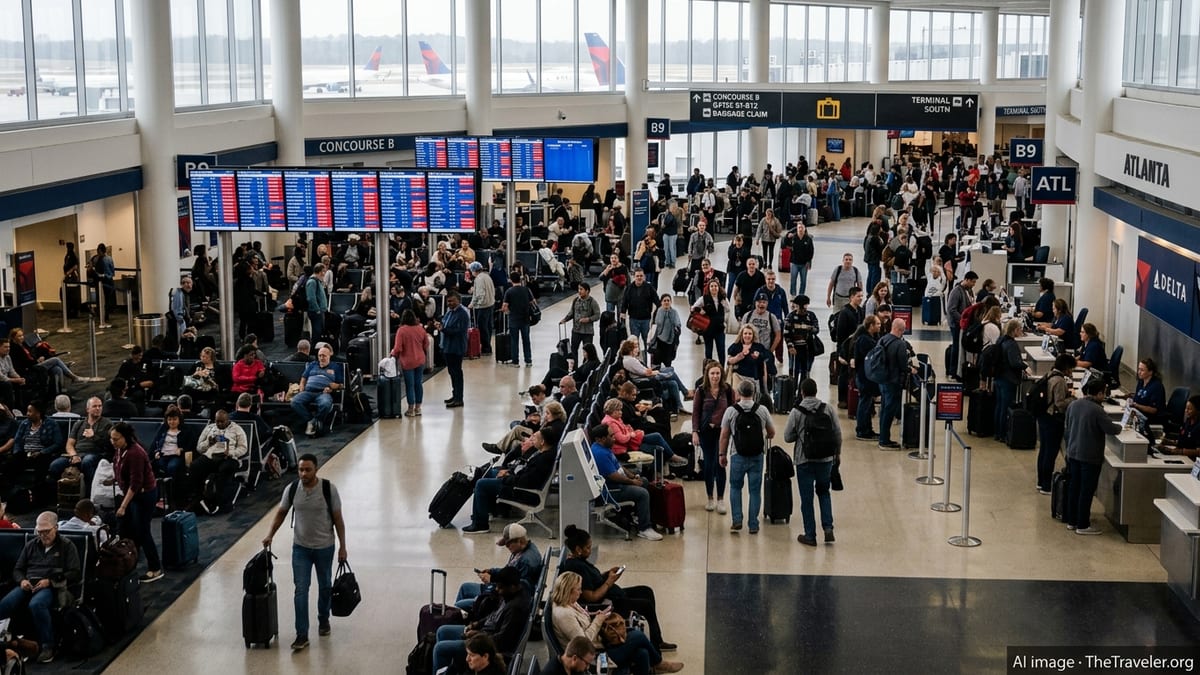
Chain Reaction at a Key Southeast Gateway
The latest turbulence at Savannah/Hilton Head International Airport came during a period of busy spring travel, turning what should have been routine hops along the East Coast into day-long odysseys for some passengers. Flight-status boards indicated that the bulk of Thursday’s irregular operations involved low-cost carriers Spirit and Allegiant Air, along with regional operator Envoy Air and mainline giant Delta, collectively accounting for more than two dozen delayed departures and arrivals and several outright cancellations.
Publicly available information shows that the disrupted services were not confined to Savannah alone. Many of the affected flights were tied to major hubs such as Atlanta and Charlotte, as well as popular leisure destinations in Florida and the Mid-Atlantic. Because these routes feed into broader domestic and international networks, a missed connection in Savannah could easily cascade into missed long-haul departures from larger hubs, leaving some travelers scrambling for overnight accommodations or last-minute rebookings.
While severe weather was not a primary factor in Savannah on Thursday, aviation data and recent patterns at the airport underscore how quickly minor operational issues in a tightly scheduled system can spread. Even a short ground hold, an extended boarding process or a late-arriving aircraft can push a flight beyond its scheduled slot, forcing subsequent services to stack up behind it. When several carriers experience similar issues at once, the result can be the sort of concentrated disruption seen in Savannah.
Spirit, Allegiant and Envoy Under Pressure
Ultra-low-cost carriers such as Spirit and Allegiant Air typically operate lean schedules with limited spare aircraft and crews, a model that helps keep fares low but leaves little room for recovery when irregular operations occur. Aviation performance reports published by federal transportation agencies have long documented how staffing challenges, tight turn times and knock-on delays from earlier flights can combine to cause disproportionately high levels of disruption for some low-cost operators compared with legacy carriers.
In the Savannah case, delay patterns aligned with what analysts often describe as a “rolling backlog,” where an initial problem on a morning rotation can echo through the day as the same aircraft and crew cycle through multiple cities. For passengers heading from Savannah to secondary markets served by Allegiant or connecting to Spirit’s larger network, a late inbound plane can mean losing the only nonstop option of the day and facing lengthy waits for alternatives.
Envoy Air, a regional affiliate that operates flights on behalf of major carriers, also featured in the day’s tally of delays and cancellations. Because regional operators feed traffic into big hubs like Atlanta and Charlotte, disruptions at this level can ripple outward to affect travelers who may never set foot in Savannah itself. Missed inbound regional flights can result in underfilled or delayed mainline departures and can force airlines to reshuffle aircraft assignments to keep the broader network moving.
Delta Disruptions Highlight Network Fragility
Delta, which maintains a significant presence across Georgia and the Southeast, was not spared from the turmoil. Although its share of the day’s Savannah-related disruptions appeared smaller than that of some low-cost carriers, the airline’s role as a major connector through Atlanta meant that even a handful of delayed or cancelled flights had an outsized effect on passenger itineraries.
Connections involving Savannah, Atlanta and Charleston were among those affected, according to route and schedule data for the region. Travelers bound for international departures from Atlanta reported missed check-in windows for transatlantic and Latin American flights, illustrating how a localized set of operational problems at a smaller airport can jeopardize long-planned overseas trips.
Recent travel commentary has also drawn attention to how nontraditional factors can affect departures in Savannah. A widely circulated local broadcast this week highlighted an incident in which a Delta flight was slowed by an alligator wandering near the runway, an unusual but vivid reminder that operational reliability in the Southeast can be influenced by everything from wildlife to runway conditions. While Thursday’s disruptions were more conventional in origin, they occurred against a backdrop of heightened traveler sensitivity to any sign of instability in regional air service.
Impact on Passengers Across Georgia and Beyond
By midafternoon, the 26 delays and 5 cancellations connected to Savannah translated into missed family events, reworked business meetings and unexpected expenses for passengers in cities across Georgia and neighboring states. Travelers connecting through Atlanta and Charleston were among those most immediately affected, but the knock-on effects extended to smaller communities that rely on one or two daily flights to Savannah as their primary link to the national network.
Publicly available guidance from airlines and consumer advocates encourages passengers caught in such disruptions to document their expenses, monitor mobile apps closely for rebooking options and, when possible, build longer layovers into itineraries that route through busy hubs. In practice, however, same-day options can be limited when cancellations involve smaller airports or once-daily services, a challenge that was evident in several of Thursday’s affected routes.
The timing of the latest turmoil is particularly unwelcome for local tourism economies. Savannah and nearby coastal destinations in Georgia and South Carolina are entering a peak period for weddings, festivals and beach trips. Even modest increases in delays and cancellations can deter would-be visitors or push them toward alternate airports in Jacksonville or Charleston, reducing passenger throughput in Savannah and complicating long-term planning for airlines and airport authorities.
What Travelers Can Expect in the Coming Days
Based on historical performance data for Savannah and similar mid-sized airports, aviation observers often note that clusters of delays and cancellations tend to ease within a day or two if weather remains favorable and no further operational shocks occur. Airlines can gradually restore normal schedules by repositioning aircraft, calling in reserve crews and trimming marginal frequencies where demand is lower.
For travelers scheduled to pass through Savannah, Atlanta or Charleston over the coming weekend, publicly available advisories suggest taking simple precautions. These include checking flight status repeatedly in the 24 hours before departure, arriving at airports earlier than usual to account for potential congestion, and considering nonstop options where feasible to reduce the risk of missed connections tied to Savannah’s current disruptions.
Consumer-rights information published by transportation regulators also underscores that passengers on flights departing from or arriving in the United States have specific entitlements when delays or cancellations are within an airline’s control. While each carrier has its own policies on meal vouchers, hotel accommodation and rebooking, understanding those rules before travel can help passengers better navigate situations like the one unfolding around Savannah.
As airlines work to clear Thursday’s backlog, the situation at Savannah/Hilton Head International Airport will serve as another case study in how sensitive modern air travel remains to localized problems. A relatively small cluster of delays and cancellations involving a handful of carriers was enough to send ripples through Georgia, the Carolinas and beyond, underscoring the importance of resilience planning for both airlines and the travelers who rely on them.