

More news on this day
Slovenia’s Bohinj railway line between Nova Gorica and Jesenice is emerging as one of Europe’s most atmospheric short-distance train journeys, combining Habsburg-era engineering, cross-border culture and close-up views of alpine landscapes into a two-hour ride.
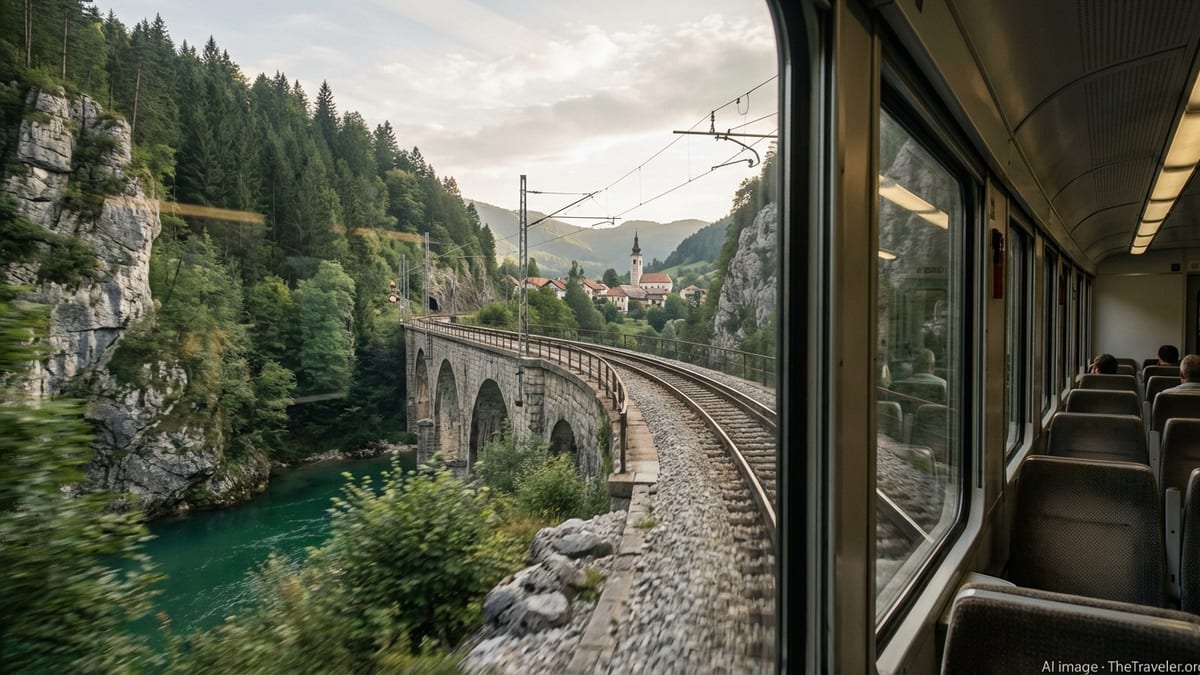
A Historic Artery Reborn for Modern Travelers
The rail link between Nova Gorica and Jesenice forms part of the Bohinj, or Transalpina, railway, a strategic line completed in 1906 to connect Central Europe with the Adriatic via Trieste. Once a vital Austro-Hungarian trade corridor, it is now drawing renewed attention for its tourism potential, with Slovenske železnice operating regular regional services that complete the journey in around two hours.
The route’s infrastructure remains a monument to early 20th century railway ambition. The Bohinj line alone includes dozens of tunnels and bridges, with the longest tunnel running more than six kilometres beneath the mountains and a web of stone and steel viaducts threading narrow valleys. North of Jesenice, the Karawanks railway tunnel, modernised in recent years, continues the historic function of linking Slovenia with Austria, underscoring the corridor’s enduring strategic importance.
Although primarily a daily transport lifeline for residents of the Soča Valley and Gorenjska regions, the line is increasingly marketed as an experience in itself. Tourism boards and local operators highlight its role in opening up lesser-known corners of western Slovenia, from riverside villages and wine-growing hills to high alpine lakes, all accessible without a car.
From Cross-Border Capital of Culture to Rail Gateway
At the southern end of the journey, Nova Gorica has spent recent years in the European spotlight. Together with neighbouring Gorizia in Italy, the city held the European Capital of Culture title in 2025, catalysing investment in public spaces and transport links. The renovated square straddling the border and upgrades around the railway station have shifted visitor attention toward rail as a natural way to arrive in and explore the region.
Complementing the Nova Gorica station is a growing network of cross-border bus services that connect the Italian and Slovenian sides of the frontier more frequently. For rail passengers, this means easier transfers from international trains and airports in Italy to the Bohinj line, positioning Nova Gorica as a convenient jumping-off point for the inland journey toward Jesenice.
The station itself is part of the story. Once a Habsburg-era outpost facing what was for decades a hard border, it now hosts cultural programming and exhibitions on the Bohinj and Transalpina routes. These displays detail how the line once carried trains from Prague and Vienna to Trieste, and how wars, shifting borders and modernisation reshaped both the tracks and the towns along them.
Through River Gorges, Viaducts and Alpine Valleys
Leaving Nova Gorica, the train almost immediately enters some of the most celebrated railway scenery in Slovenia. The line follows the emerald Soča River, crossing stone and concrete viaducts that cling to the steep sides of Baška Grapa, a narrow and dramatic gorge whose slopes rise sharply from the tracks.
Stations and halts at Solkan, Kanal, Anhovo, Plave and Most na Soči mark out a section famous among rail enthusiasts. Here the route traverses multiple tunnels and galleries as it curves above river bends and passes vineyard-dotted hills. Historic stone arches, including notable viaducts near Avče and along the Soča, showcase the engineering that once allowed dozens of long-distance trains a day to navigate this rugged terrain.
North of Most na Soči, the railway begins to climb more decisively toward the Julian Alps. The train enters the long Bohinj tunnel under the mountain of Kobla, emerging on the Gorenjska side into a landscape of high pastures, forests and traditional farmsteads. Stops at Bohinjska Bistrica and near Lake Bled place passengers within easy reach of two of Slovenia’s best-known alpine destinations.
The final stretch into Jesenice traces the base of the Karawanks range, with glimpses of snow-capped peaks for much of the year. The town, historically an ironworking centre, is today both a regional hub and a rail gateway for onward travel to Austria through the Karawanks tunnel or to the Slovenian capital via the mainline to Ljubljana.
Living Railway Heritage and Seasonal Experiences
The Bohinj railway has long been at the heart of regional heritage tourism, with nostalgic steam-hauled “museum trains” traditionally operating between spring and late autumn. These services, featuring vintage rolling stock and historical commentary, have offered visitors a chance to experience the line much as early 20th century passengers once did, accompanied by alpine views and cultural programmes on board.
Although dedicated heritage trains are currently paused, exhibitions at stations such as Nova Gorica keep the story of the line alive. Curated displays examine its construction under the Austro-Hungarian Empire, wartime damage to key structures including bridges and tunnels, and the post-war reconstruction that restored international traffic. For many visitors, pairing a regular scheduled train journey with time in these small museum spaces creates a richer understanding of how the route shaped local communities.
Tour operators in the Soča Valley and Gorenjska region continue to build packages around the working timetable, combining standard regional trains with guided walks, boat trips on Lake Bohinj or Lake Most na Soči, and tastings in nearby wine regions. The emphasis is increasingly on low-impact experiences, with rail used as the backbone for exploring villages and landscapes that would be difficult to reach sustainably by car alone.
Planning the Journey in a Changing Rail Landscape
For travelers considering the Nova Gorica to Jesenice route, the practicalities are straightforward. Slovenske železnice typically runs direct regional trains several times a day, with journey times of just over two hours and tickets priced competitively compared with long-distance buses and driving costs. Services connect with other domestic lines at Jesenice and with cross-border options from nearby Austrian and Italian hubs.
As with many mountain railways, infrastructure works can affect schedules, particularly where tunnels and steep hillside sections require intensive maintenance. Temporary closures on specific stretches, especially around Bohinjska Bistrica and Most na Soči, are sometimes bridged by replacement bus services. Passengers are advised to check current timetables and any planned works when organising their trip, especially in shoulder seasons.
Tourism authorities continue to position the Bohinj line as a model for climate-friendly travel in the Alps, highlighting the reduced environmental footprint of rail compared with private cars or short-distance flights. For visitors, that sustainability message aligns with the experience from the carriage windows: an uninterrupted panorama of rivers, forests and peaks that remain largely unspoiled.
What emerges for those who make the journey is less a simple point-to-point transfer and more a curated cross-section of western Slovenia. In just a few hours, the train threads together Mediterranean-influenced hills around Nova Gorica, deep limestone gorges, glacial lakes and alpine valleys, before arriving beneath the high Karawanks at Jesenice. It is a route that combines utility and romance, and one that is steadily claiming a place on Europe’s list of essential scenic rail journeys.