

More news on this day
Europe’s long-awaited biometric Entry-Exit System is entering its final rollout phase just as Easter holiday traffic surges, heightening concerns that untested peak-season pressures could trigger queues, missed connections and wider disruption across key Schengen gateways.
Get the latest news straight to your inbox!
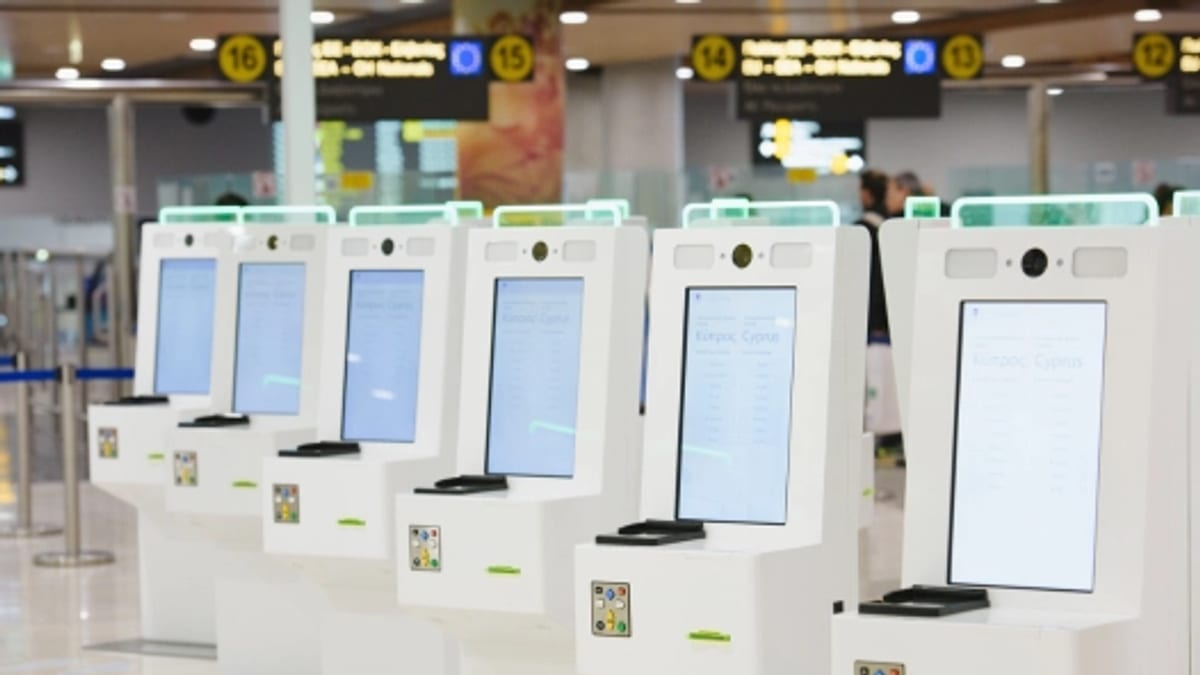
Image by Travel Industry Wire
Biometric Border Overhaul Hits a Critical Calendar Clash
The European Union’s Entry-Exit System (EES) formally launched on 12 October 2025 and is being phased in across air, land and sea borders, with full implementation targeted for April 2026. Publicly available EU documentation indicates that member states have up to 10 April 2026 to complete deployment, placing the final switch-on period squarely around the Easter holiday peak.
The scheme replaces manual passport stamping for non-EU nationals entering or leaving the Schengen area with biometric checks that capture facial images and fingerprints, alongside passport details and travel histories. EU institutions present the system as a cornerstone of modernised border control, intended to tighten enforcement of the 90-days-in-180 rule and bolster security across 29 participating countries.
Travel industry analysis notes that October’s launch was deliberately scheduled outside the busiest months, allowing authorities to test systems under relatively moderate passenger volumes. Reports now warn that the decisive stress test will arrive in late March and early April, when Easter school holidays and spring city breaks routinely push Schengen hubs close to their operational limits.
Advisories from visa and mobility services already describe EES as the most significant change to European border processing in decades. With many travellers still unaware of the new requirements, operators fear that first-time enrolments, language barriers and confusion at automated kiosks could collide with record seasonal demand.
Early Rollout Shows Longer Queues and Patchy Readiness
Initial experience from the first months of live operation offers a mixed picture. Coverage by European and UK outlets cites examples of non-EU passengers waiting up to three hours at passport control at some airports, with border-processing times reported to have increased by as much as 70 percent where EES is fully in use.
According to accounts from airport associations and travel trade bodies, delays have been concentrated at major holiday gateways in France, Spain, Italy, Portugal and Greece, as well as at certain Nordic hubs. In these locations, the combination of limited biometric booths, staffing constraints and the time needed to register each traveller’s data for the first time has produced bottlenecks during busy waves of arrivals.
Industry groups stress that repeat visitors should move faster once they are enrolled in the database, because future crossings are expected to require only a document check and verification of stored biometrics. However, with large numbers of long-haul and leisure travellers visiting Europe only every few years, the proportion of first-time EES users is likely to remain high through 2026.
There are also signs of uneven readiness between border points. Some reports highlight smaller regional airports and land crossings where infrastructure upgrades have lagged, leading to a temporary patchwork in which travellers encounter very different procedures from one gateway to another. Analysts warn that this inconsistency could complicate airline contingency planning and passenger expectations over Easter.
Flexible Rules Offer Relief Options, but Not Certainty
To address mounting concerns from airlines and airports, EU legislators have introduced a progressive start mechanism that allows member states to ramp up EES usage gradually over a 180-day period. A recent European Parliament agreement also provides for contingency measures, including the ability to scale back biometric checks temporarily if central systems or national infrastructure struggle to cope.
Specialist travel compliance briefings indicate that member states have been granted additional operational flexibility for 2026, with scope to prioritise specific crossing points and adjust the intensity of biometric processing to manage congestion. This legal framework creates space for border authorities to protect key travel peaks such as Easter and the early summer season, at least in theory.
Travel-industry commentary, however, suggests that flexibility alone may not be enough if passenger traffic exceeds forecasts or if technical issues emerge under strain. Airlines and airport operators are still calling for clearer, coordinated contingency plans spelling out when and how traditional stamp-based checks might be reintroduced on a temporary basis if queues become unmanageable.
The complexity of the shared IT architecture adds another layer of uncertainty. The EES relies on a central database operated by the EU’s large-scale IT agency, alongside scores of national systems deployed at border posts. Parliamentary reporting on the system’s development has previously highlighted delays linked to both domestic preparations and integration with the central platform, underlining the risk that localised problems could ripple quickly through interconnected hubs.
Travel Trade Warnings Ahead of Easter Peak
Warnings from the travel trade have grown more pointed as Easter approaches. Recent analysis published by European travel organisations describes a “critical expansion phase” for EES and points to the risk of “significant congestion” if border posts face full holiday-season volumes before staffing, training and infrastructure are fully aligned with the new processes.
Airline and airport groups have publicly flagged the possibility of queues extending beyond four hours in worst-case scenarios during the height of the summer, based on modelling that extrapolates from early operational data. Although these projections represent stress-test conditions rather than baseline expectations, they underscore concerns that even shorter spikes over Easter could cascade into missed departures, crew out-of-position problems and knock-on delays.
Some French aviation stakeholders have reportedly urged EU institutions to consider delaying the final phase of the rollout until after the peak periods of spring and summer, arguing that previous trials did not reflect real-world holiday traffic levels. While no such postponement has been announced at EU level, the debate highlights the tension between meeting long-planned security milestones and safeguarding travel reliability.
Consumer-facing travel advisories are already adjusting their guidance. Several visa and mobility services now recommend that non-EU travellers flying into or out of Schengen airports add at least an extra hour to their standard arrival times, with greater buffers advised at the busiest hubs or for those connecting onward the same day.
What Travellers Can Expect at Schengen Borders This Easter
For individual travellers, the core changes brought by EES are straightforward but time-consuming. On their first entry after the system is active at a given border crossing, non-EU visitors can expect to provide fingerprints and a facial image, along with passport data captured electronically. Reports from early adopters suggest that this initial interaction can take several minutes per person, even when technology works smoothly.
Families and groups are likely to feel the impact most acutely, as each member must be processed individually before proceeding. Travel advisers are urging visitors to factor this into their itinerary planning, particularly where children or older relatives may need extra time at kiosks or manual booths.
Once registered, subsequent crossings should be quicker, but many travellers arriving over Easter 2026 will be encountering EES for the first time. With airlines simultaneously rebuilding long-haul capacity and leisure demand remaining strong, passenger volumes on key transatlantic and intra-European routes are expected to be high, increasing the likelihood of pinch points at peak times.
Practical recommendations from industry-facing briefings include arriving earlier than usual at departure airports, avoiding tight connections when first entering the Schengen area, and checking carrier and airport updates regularly in the weeks before travel. While the full extent of any disruption will depend on how flexibly national authorities apply the new rules in real time, most observers agree that Easter 2026 will provide the clearest signal yet of how Europe’s new border infrastructure performs under true holiday pressure.