

More news on this day
Amsterdam’s Schiphol Airport is again in the spotlight as heavy winter weather, reduced runway capacity and tight operational limits combine to trigger hundreds of flight cancellations, creating a cascading travel nightmare for passengers across Europe and beyond.
Get the latest news straight to your inbox!
Weather Shock Turns Europe’s Third-Busiest Hub into a Bottleneck
Recent winter storms sweeping across the Netherlands have hit Amsterdam Schiphol hard, turning one of Europe’s busiest hubs into a bottleneck for days at a time. Publicly available information on the 2025–26 European windstorm season shows that a system identified as Storm Anna brought heavy snow and shifting crosswinds, forcing the cancellation of more than 300 flights at Schiphol on a single day and causing widespread delays across the network.
Coverage in Dutch and international media describes a pattern of recurring disruptions this winter, with snow, low visibility and strong gusts reducing the number of available runways and intermittently halting ground operations such as de-icing and baggage handling. When these operations pause, aircraft cannot depart or arrive as planned, and schedules unravel within hours.
Combined with preexisting constraints on Schiphol’s aircraft movements, these weather events have had outsize impacts. Even short-lived storms have turned into multi-day problems as airlines and airport teams work to reposition planes and crews, clear backlogs and rebook tens of thousands of affected travelers.
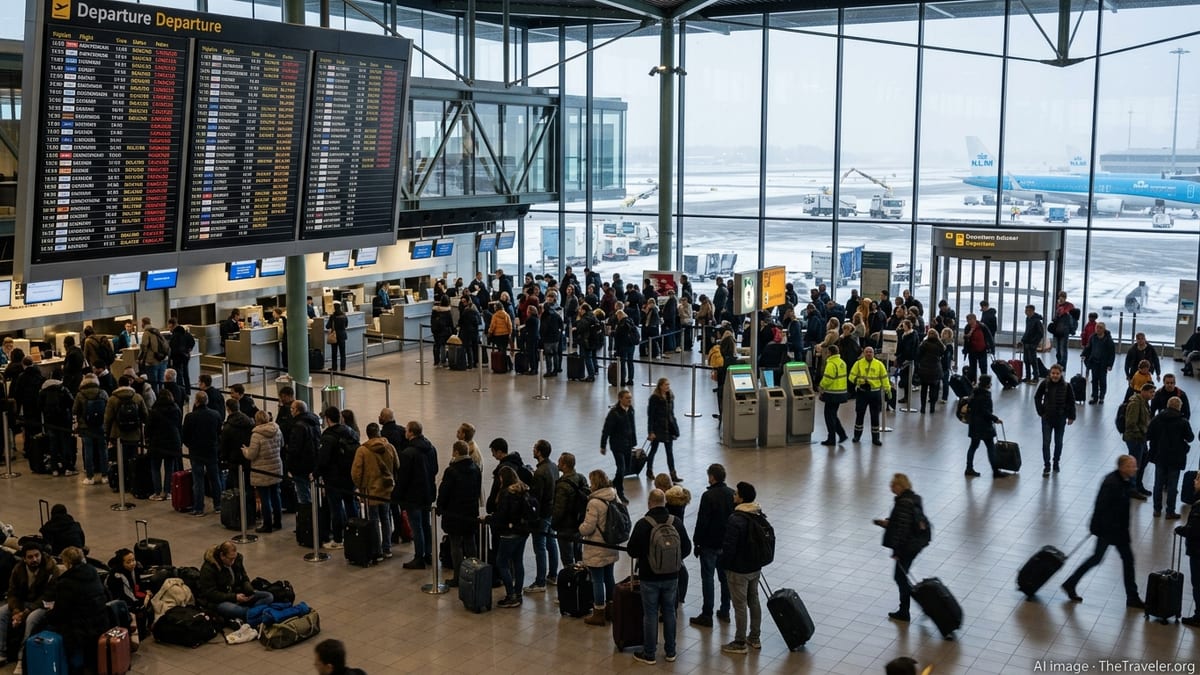
Social media posts and passenger forums show images of packed departure halls, long lines at service desks and departure boards filled with “canceled” notices, underlining the scale of the disruption and the strain on Schiphol’s role as a transfer hub connecting Europe with North America, Asia and Africa.
Why So Many Flights Are Being Canceled Instead of Delayed
Reports on airline operations this season point to several structural reasons why Schiphol has seen waves of outright cancellations rather than long rolling delays. Airlines operating at capacity in normal conditions have limited slack in their schedules, so when a storm cuts runway capacity or forces a temporary stop to ground handling, they often cancel flights proactively to avoid chaotic knock-on effects.
Analyses of KLM’s 2026 performance, for example, highlight that the carrier typically runs more than a thousand flights a day with a relatively low cancellation rate. During red-alert weather periods, however, that rate has spiked dramatically as the airline trims its schedule to match the airport’s constrained capacity. Short-haul European services have been particularly vulnerable, as they are easier to cancel and consolidate than long-haul intercontinental routes.
Government policies limiting annual flight movements at Schiphol have also been cited in public reporting as a factor that reduces flexibility. With a stricter cap on how many flights can operate, airlines have less room to add recovery flights once the weather improves. Instead of simply pushing everything back a few hours, planners often have to decide which services to drop entirely so that others can operate within the legal and operational framework.
For travelers, the result is a pattern seen repeatedly this winter: relatively clear skies appearing over Amsterdam hours after a storm, yet schedules remaining heavily disrupted as airlines work through congestion, crew duty-time limits and aircraft positioning challenges.
How the Disruptions Are Affecting Transit Passengers Worldwide
Because Schiphol is a major transfer hub, the impact of mass cancellations reaches far beyond the Netherlands. Passengers on long-haul itineraries connecting through Amsterdam have reported missed onward flights and unexpected overnight stays in Europe, even when their final destinations are thousands of kilometers away from the winter weather.
Travel forums and passenger communities are filled with accounts from travelers whose flights to or from Amsterdam were canceled, sometimes with less than 24 hours’ notice. Some describe being automatically rebooked onto flights days later, while others report waiting in digital queues for airline apps and websites to process changes amid high demand.
These disruptions have hit both leisure and business travelers. Routes linking Amsterdam with North America and Asia have been particularly sensitive, as fewer daily frequencies and high load factors leave limited seats for rebooking. When storm-related cancellations coincide with peak travel periods, such as school holidays or long weekends, the odds of securing a same-day alternative fall sharply.
Airlines are required under European air passenger regulations to offer rerouting or refunds when flights are canceled, but publicly shared experiences indicate that the process can be slow and stressful in major disruption events. Travelers report spending hours on hold or refreshing online tools, and some choose to buy new tickets on other carriers or from nearby airports to keep their plans on track.
What Travelers Should Check Before Heading to Schiphol
Reports from airlines and airport updates this winter repeatedly stress one piece of advice for passengers: do not assume that a flight is operating just because conditions appear calm at the moment. Weather systems, crosswinds and low visibility can change quickly around Amsterdam, and operational limits may force airlines to cut flights on short notice.
Before leaving for Schiphol, travelers are advised in public guidance to check their flight status directly with the airline’s website or mobile app and to monitor for notifications. If a flight shows as canceled, heading to the airport in person generally does not speed up rebooking at times of mass disruption and can add to congestion in terminals.
It is also important to look beyond the departure from Amsterdam. For connecting itineraries, passengers should verify whether all segments are confirmed and whether minimum connection times are still realistic given broader network delays. Some carriers allow self-service rebooking through digital tools when a missed connection is likely, giving travelers a chance to secure better options before the most desirable seats are taken.
Travel insurance with disruption coverage can provide an extra layer of financial protection for hotel stays, meals and alternative transport when plans fall apart. Policy terms vary widely, so passengers are encouraged by consumer organizations to review coverage details before departure, particularly during seasons of volatile weather.
Key Lessons and Strategies for Future Trips via Amsterdam
The turmoil at Schiphol this winter is prompting many travelers to rethink how they plan trips through major European hubs. Analysts and frequent flyers commenting publicly on the situation point to several lessons that can reduce risk when conditions are fragile.
One recurring recommendation is to build longer connection times into itineraries, especially during winter months. While tight transfers can be convenient, they leave little margin when an incoming flight is delayed or de-icing takes longer than expected. Opting for connections of two to three hours or more at Schiphol may improve the chances of making onward flights when the operation is under strain.
Another strategy is to consider alternative routings when weather forecasts or news reports indicate that Amsterdam is facing significant disruption. Nearby hubs such as Frankfurt, Paris or London may offer more stable options on particular days, or can serve as backup gateways if a trip is time sensitive.
Ultimately, the wave of cancellations at Schiphol highlights how dependent modern air travel is on finely tuned schedules and cooperative weather. For now, travelers using Amsterdam as a gateway are entering each winter with a clearer understanding that even a brief storm can ripple through the system for days, turning a routine connection into a complicated, high-stakes puzzle.