

More news on this day
Hundreds of passengers were left stranded in the Netherlands after Amsterdam Airport Schiphol reported nine flight cancellations and 252 delays, disrupting travel on KLM, Air France, SAS, easyJet and other carriers to key European cities including Oslo, Paris and Barcelona.
Get the latest news straight to your inbox!
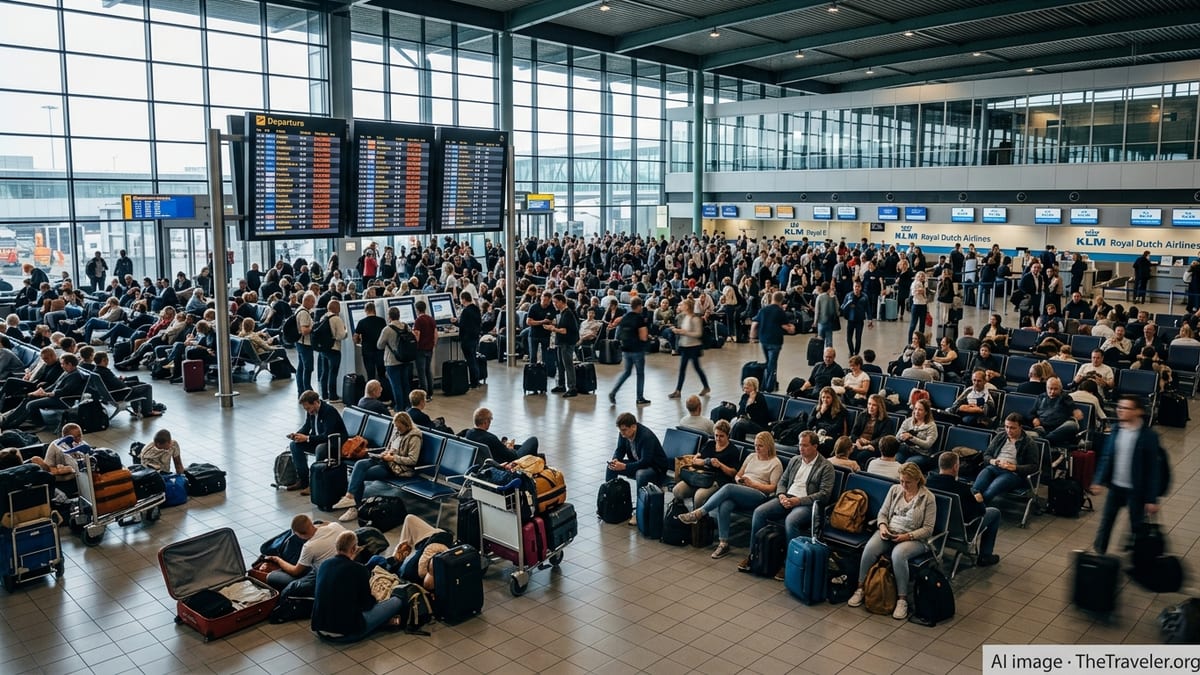
Severe Disruptions Ripple Through Amsterdam Schiphol
Publicly available flight tracking data and local media reports indicate that operations at Amsterdam Schiphol came under heavy strain, with a relatively small number of outright cancellations combining with a large wave of delays to create widespread disruption. While nine flights were recorded as cancelled, more than 250 delays across the schedule translated into hours of extra waiting time, missed connections and abandoned itineraries for departing and arriving passengers.
The disturbance affected a wide mix of European and regional routes, with flights to Oslo, Paris and Barcelona among those most heavily impacted. Travelers attempting to connect through Amsterdam on multi-leg itineraries were particularly vulnerable, as even short initial delays cascaded into missed onward departures and forced last-minute rebooking.
Travelers shared images and accounts on social platforms describing long queues at customer service desks, crowded departure halls and overnight stays in the terminal or nearby hotels. Many reported confusion as rolling delays repeatedly pushed back estimated departure times, creating uncertainty about whether flights would ultimately operate.
Although the number of cancellations remained limited compared with major winter-weather shutdowns seen earlier in the year, the unusually high volume of delays placed intense pressure on airport infrastructure, airline operations teams and ground services, generating a level of disruption that far exceeded the raw cancellation figures.
Major European Carriers Face Knock-On Effects
The operational problems at Schiphol weighed most heavily on airlines with dense schedules through Amsterdam. KLM, which uses Schiphol as its primary hub, saw its network particularly exposed as delays accumulated across short-haul and medium-haul rotations. Public data shows that even modest schedule disruptions at a major hub can quickly multiply across an airline’s system as aircraft, crews and passengers are left out of position.
Partner airline Air France also experienced disruptions through codeshare services and connecting itineraries routed via Amsterdam, while Scandinavian carrier SAS and low-cost operator easyJet were among other airlines reporting affected departures and arrivals. Passengers on multi-airline tickets across alliances and interline partners reported complex rebooking processes as carriers worked within their own policies and capacity limits.
For travelers heading to Oslo, Paris and Barcelona, the issues at Schiphol translated into missed holidays, disrupted business trips and extended layovers. Some passengers described being rebooked via alternative hubs such as Copenhagen or Frankfurt, while others were offered travel on later flights from Amsterdam once seats became available.
The disruption also highlighted how reliant Europe’s short-haul network remains on a small number of high-traffic hubs. When a major node such as Schiphol experiences constraints, the effects can quickly spread across multiple airlines and countries, even when the number of outright cancellations remains comparatively low.
Operational Strain, Weather and Capacity Constraints
Published coverage and recent analyses of Schiphol’s performance during the 2025 to 2026 winter period point to a combination of factors that can contribute to days of heavy disruption, including challenging weather, runway capacity reductions, high passenger volumes and staffing pressures across air traffic control and ground handling.
In previous months, severe winter storms and recurring de-icing bottlenecks in the Netherlands and surrounding regions have led to widespread cancellations and rolling delays. Even on milder days, residual staffing shortages and tightly packed schedules can leave limited margin to absorb technical issues, aircraft rotation delays or brief periods of low visibility around the airport.
Aviation observers note that modern hub operations depend on finely tuned connections, with aircraft and crews scheduled to operate multiple legs per day. When an early rotation is delayed at a hub like Amsterdam, knock-on effects can cascade through later flights to other European cities, including Oslo, Paris and Barcelona. Passengers may not see their flight listed as cancelled, but a delay of several hours can be just as disruptive when it causes onward connections to be missed.
Travel industry analysts have also pointed to broader capacity constraints at Schiphol, including historical slot limitations and past labor disputes, as background factors that can make the airport more vulnerable to systemic disruption when operational stress increases.
Stranded Passengers Face Long Queues and Limited Options
As delays mounted, hundreds of passengers found themselves unexpectedly stuck in the Netherlands, some overnight and others for even longer. Social media posts from the terminal described crowded customer service counters, lengthy telephone wait times and difficulty reaching airline agents during peak disruption hours.
While airlines typically provide options to rebook on later services or, in some cases, on alternative carriers, limited spare capacity on popular routes can leave travelers with few immediate choices. For those bound for Oslo, Paris and Barcelona, re-accommodation often depended on remaining seats on later departures or on connections through secondary hubs, extending journeys by many hours.
Under European passenger rights rules, many travelers are entitled to assistance such as meals, refreshments and accommodation when significant delays or cancellations occur for reasons within an airline’s control. However, public reporting and traveler experiences from recent disruption episodes at Schiphol suggest that accessing this support can be time-consuming and confusing, especially when thousands of passengers are seeking help simultaneously.
Some travelers opted to seek their own hotel rooms or alternative transport such as rail links, planning to pursue reimbursement or compensation later. Others chose to remain in the terminal to stay close to departure gates in case new seats became available on short notice as airlines adjusted their schedules.
What Travelers Should Know Before Heading to Schiphol
For passengers with upcoming trips through Amsterdam, recent events underline the importance of closely monitoring flight status and building extra time into itineraries where possible. Publicly available tools from airlines and flight tracking services can offer real-time updates on delays and gate changes, which may appear there before information is updated on airport displays.
Travel experts often recommend booking longer connection windows at major winter-affected hubs, particularly during periods of known operational strain. For journeys involving critical events or fixed start dates, routing through alternative hubs or choosing direct flights where available can reduce exposure to hub-related disruption.
Passengers transiting Schiphol on itineraries touching Oslo, Paris or Barcelona may also benefit from reviewing their airline’s rebooking and compensation policies in advance, including rules on hotel coverage, meal vouchers and refunds. Knowing the relevant provisions before issues arise can help travelers make faster decisions if delays begin to build on the day of travel.
As airlines and airport operators across Europe continue to manage winter-related challenges and structural capacity constraints, further days of disruption remain possible. Travelers connecting through Amsterdam are being encouraged by published guidance and travel industry commentary to stay flexible, stay informed and consider contingency plans when their schedules are time-sensitive.