

More news on this day
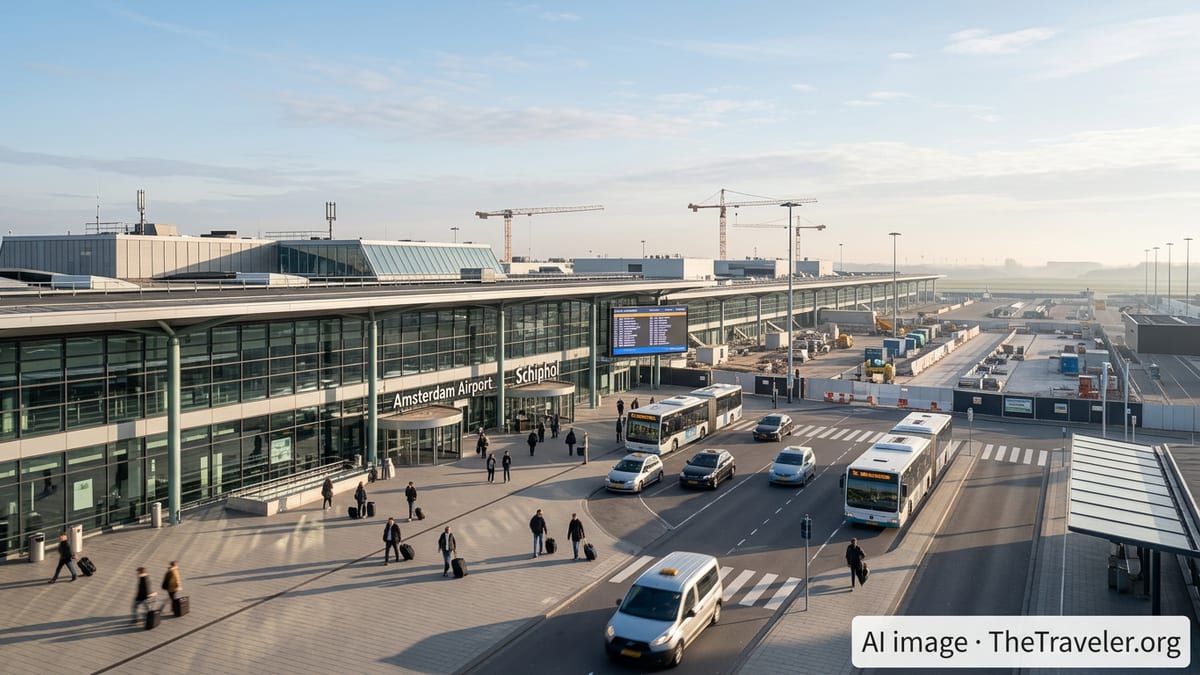
Amsterdam Airport Schiphol is entering a new phase of transformation after securing €500 million in fresh financing, a move that is set to underpin a far‑reaching overhaul of terminals, airside infrastructure and access routes as the Dutch hub strives to deliver a smoother, more reliable passenger experience in the coming decade.
Get the latest news straight to your inbox!
Strategic Financing Bolsters Record Investment Programme
The new €500 million raise forms part of a broader multibillion‑euro investment pipeline that Royal Schiphol Group has mapped out for the period to 2035. Publicly available documents on the airport operator’s Euro Medium Term Note programme show that Schiphol has been steadily building a mix of public bonds, green finance instruments and long‑term credit facilities to fund what it describes as the largest investment programme in its history.
Recent disclosures indicate that Schiphol’s funding strategy combines bond issuance on European capital markets with dedicated infrastructure loans from institutions such as the European Investment Bank. A loan agreement announced in early 2025, framed as the first tranche of a wider infrastructure finance line, signalled that lenders remain prepared to support Schiphol’s pivot from emergency pandemic‑era liquidity to long‑horizon capital expenditure focused on quality and resilience.
The latest €500 million injection is positioned within this shift. Market commentary and investor materials describe proceeds being channelled into terminal modernisation, security upgrades, sustainability measures and airfield optimisation, rather than short‑term operating needs. Analysts note that this aligns Schiphol with a broader European trend in which hub airports are using bond markets to lock in long‑dated funding for capacity‑neutral but experience‑enhancing projects.
Financial opinions on Royal Schiphol Group released over the past year point to a balance sheet deliberately structured to accommodate high capital spending while maintaining credit quality. These reports highlight available revolving credit facilities and staged bond maturities, suggesting that the €500 million raise is calibrated to avoid sharp refinancing peaks as the airport invests heavily through the 2020s and early 2030s.
From Crisis Bottlenecks to Long‑Term Capacity Redesign
The funding push comes against the backdrop of several turbulent years for Schiphol. Following widely reported queues and staffing shortages in 2022 and 2023, the airport has faced sustained political and public scrutiny of its reliability and its impact on the local environment. Traffic has since recovered, with recent figures indicating that passenger volumes are again approaching pre‑pandemic levels, even as flight movements remain capped by government policy.
Airport planning documents and recent masterplan coverage show that Schiphol is responding by rethinking how existing capacity is organised rather than simply adding more flights. The investment programme places emphasis on streamlining passenger flows, expanding security and baggage processing zones, and refurbishing ageing pier and gate areas that were originally designed for a different era of aviation.
Industry analysis of the Dutch hub notes that the focus is shifting from raw throughput towards what planners describe as “quality and balance.” This includes projects aimed at reducing operational bottlenecks that contributed to past disruption, such as narrow transfer corridors, constrained check‑in halls and limited early‑bag storage. The overhaul is being framed as an opportunity to rebuild critical systems while the overall number of aircraft movements is politically restricted, allowing construction to proceed with somewhat less operational risk than during past boom years.
Observers also point out that the airport’s investment cycle is closely tied to the ambitions of its main airline customer, KLM, and the Netherlands’ goal of remaining a leading European transfer hub. Modernising stands, boarding facilities and transfer routes is seen as essential if Schiphol is to compete with rival hubs in Paris, Frankfurt and Istanbul on both punctuality and passenger comfort.
Passenger Experience at the Heart of Terminal Upgrades
According to published coverage of Schiphol’s redevelopment vision, much of the new capital will flow directly into areas that are visible to travellers. Plans include reconfigured security lanes using more advanced screening technology, enlarged waiting and seating areas, and revamped retail and food offerings with more daylight and clearer wayfinding. Designers are said to be prioritising intuitive walking routes that shorten transfer times and reduce the need for repeated security checks.
Architecture visuals shared in recent months show more open terminal spaces with higher ceilings, expanded piers and upgraded lounge concepts. The intention, as described in these materials, is to move away from cramped gate hold rooms towards flexible zones that can handle both peak‑hour surges and quieter periods more gracefully. Improvements to acoustics, lighting and indoor air quality are also being highlighted as part of a broader push to make time spent at the airport feel less stressful.
Digitalisation is another focus area linked to the investment drive. Project summaries reference the roll‑out of more self‑service bag drops, biometric identity checks at key touchpoints and upgraded flight information systems. These technologies are expected to support smoother flows during busy holiday travel periods, while also giving airlines and ground handlers better real‑time data to manage disruptions.
For departing and arriving passengers alike, the combination of physical and digital upgrades is intended to translate into shorter queues, clearer information and more predictable connection times. Industry commentators note that such enhancements are increasingly decisive in how travellers and airlines evaluate a hub, particularly in a market where environmental constraints limit the prospect of simple expansion.
Sustainability and Ground Access Central to Long‑Range Vision
The €500 million raise is also intertwined with Schiphol’s environmental and ground‑access agenda. The airport has publicly committed to cutting noise and emissions while maintaining its role in international connectivity, a balancing act that places considerable weight on infrastructure design.
Planning documents and government announcements outline a series of projects in which Schiphol will play a central role, including the extension of Amsterdam’s North/South metro line towards the airport and Hoofddorp during the next decade. While these public transport investments rely on separate funding decisions, Schiphol’s own capital programme includes associated works on station facilities, forecourt redesigns and parking adjustments to encourage more passengers and staff to arrive by rail rather than by car.
Within the airport perimeter, part of the new financing is earmarked for energy‑efficiency improvements and the electrification of ground operations. Project descriptions reference upgrades to building insulation and climate systems, installation of additional solar capacity on terminal roofs and the expansion of charging infrastructure for electric ground support equipment and service vehicles. Such investments are designed to reduce the airport’s own emissions footprint even as total passenger numbers gradually grow.
Analysts observing the European hub landscape suggest that Schiphol’s strategy reflects a broader shift in which large airports are repositioning themselves as multi‑modal, energy‑aware campuses. Instead of focusing solely on runways and terminals, investment plans increasingly address rail access, on‑site energy generation and noise‑mitigation measures for surrounding communities, factors that are becoming critical to maintaining a social licence to operate.
Timelines, Construction Challenges and Passenger Impact
Schiphol’s long‑term vision runs through the mid‑2030s and into a broader redevelopment horizon that stretches toward 2050, indicating that travellers will encounter a work‑in‑progress airport for many years. Officially published schedules suggest that some projects, such as terminal refurbishments and security reconfigurations, will be delivered in stages to minimise disruption, while more complex undertakings related to access infrastructure and potential new terminal capacity will follow later.
Construction at a live hub of Schiphol’s scale presents significant challenges. Aviation analysts expect periods of temporary congestion as work areas are cordoned off and passenger flows are redirected. However, project phasing strategies outlined in planning material indicate that the airport aims to keep as many gates and check‑in desks operational as possible at each step, using night‑time work windows and off‑peak periods to advance the most intrusive tasks.
For passengers, the short‑term reality is likely to involve a mix of improvements and inconveniences: refreshed parts of the terminal network opening alongside detours, scaffolding and intermittent noise. Travel organisations and consumer groups are already advising travellers to allow extra time for check‑in and security during peak seasons while the airport is under construction.
Over the longer term, Schiphol’s €500 million funding boost, combined with its wider multibillion‑euro investment commitments, is intended to deliver a hub that is less vulnerable to sudden strain, more pleasant to use and better aligned with the Netherlands’ climate and mobility goals. How smoothly that transformation unfolds will be closely watched by airlines, investors and travellers as Europe’s competitive airport landscape continues to evolve.