

More news on this day
Amsterdam’s Schiphol Airport suffered a fresh wave of disruption today, with 27 flight cancellations and more than 100 delays affecting major carriers including El Al, KLM, Etihad, Qatar Airways and Emirates, leaving thousands of passengers facing missed connections, overnight stays and last-minute itinerary changes across the Netherlands and beyond.
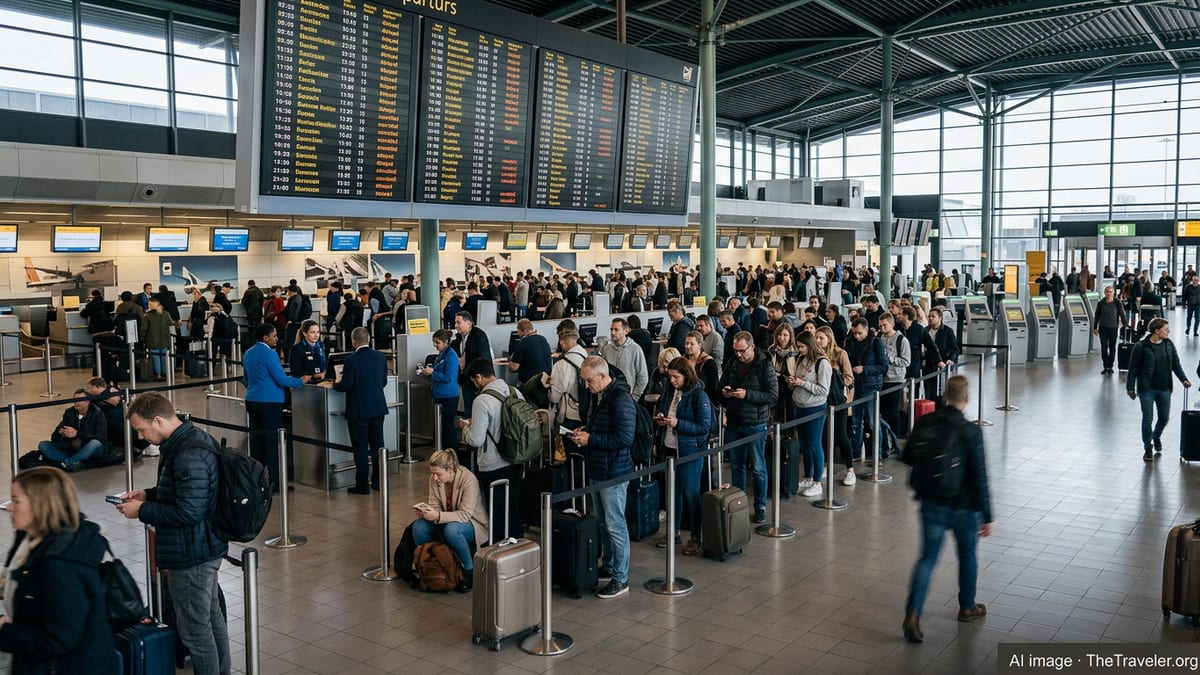
Major Carriers Hit as Disruptions Ripple Through Schiphol
The latest operational setback at Schiphol comes amid a broader pattern of turbulence affecting air travel across Europe. Industry data for 5 March 2026 show the Netherlands’ main hub recording 31 cancellations and 98 delays, with 27 of those cancellations and more than 100 delays concentrated among long-haul and connecting services that link Amsterdam to the Middle East, North America and key European capitals.
Passengers on flights operated by El Al, KLM, Etihad Airways, Qatar Airways, Emirates and other international carriers reported long queues at check-in and transfer desks as aircraft were held on the ground or rotated to alternative routes. Travellers heading to and from destinations such as Tel Aviv, Dubai, Abu Dhabi and Doha faced particular uncertainty as airlines adjusted schedules in response to operational constraints and continuing airspace restrictions in parts of the Middle East.
The knock-on effect has been especially acute for connecting traffic, a cornerstone of Schiphol’s role as a European transfer hub. Even when flights were not fully cancelled, extended delays of several hours meant missed onward connections and forced rerouting via other airports including Frankfurt, Paris Charles de Gaulle and London Heathrow.
While Schiphol has not declared a formal capacity crisis, aviation analysts note that the combination of rerouted long-haul services, limited crew availability and congested European skies has left little margin for disruption. When a handful of key departures are pulled from the schedule, the result can quickly balloon into dozens of affected flights and widespread timetable instability.
Middle East Airspace Limits Add Pressure to Dutch Operations
The current wave of cancellations at Schiphol cannot be viewed in isolation from the wider operational upheaval linked to airspace closures and restrictions over parts of the Middle East. Since late February, airlines including Emirates, Etihad and Qatar Airways have been forced to curtail or reroute services as conflict-related no-fly zones disrupt some of the world’s busiest long-haul corridors.
KLM has confirmed that it is avoiding airspace over Iran, Iraq and Israel, as well as parts of the Gulf region, for safety reasons. Those diversions lengthen flight times, complicate crew rostering and reduce the number of rotations each aircraft can complete in a day. In practice, that means thinner buffers in schedules and a greater likelihood that any technical or weather-related issue will cascade into delays or cancellations at hub airports such as Schiphol.
Gulf carriers are under similar strain. Emirates, Etihad and Qatar Airways have all adjusted their networks in recent days, with some services suspended and others operating on extended routings that add hours of flying time. When those disrupted long-haul flights are paired with dense European connection banks in Amsterdam, relatively small timing shifts can translate into missed curfews, out-of-position aircraft and last-minute cancellations.
For Schiphol, which relies heavily on transfer passengers heading between Europe and Asia, the Middle East or Africa, these structural pressures have heightened sensitivity to any kind of irregular operations. The 27 cancellations and more than 100 delays recorded today are emblematic of an environment in which international airlines are juggling safety, regulatory and commercial imperatives on a daily basis.
Passenger Impact: Missed Connections, Overnights and Rebooked Holidays
For travellers, the statistics at Schiphol translate into very real disruptions. Holidaymakers reported being informed of cancellations only hours before departure, while business travellers and visiting friends and relatives faced overnight stays in airport hotels as they waited for rebooked flights. Many of those affected were connecting through Amsterdam from regional airports and discovered upon arrival that their onward long-haul sector had been scrubbed or heavily delayed.
Lines quickly formed at airline service desks as customers sought meal vouchers, hotel accommodation and alternative itineraries. With KLM and its partners already operating close to capacity, rebooking options onto same-day flights were limited, especially on routes to the Middle East and onward to Asia. Some passengers were offered connections via other European hubs, adding extra stops and hours of travel time to journeys originally planned as single connections through Amsterdam.
Travel advisers warned that, given the scale of disruption, passengers should expect responses from airline call centres and online chat services to be slower than usual. Social media posts from travellers at Schiphol described wait times of several hours to speak with airline agents and instances where online rebooking tools struggled to keep up with rapidly changing schedules across multiple carriers.
For those with tightly planned itineraries, such as cruise departures or major events, today’s cancellations and delays could prove especially costly. Some passengers, facing limited rebooking options, opted to cancel trips entirely or to seek partial refunds and vouchers for future travel, weighing the immediate disruption against the prospect of continued instability in long-haul networks over the coming days.
Route Network and Regional Travel Disruptions
The cancellations at Schiphol have hit several strategic routes for the Netherlands, including flights to the Middle East, Eastern Mediterranean and key European business centres. Services to and from Tel Aviv, Dubai and Abu Dhabi have been particularly exposed due to a mix of airspace constraints and airline schedule adjustments. El Al’s connectivity between Amsterdam and Israel, as well as KLM and Gulf carrier services linking the Dutch hub with the United Arab Emirates and Qatar, featured among the disrupted operations.
Intra-European routes have also felt the effects as airlines shuffled aircraft and crews to cover long-haul gaps or to protect the most commercially critical rotations. Some frequencies to nearby hubs such as London, Paris and Frankfurt were delayed or consolidated, with passengers moved onto later departures or rebooked via partner airlines. This created further pressure on regional airports in neighbouring countries, where additional arrivals and departures were slotted into already busy timetables.
Rail alternatives saw increased interest as Dutch and cross-border travellers looked to avoid the risk of same-day flight disruption. Services on high-speed lines connecting Amsterdam with Brussels, Paris and London experienced higher demand, particularly from passengers whose short- or medium-haul flights were delayed but who still had flexibility to switch modes at short notice.
Tourism bodies in the Netherlands are watching the situation closely, concerned that repeated episodes of disruption at Schiphol may deter some visitors or encourage them to route through competing hubs. While today’s operational challenges are tied largely to extraordinary geopolitical and airspace conditions, they arrive after several years in which Schiphol has already grappled with capacity caps, staffing shortages and previous weather-related shutdowns.
What Travellers Through Amsterdam Should Do Now
With schedules still fluid, travel experts advise anyone flying via Schiphol in the coming days to monitor their booking frequently and to ensure contact details in airline profiles are up to date so that alerts can be received quickly. Check-in windows may open and close earlier than usual as carriers adjust departure times to fit available slots, so passengers are being urged to verify their flight status before leaving for the airport.
Those whose flights have already been cancelled or delayed by several hours should consult their airline’s rebooking and compensation policies. Under European passenger rights rules, travellers departing from Amsterdam generally have access to assistance such as meals, refreshments and hotel stays in the event of significant disruption, and in some cases may be entitled to refunds or fixed compensation depending on the cause of the delay or cancellation.
Travel insurers are also encouraging policyholders to keep detailed records, including boarding passes, written confirmations of cancellations, and receipts for additional expenses such as accommodation or alternative transport. These documents can be crucial when submitting claims for disrupted trips, particularly when multiple carriers and connecting airports are involved.
For now, Schiphol remains operational, but the combination of 27 cancellations, more than 100 delays and continued uncertainty across long-haul networks underscores how vulnerable Europe’s busiest hubs are to events unfolding far beyond their own runways. Travellers planning to pass through Amsterdam in the near future are being advised to build in extra time, consider flexible tickets where possible and remain prepared for further last-minute changes as airlines and airports work to stabilise their schedules.