

More news on this day
Scoot is set to shake up the Singapore–Tokyo market with the launch of a new daily budget service to Tokyo Haneda from March 2026, taking direct aim at premium incumbents All Nippon Airways and Japan Airlines on one of Asia’s most coveted city airport corridors.
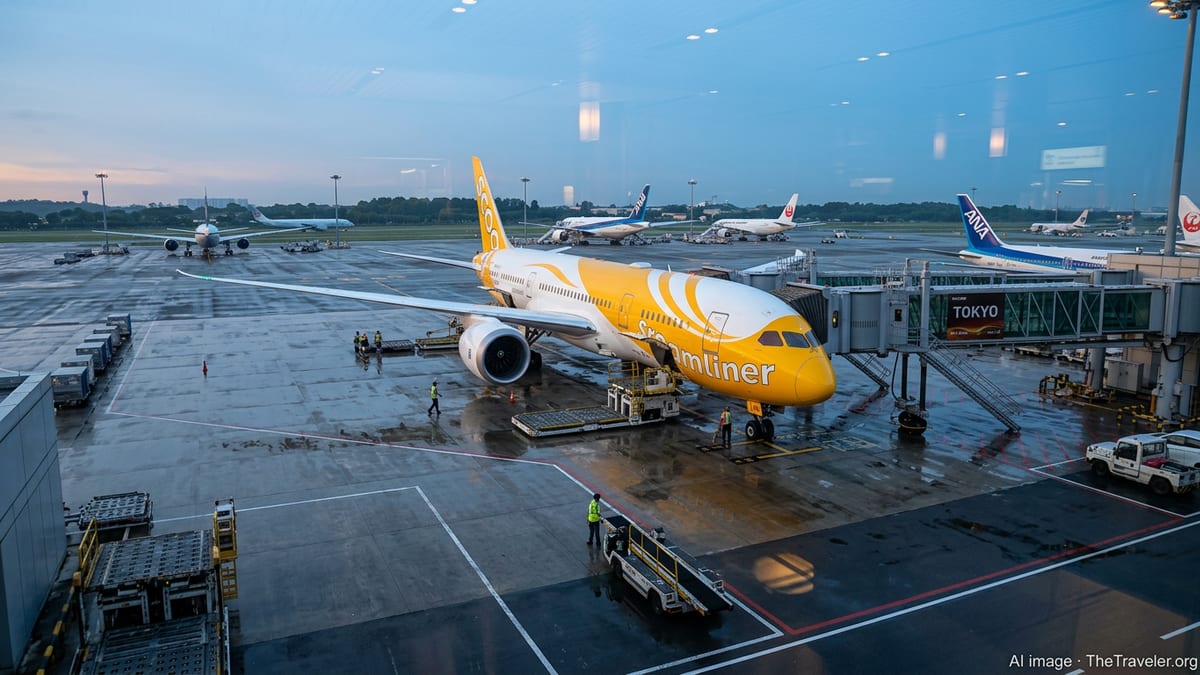
Daily Dreamliner Link Into Tokyo’s City Airport
The low cost subsidiary of Singapore Airlines will begin operating daily flights between Singapore Changi and Tokyo Haneda on 1 March 2026, using its widebody Boeing 787 Dreamliner fleet. The launch adds a second Tokyo gateway for Scoot, which already flies to Narita via Taipei, and marks its first direct entry into the intensely contested Haneda market.
Haneda is prized among airlines and travelers for its close proximity to central Tokyo and its extensive domestic connections, historically dominated by full service Japanese carriers ANA and JAL. By bringing a no frills product into Haneda, Scoot is positioning itself as a lower cost alternative for leisure travelers and price sensitive business passengers who want the convenience of the downtown airport without paying flagship fares.
The new Haneda service will initially operate once daily, complementing Singapore Airlines’ own multiple daily flights to the Japanese capital. While Scoot has not detailed its final timetable, industry expectations are for late night or early morning departures in at least one direction to align with Haneda’s slot structure and to facilitate same day connections on both ends.
The service will be sold in Scoot’s typical point to point model, with optional paid add ons such as baggage, seat selection and meals, but it will also plug into the broader SIA Group network via Changi, offering one stop itineraries from Southeast Asia and parts of Australia into Tokyo.
Fares Under Pressure as Budget Competition Reaches Haneda
Scoot’s arrival at Haneda is expected to put downward pressure on fares between Singapore and Tokyo, a route that has seen strong demand from both leisure and corporate segments. One way economy tickets on the new service are set to start from around the high SGD100 to low SGD200 range in promotional sales, including taxes, undercutting many full service offerings on the same city pair.
For ANA and JAL, which have traditionally leveraged Haneda access as a premium product differentiator, the presence of a low cost competitor on the same airport pair could erode yield on certain segments. Corporate travelers bound by strict travel policies may stick with full service carriers, but small businesses, younger professionals and price conscious tourists are more likely to trade frills for savings, particularly outside peak holiday periods.
The move also raises the stakes for rival carriers flying to Tokyo Narita from Singapore. With Scoot offering a lower fare gateway into Haneda, some passengers who previously chose Narita for cheaper tickets may now opt for the more centrally located airport, potentially prompting competitive responses across both Tokyo airports.
At the same time, Scoot’s presence at Haneda may stimulate new demand rather than simply divert traffic from existing services. Lower entry prices and more flexible travel options are likely to attract first time visitors to Japan, while repeat travelers may be encouraged to add side trips beyond Tokyo using the extensive domestic network available from Haneda.
Strategic Play in SIA Group’s Japan Expansion
The Haneda launch forms part of a broader Japan growth strategy for the Singapore Airlines Group. Scoot has been steadily expanding its footprint in the country, adding leisure focused destinations such as Okinawa from December 2025 and increasing frequencies to Sapporo and Tokyo Narita in response to resurgent post pandemic demand for Japan travel.
With the addition of Haneda, Scoot’s Japan network will reach at least three cities by early 2026, supported by 45 or more weekly flights across the country. The new route also deepens the SIA Group’s already substantial presence in Tokyo, where Singapore Airlines operates multiple daily services to both Narita and Haneda, and has a revenue sharing partnership with All Nippon Airways on Japan Singapore routes.
For the group, operating both full service and low cost brands into the same key market allows for better segmentation of demand. Premium and connecting passengers can be funneled into Singapore Airlines’ higher yielding cabins, while Scoot is used to capture price sensitive traffic that might otherwise choose rival low cost or hybrid carriers in the region.
Industry analysts note that Scoot’s Dreamliner deployment to Haneda is also significant. The 787’s fuel efficiency and range provide flexibility to adjust capacity and tap into connecting flows through Changi, positioning the airline to ramp up services or add seasonal frequencies quickly if demand continues to grow.
What the New Route Means for Travelers
For travelers in Singapore and across Southeast Asia, Scoot’s entry into Tokyo Haneda opens up a more affordable way to access Japan’s capital directly into its most convenient airport. Shorter transfer times to central districts such as Shinjuku, Shibuya and Ginza, along with easier access to domestic flights and shinkansen services, make Haneda particularly attractive for travelers on tight itineraries.
The carrier is expected to roll out promotional campaigns ahead of the March 2026 launch, including limited time discounted fares and bundled deals featuring baggage and seat selection. These offers will likely be timed around major travel fairs and online sales windows, aiming to lock in early demand for spring and summer travel periods.
Passengers should, however, factor in the typical low cost model trade offs. Onboard meals, checked baggage, advance seat selection and changes to travel dates will incur extra fees, and cabin comfort will be simpler than on full service competitors. For many leisure travelers, the combination of a modern widebody aircraft and a shorter transfer into Tokyo will be enough to offset these compromises.
The new service also enhances options for Japanese travelers heading to Singapore and beyond. With a daily Haneda departure, Scoot will be able to feed Japanese leisure traffic not only into Singapore but also onto onward Scoot and Singapore Airlines flights across Southeast Asia, Australia and parts of Europe, using Changi as a one stop hub.
Raising the Stakes in Asia’s Budget Long Haul Market
Scoot’s push into Tokyo Haneda underscores the growing importance of long haul routes within the low cost segment in Asia. The airline has already ventured into Europe with its Vienna service and continues to add medium haul destinations in China, Thailand and Vietnam, supported by a fleet strategy that blends narrowbody Embraer and Airbus aircraft with long range Boeing 787s.
By challenging legacy carriers on a marquee route such as Singapore–Haneda, Scoot is signaling confidence in sustained demand for affordable travel between Southeast Asia and North Asia. The move may encourage other low cost operators to consider similar city pairings, further blurring the line between traditional full service strongholds and budget carrier networks.
For ANA and JAL, the competitive landscape is becoming more complex. Alongside growing pressure from Middle Eastern and Asian network carriers on connecting traffic, they must now contend with a nimble low cost rival at their home city airport targeting outbound Japanese holidaymakers and inbound tourists alike.
As bookings open for the new Scoot service, travelers and industry watchers will be closely tracking how fare levels, load factors and schedule adjustments evolve across the Singapore Tokyo corridor, a bellwether for broader trends in Asia’s post pandemic aviation recovery.