

More news on this day
Scotland’s upcoming friendly against Japan at Hampden Park on 28 March 2026 is shaping up to be a showcase both on and off the pitch, with Scotland’s national stadium preparing for tens of thousands of fans and ScotRail rolling out enhanced services, crowd management measures, and fresh journey advice to keep supporters moving smoothly through Glasgow.
Get the latest news straight to your inbox!
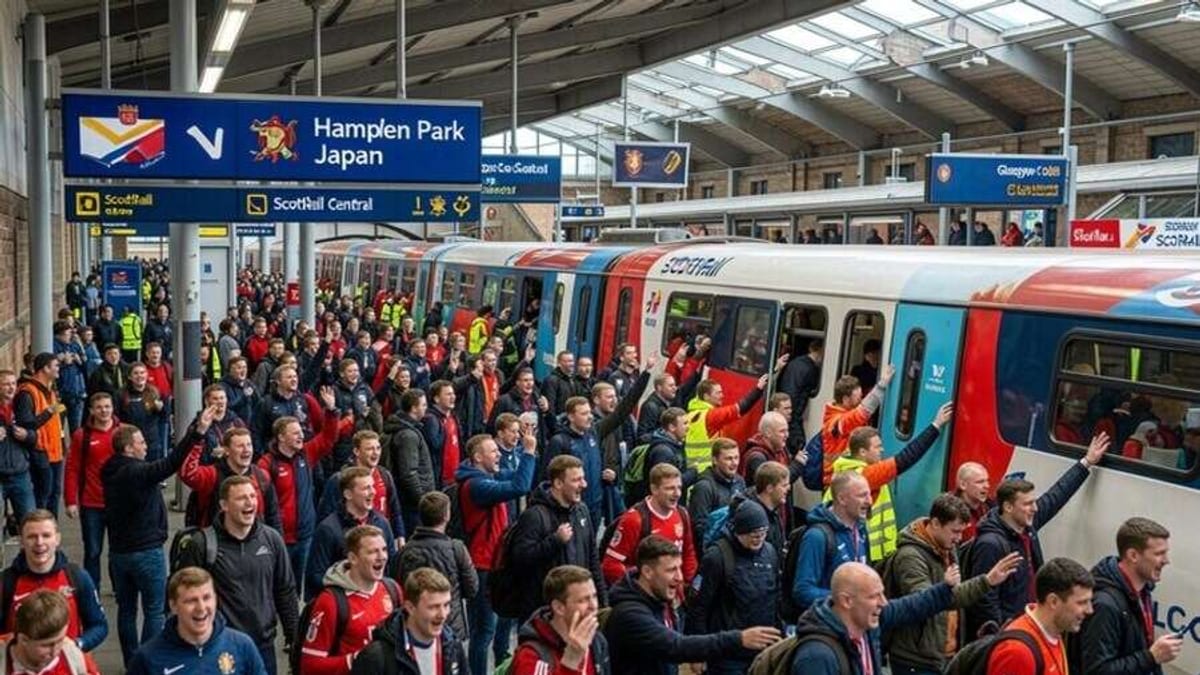
Image by Latest International / Global Travel News, Breaking World Travel News
High-Stakes Friendly Brings Hampden Into Focus
The Scotland versus Japan World Cup friendly at Hampden Park on 28 March 2026, with a scheduled 5:00 p.m. kick-off, is drawing intense interest from home supporters and visiting fans alike. Traffic and transport briefings describe it as one of the stand-out fixtures of Scotland’s early-year calendar, combining a high-profile international opponent with a traditional Saturday evening slot.
Event listings highlight that the match window from late afternoon into early evening will overlap with regular weekend traffic, retail activity, and other leisure events across Glasgow. This mix has prompted transport planners to treat the fixture as a full-scale major event, rather than a routine friendly, with an emphasis on early arrivals and staggered departures to relieve pressure on local roads and railways.
Publicly available information notes that roads around the stadium, including key approaches through the south side of Glasgow, are expected to be busy from mid-afternoon, with a particular pinch point anticipated in the hour before kick-off. As a result, fans are being strongly encouraged to rely on rail and bus connections where possible and to build in extra time both pre- and post-match.
Hampden Park’s own guidance reiterates that the national stadium is designed to be accessed primarily by public transport, with car access tightly controlled on major event days. Supporters are being advised to treat the Scotland v Japan fixture as they would a competitive qualifier, not a low-key friendly, when planning their journeys.
ScotRail Strengthens Services for Matchday Crowds
ScotRail’s recent handling of major events at Hampden, from international friendlies to cup semi-finals and stadium concerts, provides a clear indication of what supporters can expect when Japan visit Glasgow. For comparable fixtures, the operator has deployed additional services and extra carriages between Glasgow Central and southside stations serving Hampden, particularly Mount Florida and Kings Park, which sit within walking distance of the ground.
Operational updates for previous Hampden dates show a consistent pattern: more seats on key routes into Glasgow, targeted extra trains on the short shuttle corridor to Mount Florida, and post-event services timed to depart soon after the final whistle. Published travel advice typically stresses that these trains can still be extremely busy, and that queuing systems before and after events are a standard feature rather than a sign of disruption.
Recent coverage of large football and concert crowds at Hampden also points to a continued emphasis on pre-purchased tickets and contactless payment to reduce queuing at station ticket offices. Fans are routinely encouraged to secure return tickets in advance, use operator apps to check timetables and platform information, and travel into the stadium area well ahead of kick-off to spread demand more evenly across the afternoon.
While detailed ScotRail timetables for the Scotland v Japan match are expected to be published closer to the date, existing patterns around similar fixtures suggest an integrated approach combining extra seating capacity, crowd-control barriers on concourses, and close coordination with other public transport providers to keep interchange routes as fluid as possible.
Key Routes: From City Centre to the Turnstiles
For many supporters, the core matchday journey will run through Glasgow Central station, where local services connect to Mount Florida and Kings Park in around 10 minutes. Hampden guidance notes that both stations are typically around a five-minute walk from the stadium, with clearly signposted routes and visible stewarding on busy days.
On previous Hampden occasions, queuing arrangements at Glasgow Central have usually been implemented on the main concourse, with supporters directed into separate lines for different southside routes. After the match, similar systems have been used at Mount Florida and Kings Park to manage the flow of fans back towards the city centre, often with phased access to platforms to prevent overcrowding on stairways and footbridges.
For those travelling from outside Glasgow, intercity and regional rail services are expected to connect into Central station throughout the day, though some journeys may involve changes at intermediate hubs. Past transport briefings for Hampden events have highlighted that ongoing engineering works in parts of the network can occasionally restrict late-evening options, making it important for fans to check last-train times while planning their trip.
Alternative routes by bus and subway are also part of the wider travel picture. Local bus services on corridors through Glasgow’s south side provide options for those staying in the city, while the Glasgow Subway network offers connections from key visitor districts into the city centre, where onward trains and buses to Hampden-area stops are available. Event information consistently advises visitors unfamiliar with Glasgow to factor in walking times between modes and to avoid relying on direct door-to-door car access.
Road, Parking and Accessibility Considerations
Road travel around Hampden on major event days is typically subject to restrictions, temporary closures, and resident-priority parking schemes. Published traffic notices for the Scotland v Japan friendly underline that specific streets near the stadium can be closed or partially closed around kick-off and the final whistle, with traffic management teams on site to prioritise safety and pedestrian movement.
Drivers heading into Glasgow for the match are therefore being advised to consider park-and-ride style arrangements, using public transport for the final leg to the stadium. This approach reflects long-standing guidance around Hampden fixtures, where on-street parking in the immediate vicinity is limited and often controlled by event-specific regulations to protect local residents.
For supporters with mobility needs, the wider Hampden guidance points to dedicated accessible routes and drop-off points, as well as accessible seating and assistance options inside the stadium. Separately, rail industry information notes that ScotRail’s Assisted Travel services remain available on many routes, although advance booking is recommended where possible to ensure staff availability and suitable boarding arrangements.
Visitors staying overnight in Glasgow or elsewhere in the central belt may also benefit from staggering their departure, using later trains or buses after the initial post-match rush subsides. Crowd-management plans around Hampden are designed on the assumption that the majority of spectators will leave immediately after full-time, so fans with flexible schedules can often experience quieter journeys by waiting slightly longer before setting off.
Practical Tips for a Smoother Matchday Experience
Travel advice issued for recent Hampden events provides a range of practical pointers that are likely to apply again when Scotland face Japan. The recurring themes are to travel early, avoid last-minute arrivals, and allow generous time for security checks, ticket scanning, and the walk from station or bus stop to the turnstiles.
Supporters are routinely reminded that large queues can form not only at rail stations but also at catering outlets, stadium entrances, and surrounding streets. Arriving well before the 5:00 p.m. kick-off not only reduces pressure on transport infrastructure but also helps to distribute crowd density more evenly around the stadium footprint.
Another consistent message is the value of digital tools and live information. Fans are encouraged to consult operator apps and journey planners on the day of travel for any late timetable changes, service disruption, or alterations to normal queuing arrangements. Keeping digital or printed tickets ready, planning a clear meeting point with friends or family, and having an alternative route in mind if services are disrupted can all help to minimise stress on what is expected to be a busy but celebratory occasion.
With Scotland and Japan set to deliver an intriguing contest on the pitch, the supporting cast of transport operators, traffic managers, and stadium planners is working to ensure the off-field experience is just as memorable for the right reasons. For fans willing to plan ahead, follow the published guidance, and build in extra time, the journey to and from Hampden Park should form a positive part of an electric international matchday.