

More news on this day
Scotland’s most visited tourist attraction has been confirmed as the National Museum of Scotland, with fresh visitor data highlighting a powerful rebound in cultural tourism and cementing the country’s reputation as a global heritage heavyweight.
Get the latest news straight to your inbox!
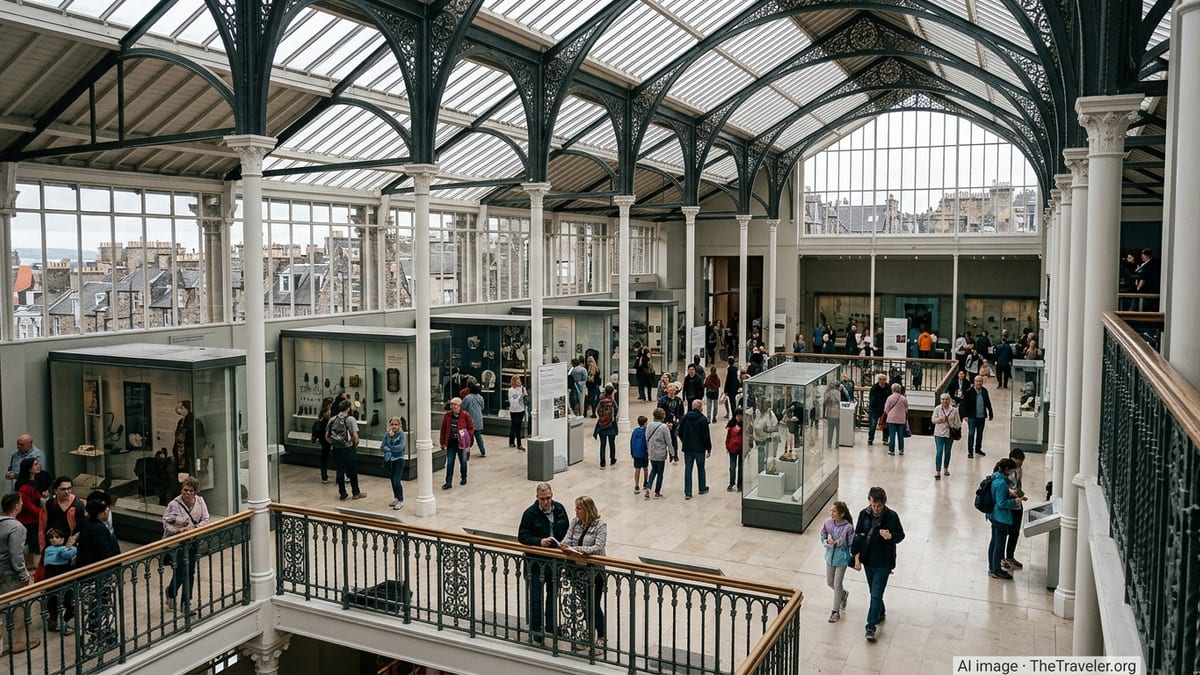
National Museum of Scotland Takes the Top Spot
Publicly available information from the Association of Leading Visitor Attractions and recent museum data indicate that the National Museum of Scotland in Edinburgh is currently Scotland’s single most visited attraction. The museum recorded more than 2.3 million visits in 2024 and a further rise to just over 2.3 million in 2025, edging past Scotland’s other headline sites to claim the national crown.
These figures place the National Museum not only at the top of Scotland’s league table, but also among the most popular museums in the United Kingdom outside London. The sustained performance reflects the museum’s broad appeal, spanning Scottish history, world cultures, science and technology, and design, all housed in a landmark building that dominates Edinburgh’s Old Town skyline.
The museum’s visitor profile is understood to be a mix of domestic day-trippers, families, and a growing share of international tourists who have returned in strong numbers since the lifting of pandemic travel restrictions. Its status as a free-to-enter institution has also been flagged in industry reporting as a key factor in maintaining high levels of footfall during a period of rising living costs.
Analysts of the sector note that the National Museum’s consistent position at or near the top of UK attendance rankings underscores how cultural institutions can anchor a city’s tourism offer. In Edinburgh’s case, the museum now sits at the heart of an interconnected cluster of galleries, historic sites and festivals that collectively drive the capital’s visitor economy.
Edinburgh Castle Remains the Premier Paid Attraction
While the National Museum of Scotland leads overall in visitor volume, Edinburgh Castle continues to dominate as Scotland’s most visited paid-for attraction. Data compiled by VisitScotland and sector barometers show the fortress drawing close to 2 million paying visitors in 2024, with more than 2 million recorded in 2025, underscoring its enduring international pulling power.
The castle’s position on Castle Rock, with panoramic views over Edinburgh and its role as a symbol of Scottish statehood, gives it a visibility few attractions can match. Visitor surveys cited in industry reporting consistently highlight the castle as a “must-see” for first-time travellers, while repeat visitors are drawn back by evolving interpretation, special events and seasonal programming.
Tourism analysts point to the complementary relationship between the castle and the National Museum of Scotland. Many itineraries feature both attractions on the same day, particularly for cruise passengers and short-stay city-break visitors. Together, they form a powerful narrative of Scottish history, from the medieval and early modern power struggles embodied by the castle to the broader social and cultural stories showcased in the museum galleries.
The robust figures for Edinburgh Castle also reflect wider growth in heritage tourism. Reports on visitor behaviour in 2024 and 2025 note a strong appetite for historic sites, with castles, battlefields and cathedrals performing well as travellers seek experiences that link scenery with stories and national identity.
Visitor Numbers Surge Across Scotland’s Attractions
The latest attraction barometers compiled by the Moffat Centre at Glasgow Caledonian University and the Association of Scottish Visitor Attractions show a broad-based rise in visitor numbers across Scotland. Aggregate figures for 2024 point to nearly 50 million visits, up around 4 percent on the previous year, with both free and paid sites participating in the upswing.
Growth has been particularly strong at major cultural institutions. The National Museum of Scotland and Edinburgh Castle were joined by National Galleries Scotland and other flagship sites in reporting multi-year highs, reinforcing what commentators describe as a “halo effect” for Edinburgh as a city-break destination. Museums and galleries in Glasgow, the Highlands and key island gateways have also reported healthy increases, suggesting benefits are spreading beyond the capital.
Industry observers link the surge to a mix of factors: a continued rebound in international travel, strong domestic staycation demand, and targeted investment in exhibitions and visitor facilities. New and refreshed gallery spaces, immersive displays, and upgraded amenities have been credited with encouraging longer dwell times and repeat visits.
At the same time, research from VisitScotland highlights the role of Scotland’s global profile in screen tourism and social media. Dramatic images of castles, lochs and city skylines are widely shared online, driving aspiration visits from markets in North America, Europe and Asia and helping to convert interest into bookings at marquee attractions.
Cultural Powerhouse Status Strengthened
The performance of Scotland’s leading attractions is feeding into a wider narrative of the country as a cultural powerhouse within the UK and Europe. National visitor statistics for 2024 and early 2025 show that Scotland is outperforming many comparable destinations in terms of both visitor numbers and spending, particularly among long-haul travellers.
Policy and research papers on the sector stress that cultural sites are no longer seen solely as heritage assets but as critical components of Scotland’s soft power. Flagship venues such as the National Museum of Scotland, Edinburgh Castle and the National Galleries are described as “front doors” to the country, shaping international perceptions and reinforcing themes of creativity, learning and innovation.
Investment strategies set out by cultural agencies highlight an ambition to use this momentum to broaden the geographic spread of visitors. Plans include promoting lesser-known museums and historic properties, strengthening links between major hubs and rural or island communities, and enhancing digital access so that on-site experiences are complemented by online engagement.
Commentary from tourism economists suggests that Scotland’s strong cultural brand is helping to support resilience in the face of wider economic headwinds. By offering high-quality, content-rich experiences, attractions are better placed to encourage higher-value travel, longer stays and off-season visits, all of which are seen as critical to maintaining sustainable growth.
Balancing Growth, Sustainability and Local Impact
The surge in visitor numbers has also renewed discussion about how best to manage growth. Reports examining the implications of tourism recovery highlight concerns around congestion in parts of Edinburgh’s historic centre and at some of the country’s most iconic natural sites, particularly during peak summer months.
Local authorities and industry bodies are exploring measures such as visitor levies, timed ticketing and improved public transport connections to distribute footfall more evenly and encourage low-carbon travel choices. Scotland-wide policy debates emphasise the need to ensure that communities benefit directly from increased tourism, through jobs, local procurement and investment in public realm improvements.
Cultural institutions are likewise refining their approaches to sustainability. Public plans from museums and heritage bodies reference carbon-reduction targets, green building initiatives and exhibitions that address climate and biodiversity themes. The National Museum of Scotland, Edinburgh Castle and other major sites are increasingly framed as platforms for conversations about the future, as well as guardians of the past.
As Scotland’s most visited attractions continue to post strong numbers, the challenge for policymakers, operators and communities will be to harness this success while protecting the qualities that make these places distinctive. The latest rankings confirm the National Museum of Scotland at the top of the visitor charts, but the broader story is one of a country whose cultural assets have become central to its economic, social and international outlook.