

More news on this day
Scotland’s national operator ScotRail has confirmed an £80 million overhaul programme to introduce refurbished Class 222 trains, replacing its aging Inter7City high-speed trains on long‑distance routes from late 2027.
Get the latest news straight to your inbox!
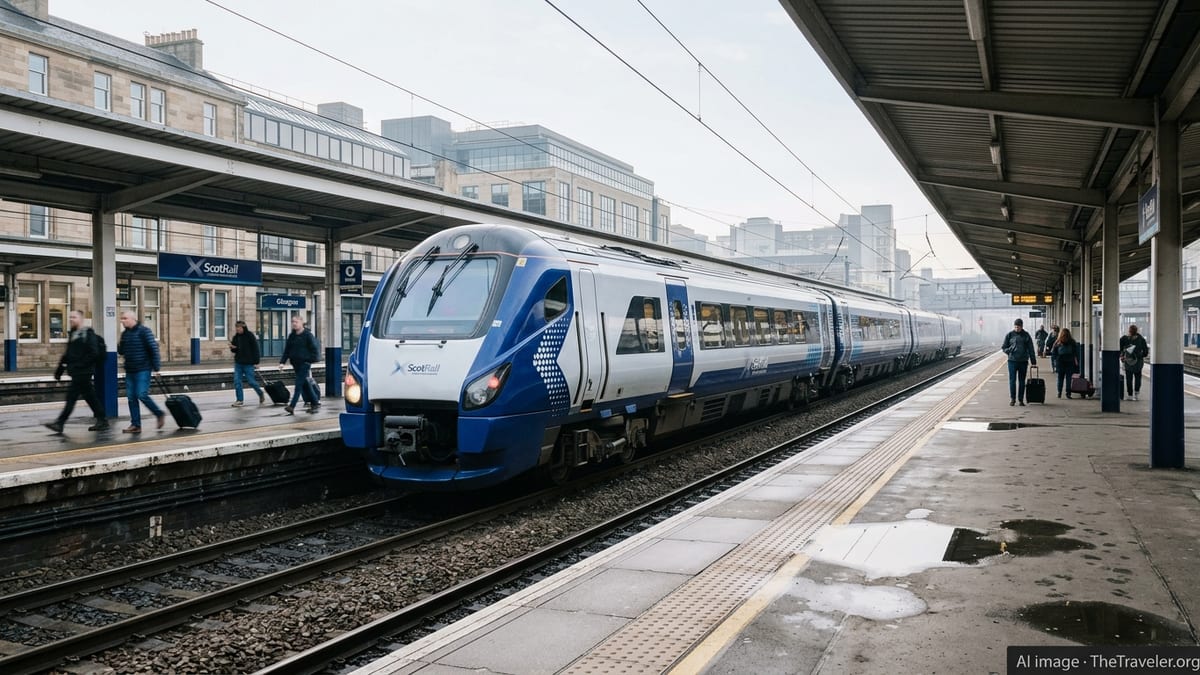
Refurbished Class 222 Fleet to Take Over Inter7City Routes
According to recent coverage of ScotRail’s rolling stock strategy, the operator will lease 22 five‑car Class 222 diesel multiple units and put them through a comprehensive refurbishment programme valued at around £80 million. The upgraded trains are scheduled to begin entering passenger service in Scotland in the second half of 2027, with a phased rollout expected to be completed by the end of 2028.
The modernised Class 222 fleet will take over services currently operated by ScotRail’s Inter7City high‑speed trains on key intercity routes linking Glasgow and Edinburgh with Aberdeen and Inverness. Publicly available information highlights that the incoming trains will be configured for intercity travel, with a focus on comfort, reliability and accessibility rather than outright top speed increases.
Reports indicate that the decision follows several years of planning around fleet transition and decarbonisation of Scotland’s rail network. The refurbished Class 222s are intended as an interim but long‑lasting solution, bridging the gap between the withdrawal of life‑expired high‑speed trains and the eventual introduction of new low‑carbon rolling stock later in the next decade.
Addressing Safety, Reliability and Accessibility Concerns
ScotRail’s current Inter7City fleet is based on High Speed Train sets originally introduced across Britain in the 1970s and 1980s, later shortened and refurbished for use in Scotland. While popular with many passengers, their age and legacy design standards have increasingly been seen as constraints on safety, accessibility and operational resilience on routes that are critical for tourism and regional connectivity.
Publicly available government correspondence on the fleet strategy has described the Inter7City trains as the oldest in ScotRail’s portfolio and increasingly expensive to maintain. Their replacement has been a policy objective linked not only to improving the passenger experience, but also to meeting modern crashworthiness, accessibility and emissions expectations.
The refurbished Class 222 units are expected to bring step‑change improvements for passengers, including level‑access interiors, improved onboard information systems and modern facilities in both standard and first class. Past refurbishment work by manufacturers on similar fleets elsewhere in the United Kingdom has typically included upgrades such as power sockets, improved lighting, refreshed seating and enhanced toilet facilities, and industry observers expect a comparable specification for the ScotRail programme.
Investment Strategy Balances Cost and Long-Term Fleet Renewal
The £80 million refurbishment is part of a broader rolling stock transition strategy that seeks to deliver tangible upgrades in the near term while avoiding the higher upfront costs and longer lead times associated with ordering an entirely new diesel or bi‑mode fleet. Rail industry commentary suggests that leasing and overhauling existing Class 222 trains offers a relatively rapid and affordable way to remove the oldest high‑speed trains from Scottish rails.
At the same time, publicly available planning documents for Scotland’s rail decarbonisation programme point towards a long‑term shift to electrification, battery and hydrogen technologies on many of the same intercity corridors. The refurbished Class 222 units are therefore being framed as a medium‑term solution with an expected service life in Scotland of at least a decade, giving time for infrastructure upgrades and procurement of fully zero‑emission trains.
Travel and transport analysts note that this approach mirrors a wider UK and European trend in which operators extend the working life of modern multiple units through substantial mid‑life refurbishments. These programmes are viewed as a way to improve passenger amenities and reliability quickly, while spreading the environmental and financial cost of new‑build fleets over a longer period.
Implications for Passengers and Scotland’s Tourism Corridor
For travellers, the change will be most visible on long‑distance journeys linking the Central Belt with the Highlands and north‑east coast, routes that are heavily used by tourists as well as regular commuters. Reports indicate that the refurbished Class 222s will retain intercity‑style seating layouts, luggage space and catering provision suited to journeys of several hours, alongside better accessibility for passengers with reduced mobility.
Tourism bodies have long highlighted the importance of comfortable and reliable rail links to destinations such as Inverness, the Cairngorms, Aberdeen and the coastal towns of the north‑east. A modernised fleet is expected to support marketing of rail as a convenient alternative to car or domestic air travel, particularly if improvements in punctuality and onboard facilities accompany the introduction of the new trains.
ScotRail’s fleet transition also interacts with wider timetable and infrastructure changes, including recent electrification projects in the Central Belt and ongoing discussions about future capacity enhancements on busy corridors. Industry observers suggest that the Class 222 programme could create opportunities to revise stopping patterns and journey times once the refurbished trains are fully bedded into service.
Transition Timeline and Next Steps
Based on current information, detailed design and engineering work on the Class 222 refurbishment is expected to take place over the next 18 to 24 months, with work being carried out at established rolling stock facilities in Britain. The scope is anticipated to cover mechanical overhauls as well as interior and systems upgrades, ensuring the trains are suited to Scotland’s operating conditions.
The first units are planned to arrive in Scotland ahead of their initial introduction to passenger service in late 2027. A phased deployment will enable driver training, route familiarisation and reliability testing, while allowing ScotRail to gradually stand down its Inter7City sets. By the end of 2028, published timelines indicate that the modernised Class 222 fleet should be the mainstay of intercity services on ScotRail’s core long‑distance routes.
For passengers planning trips across Scotland in the second half of this decade, the £80 million programme signals a tangible shift in what intercity rail travel in the country will look and feel like. As the refurbished trains are rolled out, they are set to redefine the experience on some of the nation’s most scenic and strategically important rail corridors.